
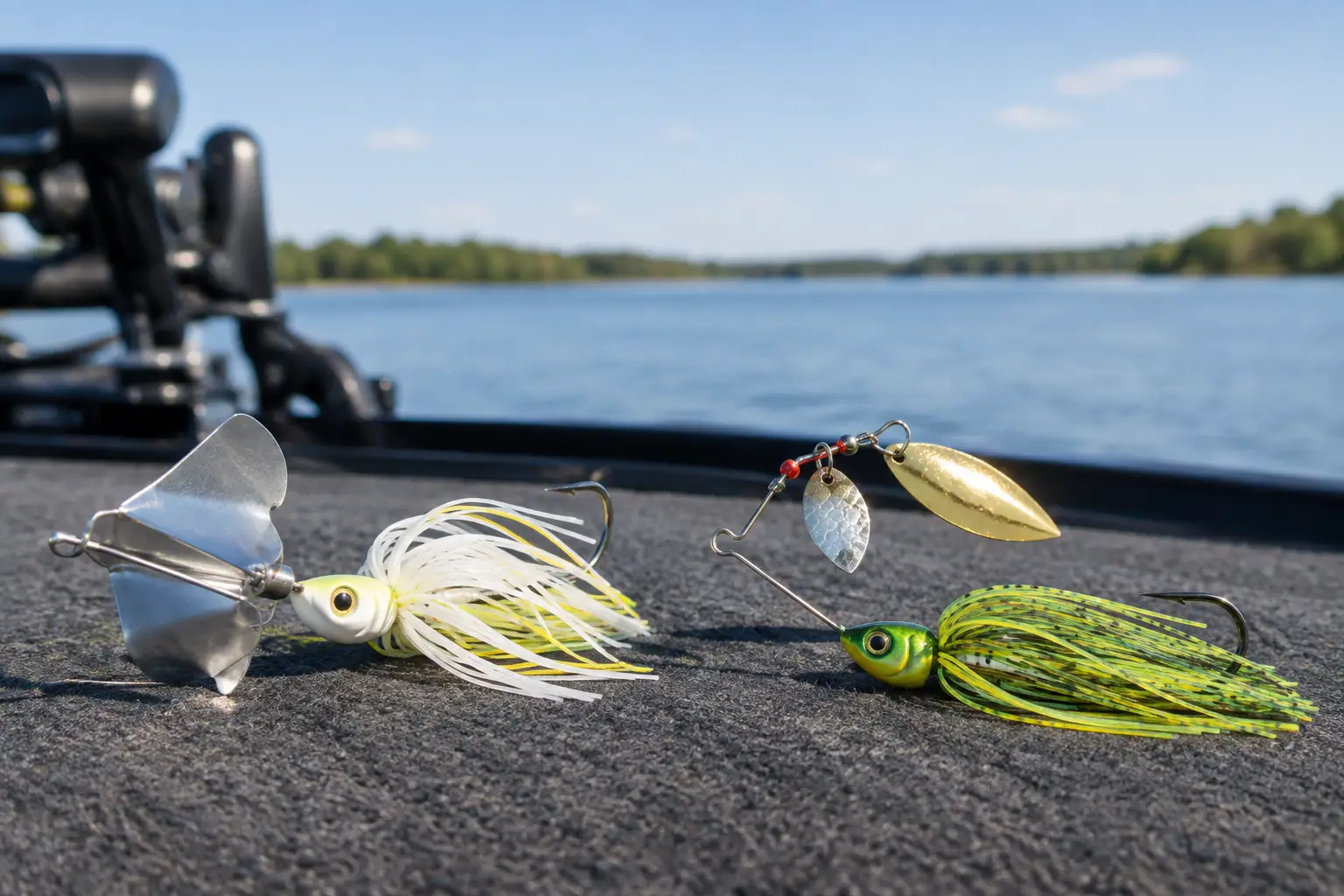
A bass blowing up a buzzbait beside a laydown is hard to beat. But when that same fish follows, swirls, or simply will not commit, a spinnerbait can save the day. The buzzbait vs spinnerbait bass question is not about which lure is better overall. It is about matching sound, flash, depth, and speed to what bass can find and are willing to chase.
Both lures belong in a serious bass angler’s box. Both cover water. Both come through wood, grass, and shallow targets better than many treble-hook baits. The difference is that a buzzbait calls fish to the surface, while a spinnerbait can work through the strike zone when bass are not looking up.
Buzzbait vs Spinnerbait for Bass: The Main Difference
A buzzbait is a topwater reaction bait. Its blade churns the surface, throws spray, squeaks or clacks depending on the setup, and leaves a trail that bass can track from a distance. It is built to make a fish react fast, especially in skinny water around cover.
A spinnerbait runs below the surface. Its blades flash, thump, and push water while the wire frame keeps the hook riding fairly clean through targets. You can wake one just under the surface, slow-roll it along a drop, or burn it over grass. That wider depth range makes it the more flexible choice when conditions are changing.
Think of it this way: a buzzbait is for forcing a surface decision. A spinnerbait is for giving bass a moving target at the depth where they are holding.
When a Buzzbait Gets the Better Bite
Buzzbaits shine when bass are shallow, active, and willing to hunt. That usually means warm water, low light, wind-chopped banks, or stained water where a loud surface profile gives fish something easy to locate.
Early morning is the classic buzzbait window, but do not put it away once the sun gets high. A good breeze, muddy runoff, shade from docks, or a bank full of grass can keep a topwater bite alive all day. In summer, a buzzbait run tight to shade lines can pull big fish that will not move far for a deeper lure.
The best buzzbait water is usually shallow enough that a bass can get to the surface without much effort. Work it over submerged grass, beside wood, along riprap, through pockets in pads, and down the edges of shallow flats. If you can see bait flickering or hear bluegill popping around the bank, a buzzbait deserves a few casts.
Speed matters. Most of the time, keep the bait moving just fast enough to stay on top and make a steady trail. A slow, sputtering retrieve can be deadly around isolated cover. A faster retrieve often gets better reaction strikes over grass or when fish are aggressive. Let the fish tell you what they want.
A trailer can change the whole bait. A soft plastic trailer adds bulk, lift, and a more substantial profile. A frog-style trailer works well when you want the buzzbait to stay high and crawl through thick stuff. If bass are missing the bait, add a trailer before you give up on the pattern. Often, they are not missing. They are just trying to pin down a fast-moving target.
When a Spinnerbait Is the Better Call
A spinnerbait earns its keep when bass are not quite committed to the surface or when you need to fish more than one depth. It is one of the best tools for covering a windy bank, probing murky water, and finding active fish scattered across flats, points, and creek arms.
In stained or muddy water, a spinnerbait’s vibration gives bass a clear target. A Colorado blade puts out a heavier thump and works especially well when visibility is poor. A willow blade produces more flash and comes through water with less resistance, making it a strong choice for clearer water or faster retrieves. Tandem blade setups give you a useful middle ground: flash, vibration, and a baitfish profile in one package.
Use a spinnerbait around the same shallow cover where you would throw a buzzbait when the topwater bite is slow. Roll it past dock posts, bump it through brush, run it beside standing timber, or bring it just over submerged grass. Let it contact cover. A spinnerbait that ticks a stump or deflects off a limb often gets hit right after it clears the obstruction.
It also gives you an edge during cold fronts. A front can shut down a surface bite in a hurry, especially when bluebird skies and slick water show up. Rather than forcing a buzzbait over fish that have backed off, slow-roll a spinnerbait on the outside edge of grass, along a channel swing, or down a steeper bank. You still cover water, but you keep the lure in front of bass longer.
Match the Lure to the Conditions
Water temperature is a good starting point, not a hard rule. Buzzbaits are generally strongest once water is warm enough for bass to stay shallow and chase, often from late spring through early fall. Spinnerbaits can produce in every season, including early spring and late fall when a buzzbait may get ignored.
Water color should guide your blade and skirt choices more than it dictates buzzbait or spinnerbait. In dirty water, choose bolder colors and a stronger vibration profile. Black, chartreuse, white, and dark contrasts are easy for fish to locate. In clearer water, natural shad, bluegill, or translucent patterns often look better, especially when bass are feeding by sight.
Wind is another dividing line. A light chop can help both lures, but spinnerbaits are usually easier for bass to track when wind is strong and the surface is broken up. A buzzbait still works in wind, particularly around protected pockets and shallow cover, but it can be harder to fish cleanly when waves keep knocking it off rhythm.
If bait is shallow and bass are busting the surface, start with the buzzbait. If bait is scattered, the wind is up, or you are unsure how deep the fish are holding, start with the spinnerbait.
Retrieve Mistakes That Cost Fish
The biggest buzzbait mistake is stopping the retrieve after a strike. When a bass blows up and misses, keep the bait moving for a second or two. Many fish turn and come right back. If that fish does not return, make the next cast past the strike and bring the bait through the same lane.
With spinnerbaits, anglers often reel too steadily. A straight retrieve catches fish, but small changes in speed make the bait look more like a fleeing or wounded meal. Pause briefly after ticking grass. Speed it up near a stump. Let it fall for a beat beside a dock post, then start turning the handle again. Those simple changes trigger fish that followed without committing.
Do not overlook casting angles. Running either bait parallel to a grass edge or laydown keeps it in the strike zone longer than casting straight at the cover. On a bank with wood, work from the shallow side when possible so the lure comes naturally past the ambush spot instead of pulling away from it too soon.
Gear That Helps Both Lures Perform
For buzzbaits, a medium-heavy baitcasting rod around 6 feet 8 inches to 7 feet 3 inches gives you enough backbone to drive the hook home and enough tip to make accurate casts. A faster reel helps keep the bait on top without wearing yourself out. Monofilament is a solid choice because it floats and has enough stretch to keep you from jerking the bait away on a violent blowup.
For spinnerbaits, a medium-heavy rod works for most sizes, though a moderate-fast action can help keep fish pinned when they swipe at the bait. Fluorocarbon gives you better control for deeper slow-rolling, while monofilament is useful when waking a spinnerbait near the surface. Match line size to cover. Heavy wood and grass call for tougher line than an open-water point.
Let the Fish Make the Final Call
There are days when bass will crush a buzzbait from daylight until dark. There are also days when the exact same bank only gives up fish once a spinnerbait runs a foot deeper with a little flash and thump. Carry both, pay attention to where strikes happen, and adjust before the bite fades.
If you are chasing big shallow fish, start loud and high with a dependable buzzbait. When the surface goes quiet, pick up a spinnerbait and keep working the same kind of cover. The next bass may tell you all you need to know.

3 Comments