
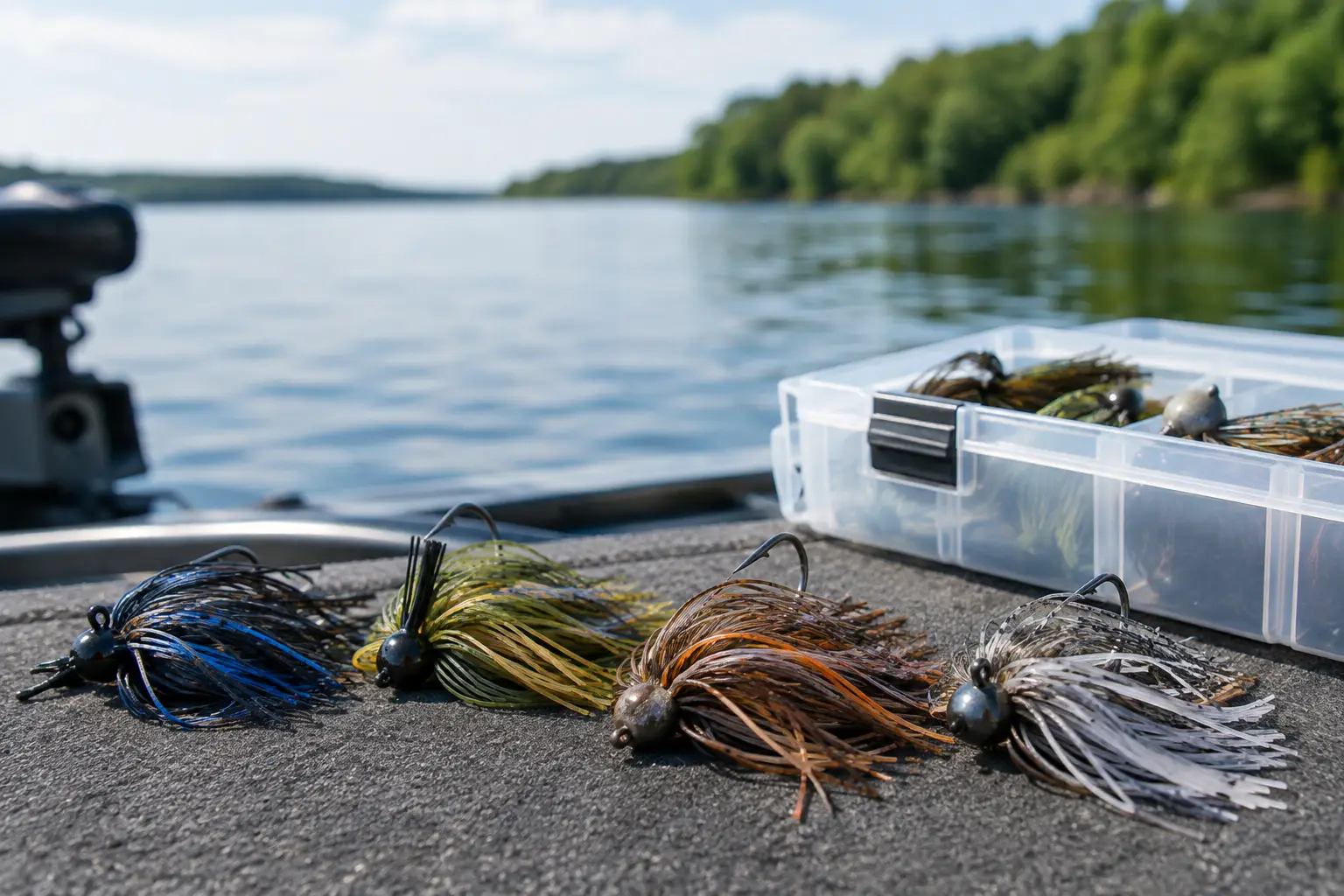
A jig can look right in your hand and still fish wrong once it hits the water. Most of the time, the missing piece is the trailer. Knowing how to choose jig trailers means matching the bait’s profile, movement, and fall to what bass are feeding on – not just grabbing the closest pack of plastics.
A trailer changes nearly everything about a jig. It can make a compact finesse jig look like an easy crawfish meal, turn a swimming jig into a bluegill imitator, slow a flipping jig’s fall, or add enough bulk to get noticed in dirty water. Get the trailer right, and your jig becomes a lot more than lead, skirt, and hook.
Start With the Job Your Jig Needs to Do
Before picking a trailer, decide how you plan to fish the jig. A jig dragged on a rocky point needs a different look than one punched into a grass mat. The right trailer is not always the biggest, noisiest, or most active option. It is the one that gives bass the clearest reason to eat your presentation.
For a bottom-contact jig, think crawfish, gobies, and other critters that scoot, flare, and pause along the bottom. A chunk-style trailer with a broad body and modest action is often hard to beat. It keeps the bait compact and gives the skirt something to wrap around, creating one solid meal instead of two separate pieces.
For a swimming jig, pick a trailer that tracks true and adds a little kick. A paddle-tail swimbait, split-tail plastic, or slender craw with active legs can give the jig a baitfish profile without making it roll or plane toward the surface. Keep casting distance and retrieve speed in mind. A thick trailer catches more water, which can be helpful in stained water but may make a lighter jig ride too high.
For flipping and pitching, bulk matters. Bass buried in wood, reeds, docks, or matted vegetation do not always get a long look. A bigger trailer creates a fuller profile, moves more water, and slows the fall enough to keep the bait in the strike zone. But there is a trade-off: too much plastic can hurt penetration in heavy cover or make a pressured fish hesitate.
Match Trailer Size to the Jig
A trailer should complement the jig, not bury it. As a practical starting point, use a compact trailer on a 3/16- or 1/4-ounce jig, a medium trailer on a 3/8- or 1/2-ounce jig, and save the largest chunks and creature baits for 1/2-ounce-and-up flipping jigs.
That is a starting line, not a hard rule. If bass are keyed on small forage in clear water, a smaller trailer on a heavier jig can be deadly because it gets down fast while keeping a subtle profile. When fish are feeding on big craws, bluegill, or shad, a bulky trailer can be the right call even on a lighter jig.
Look at the finished bait from the side. The trailer should extend beyond the skirt enough to show itself, usually about a half-inch to an inch depending on the jig style. If the plastic sticks way past the skirt, it may look stretched out rather than natural. If it disappears inside the skirt, it is not adding much beyond a little thickness.
A compact setup also helps when bites are short. Bass can inhale a small jig-and-trailer package more easily than a giant mouthful of silicone and plastic. That matters in cold water, on heavily pressured lakes, and anytime fish are just nipping at the bait.
Choose Action Based on Water Temperature and Fish Mood
Trailer action is one of the biggest decisions anglers make, and it is where many jig setups go sideways. More action is not automatically better.
In warm water, active bass will often respond to kicking claws, flapping appendages, and paddle tails that push water. These trailers shine around shallow cover, on a fast swim, or when bass are feeding aggressively. They help fish locate the jig in stained water and can trigger reaction bites when you are covering water.
When the water cools, bass often prefer a quieter offering. A compact chunk, beaver-style bait, or subtle craw trailer has less exaggerated movement and can stay in the strike zone without looking frantic. Cold-water bass do not always want to chase something that looks like it drank three cups of coffee.
Buoyancy matters here, too. A floating or high-buoyancy trailer holds the jig’s claws up when it rests on the bottom. That is a strong crawfish look around rock, wood, and sparse grass. It gives a dragging jig life even when you are not moving it.
A sinking trailer creates a more streamlined package and may help a jig slip through thick vegetation. It can also speed up the fall. That is useful when bass are tucked deep in cover and you need the bait to get through the ceiling fast. If your jig is hanging in the grass or falling too slowly, reduce trailer bulk before automatically going to a heavier jig.
Let the Cover Decide the Profile
The cover you fish should influence both the shape and durability of your trailer. In brush piles and laydowns, streamlined plastics with fewer loose arms tend to come through cleaner. A simple chunk or compact craw is easier to skip under limbs and less likely to grab every twig on the way down.
In thick grass, a narrow trailer with a solid body can help the jig penetrate and slide free. Avoid trailers with long, thin appendages if they constantly foul on vegetation. That said, a lightly flapping craw can be excellent on the outside edge of grass where you want the jig to swim, pause, and flare.
Around docks, match the trailer to the skip. Flat, compact plastics skip better than bulky baits with wide claws. A low-profile trailer also keeps the jig from helicoptering on a long skip. If you are pitching dock posts instead of skipping far underneath, you can add more bulk and let the bait fall slower beside the target.
On rock, a stand-up trailer with raised claws earns its keep. Drag it, hop it, and give it room to settle. Bass often eat a jig when it stops, especially if the trailer makes the bait look like a crawfish defending itself on the bottom.
Pick Color for the Water and the Forage
You do not need a dozen trailer colors for every jig, but color can clean up the presentation. Start by matching the trailer to the skirt. A black-and-blue jig paired with a black, blue, or dark purple trailer makes a bold silhouette in muddy water. A green pumpkin jig paired with green pumpkin, brown, or orange accents gives you a dependable crawfish profile in clearer water.
Contrast is useful when visibility is poor. Black-and-blue with a blue trailer, or a dark jig with a bright blue claw, gives bass a target. In cleaner water, natural shades usually get more bites: green pumpkin, watermelon, brown, smoke, and muted craw colors.
Do not overlook the underside of the trailer. A little orange, red, or chartreuse can imitate crawfish color and add a flash point without making the entire bait look unnatural. If bass are eating bluegill around shallow cover, green pumpkin with blue, purple, or copper accents can be a better fit than a straight craw pattern.
Rig the Trailer Straight and Check It Often
Even the right trailer will not work well if it is rigged crooked. Thread it onto the hook so it sits centered against the jig collar, with both claws or tails balanced. A crooked trailer can make a swimming jig roll, reduce hook-up efficiency, and look off during a slow fall.
Trim when needed. If a trailer overwhelms a finesse jig, cut a short section from the head rather than cutting off the claws. You preserve the action while bringing the overall length back into proportion. If you want more movement from a chunk-style bait, split the connected claws slightly. Small adjustments can give you a different bait without opening another package.
Check the trailer after every fish, missed strike, or hard pull through cover. Plastic can slide down the hook, tear near the head, or lose a claw without you noticing. A jig without its trailer may still catch one, but it is no longer showing bass the same package you chose on purpose.
Build Confidence With a Few Proven Styles
You can cover most bass situations with three trailer categories: a compact chunk for dragging and cold water, a craw or creature bait for flipping and pitching, and a paddle-tail or active trailer for swimming. Learn what each one does to your jig’s fall and movement before buying every new shape on the pegboard.
A good handmade jig deserves a trailer that lets it work. Hart Tackle’s Rat-L-Chunks, for example, make sense when you want a compact craw-style profile behind a jig without turning the bait into a bulky mess. The real test is always on the water: watch how the finished bait falls, swims, and comes through the cover you are fishing.
Next time you tie on a jig, take an extra minute before the first cast. Match the trailer to the cover, the water temperature, and the size of the meal bass are likely hunting. That small decision can be the difference between dragging a jig around all day and getting the bite you came for.
