
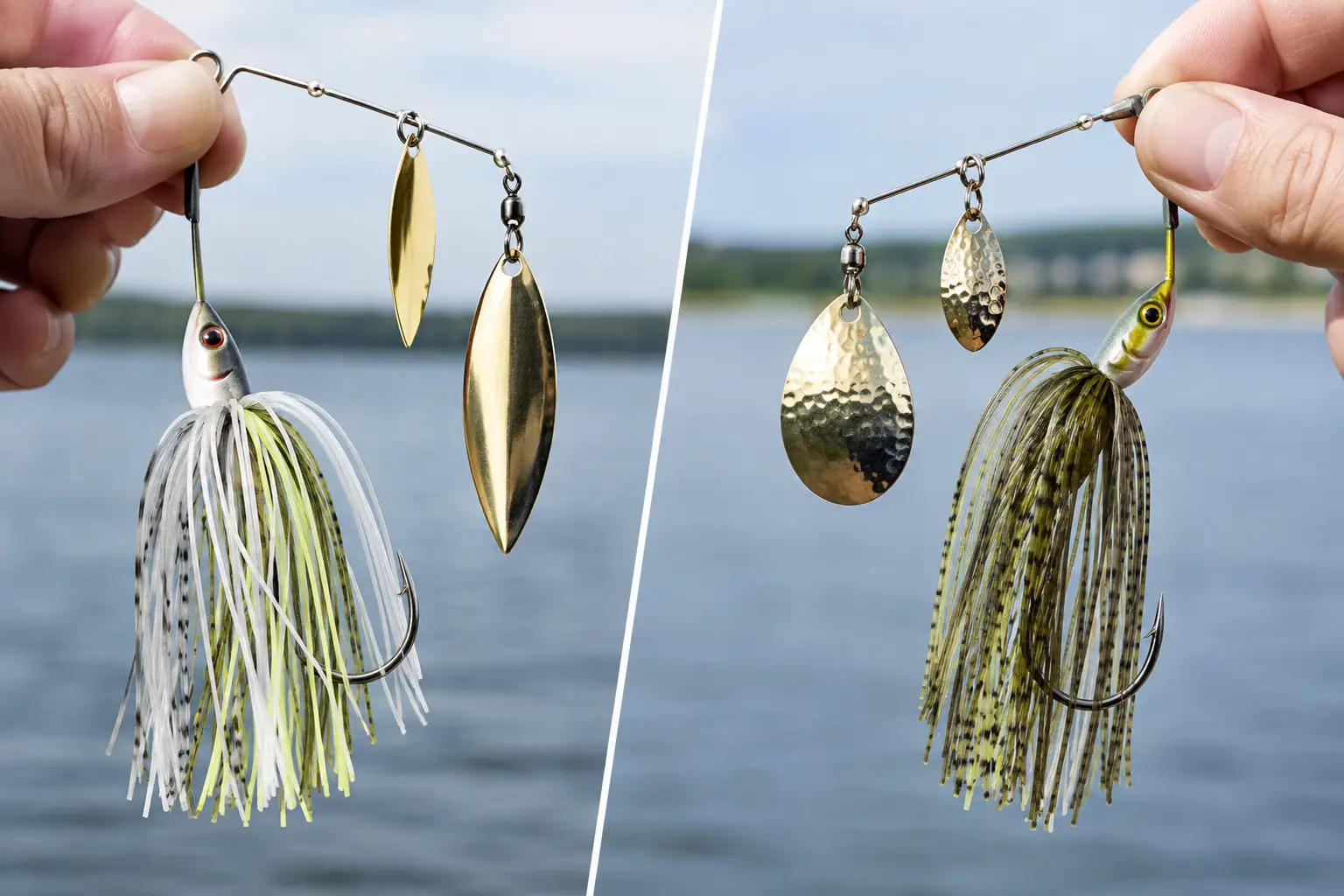
A spinnerbait can look right and still fish wrong if the blade does not match the water. The willow blade versus colorado blade decision controls how much flash, vibration, lift, and resistance your bait creates. Get that right, and a spinnerbait becomes a tool you can put exactly where bass live. Get it wrong, and you may be burning over their heads or crawling a bait that they never feel.
Neither blade is flat-out better. Willow blades shine when bass can see, Colorado blades shine when bass need to feel the bait, and plenty of good spinnerbaits use both. The best choice comes down to water clarity, depth, retrieve speed, cover, wind, and the mood of the fish.
Willow Blade Versus Colorado Blade: The Main Difference
A willow blade is long, narrow, and built for flash. It spins with less water resistance than a round blade, so it runs cleaner at faster speeds and keeps a spinnerbait from lifting as much. That makes it a strong choice for covering water, fishing deeper grass edges, and waking a bait just below the surface without the lure rolling over.
A Colorado blade is rounder and cups more water. It puts out a heavier thump that travels through stained water, muddy water, low light, and shallow cover. It also creates more lift, which helps you slow-roll a spinnerbait through a foot or two of water without constantly hanging bottom.
Think of a willow blade as a visual meal ticket. Think of a Colorado blade as a dinner bell. Bass use both sight and their lateral line to track prey, but one sense often matters more than the other on a given day.
When a Willow Blade Gets the Job Done
Tie on a willow blade spinnerbait when the water has decent visibility and bass are willing to move. Clear water, lightly stained water, sunny skies, and wind-blown banks are all good places to start. The blade throws light like a fleeing shad, especially when you keep the bait moving.
Willows are also made for speed. If you want to burn a spinnerbait over submerged grass, run a bait down a seawall, or cover a long stretch of riprap, the narrow profile lets you crank faster without the bait climbing out of the strike zone. A fast retrieve often triggers fish that will not commit to a slower presentation.
Fish Willow Blades Around Shad
When bass are feeding on shad, a willow blade spinnerbait has a natural look. Silver, nickel, and chrome blade finishes give off the bright flash of baitfish. Gold can be the better call in stained water, under cloudy skies, or when the local forage has more of a golden tint.
A double-willow setup gives you maximum flash and a more streamlined profile. Use it when the water is clear enough for bass to track the bait from a distance. It is a good setup for points, flats, grass lines, docks, and open pockets in flooded cover.
Do not assume a willow is only a warm-weather blade. It can produce in cold water, too, if you keep it in the fish’s face. Roll it slowly along a deep weed edge or over a transition bank. The key is maintaining enough speed for the blade to turn without racing the bait past a sluggish fish.
Where Willow Blades Can Cost You
A willow blade does not push as much water as a Colorado. In muddy water, that flashy, fast bait may not give bass enough time to find it. It can also be a poor fit for extra-shallow, gnarly cover when you need to crawl a spinnerbait slowly and keep it running high.
If you are reeling steadily but cannot feel the blade working, you are giving up one of the spinnerbait’s biggest advantages. Change to a larger blade, slow down, or move to a Colorado setup that announces itself better.
When a Colorado Blade Is the Better Call
Colorado blades earn their keep when visibility is poor. After a rain muddies the creeks, when wind has the bank churned up, or when you are fishing at dawn, dusk, or after dark, that hard thump helps bass locate the bait.
This is the blade for a slow, deliberate retrieve. Cast it beside a laydown, let it fall next to a dock post, then bring it back just fast enough to feel that steady pulse. The bait stays up in the water column more easily than a willow spinnerbait, which is a big deal when bass are holding shallow.
Use Colorado Blades in Shallow Cover
A round Colorado blade works well around stumps, brush, flooded bushes, shallow grass, and chunk rock. It lets you slow down and pick apart the places where big bass sit waiting for an easy meal.
Bump the spinnerbait into cover. Do not just run it beside the target. A blade bait that deflects off a limb or ticks a stump often gets the reaction bite you were looking for. After contact, pause for a heartbeat or speed up a half-turn. That change is when a following bass often commits.
Blade size matters here. A larger Colorado blade creates more thump and lift, while a smaller one runs a little deeper and comes through cover with less pull. If the bait keeps riding too high, do not abandon the Colorado right away. Try a smaller blade, a heavier head, or a slightly quicker retrieve.
Night Fishing and Dirty Water
In truly muddy water, bass may only have a short window to find your lure. A Colorado blade helps by putting out a strong vibration trail. Darker skirts can give the fish a better silhouette, while chartreuse, white, and combinations with some contrast remain solid choices in stained water.
For night fishing, the same rule applies: make the bait easy to track. A single large Colorado blade is a proven option because it thumps hard and allows a slow retrieve. Keep it close to cover and keep the retrieve steady. A bass does not need to see every detail if it can home in on the pulse.
Why a Willow-Colorado Combination Works
Tandem blade spinnerbaits usually pair a smaller Colorado blade up front with a larger willow blade behind it. This is the middle ground when the water is stained but not muddy, when clouds cut the light, or when you need a bait that gives bass both flash and vibration.
The front Colorado starts the conversation. The rear willow adds the shad-like flash and lets you retrieve the bait at a useful pace. If you only carry one general-purpose spinnerbait blade combination, a tandem setup is hard to beat.
It is especially useful during changing conditions. Maybe the morning starts cloudy and the water has a little color, then the sun breaks through. Rather than treating blade choice like an all-or-nothing deal, use the tandem to cover water until the fish tell you whether they want more flash, more thump, or a slower presentation.
Let the Retrieve Make the Final Call
Blade selection gets you close. Retrieve speed finishes the job. A willow blade wants a quicker, smoother retrieve, but you can still kill it beside a stump, burn it over grass, or let it helicopter down a bluff bank. A Colorado blade is comfortable moving slow, but a sudden burst after it clears cover can trigger a strike.
Watch the bait as it comes back. It should run true, the blades should turn consistently, and you should be able to feel the blade pulse through the rod. If the spinnerbait leans, rolls, or skips on top when it should be running below the surface, your speed, blade size, or line angle needs adjustment.
Spinnerbaits are not delicate baits. They are made to hit cover, cover water, and call big fish out of places where other lures disappear. Hart Tackle anglers should treat blade choice the same way they treat any tackle decision: match the tool to the job, then fish it with confidence.
A Quick Choice at the Ramp
If the water is clear and bass are chasing bait, start with willow blades. If the water is muddy, the sky is dark, or the fish are buried shallow in cover, start with a Colorado. If conditions sit between those two extremes, a tandem blade spinnerbait gives you a dependable answer.
Then let the fish settle the argument. A bass that tracks but will not bite may want less flash, more thump, or a slower retrieve. Make that change before you leave a good stretch of water. The right blade is not the one that looks best in your hand. It is the one a big bass can find, track, and crush.
