
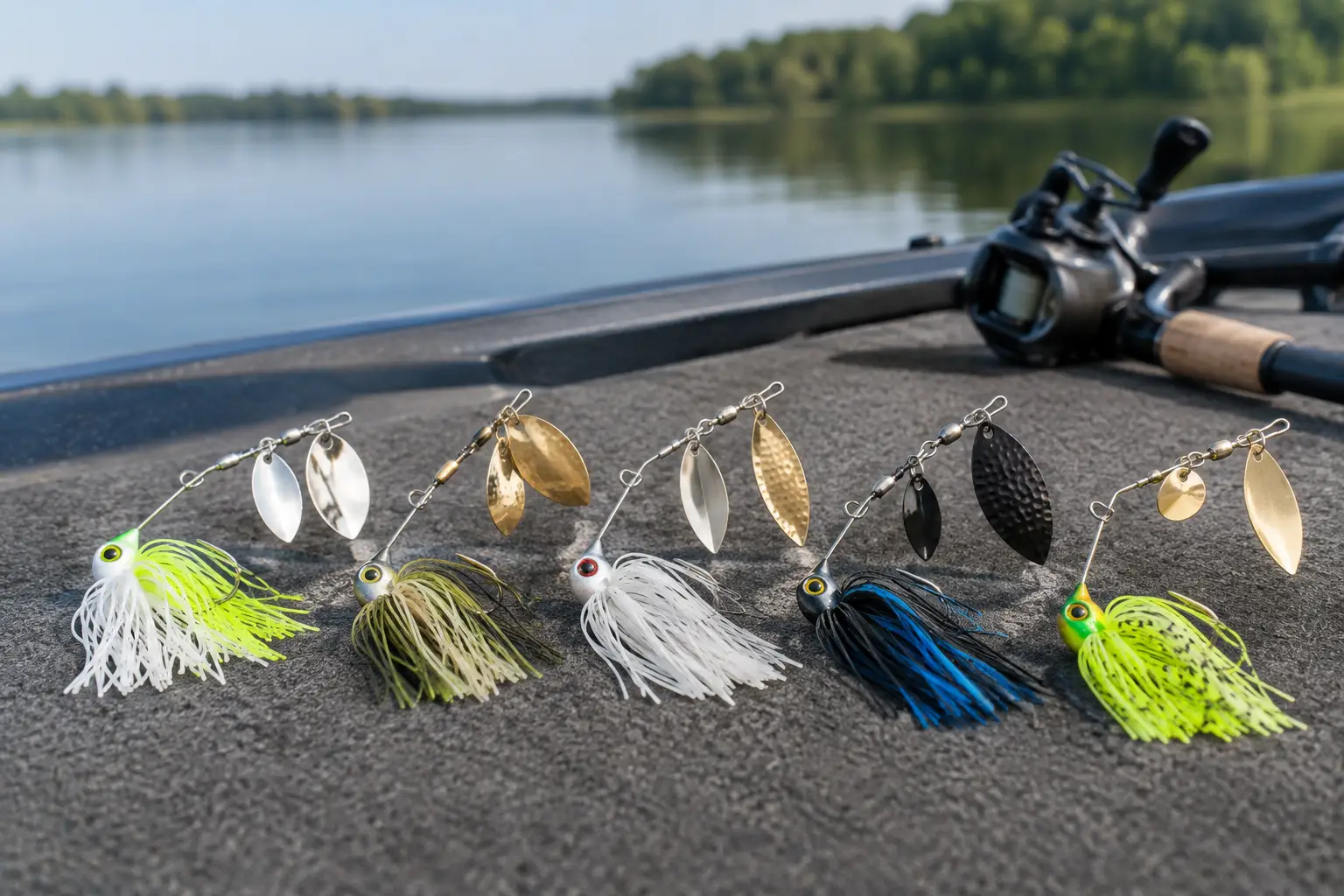
A spinnerbait can have the right skirt, head color, and hook, then still come up short because the blades are wrong for the water in front of you. That is where a real spinnerbait blade comparison pays off. Blade shape controls vibration, flash, lift, running depth, and how well a fish can find the bait when conditions get tough.
There is no single best blade. A big Colorado blade can call fish from dirty water like a dinner bell, but it may run too high for a deep ledge. A willow blade can burn over grass with a clean baitfish look, but it may not push enough water in muddy conditions. Pick the blade setup based on what the bass can see, feel, and chase that day.
Spinnerbait Blade Comparison: What Each Shape Does
Before getting into blade combinations, it helps to understand the three main shapes. The differences are not cosmetic. Each blade displaces water differently and changes the way the whole spinnerbait tracks through the water.
Colorado blades: maximum thump
Colorado blades are the roundest of the common spinnerbait blade shapes. Their broad face grabs water hard, creating a heavy pulse you can feel through the rod. That resistance also creates lift, so a Colorado-bladed bait wants to ride higher in the water column than a slimmer blade setup.
This is the blade to reach for in muddy water, stained creeks, low-light conditions, or after a rain has dirtied up the backs of pockets. Bass may not be able to see the bait from far away, but they can feel that thump. A Colorado blade is also strong around wood, docks, and shallow cover where you want to slow-roll a spinnerbait without letting it sink into trouble.
The trade-off is speed and depth. Big Colorado blades pull hard, wear on your arm after a long day, and make it harder to keep the bait deep. They are built for calling power, not subtlety.
Willow blades: flash and speed
Willow blades are long, narrow, and shaped much like a minnow. They create less drag than a Colorado blade, which means they run cleaner at higher speeds and allow the spinnerbait to stay deeper. They also produce a sharp flash as they rotate, especially in silver, nickel, chrome, or polished finishes.
Willows shine in clear water, around shad, over submerged grass, and whenever bass are feeding by sight. A double-willow spinnerbait can be burned just under the surface, waked across shallow flats, or counted down along weed edges. The narrow profile slips through vegetation better than a round blade and keeps the bait from feeling overly bulky.
The downside is that willow blades have less thump. In chocolate milk water, at night, or when bass are holding tight to cover and reacting more to vibration than flash, a double willow can be too quiet. It may look right, but fish have to find it first.
Indiana blades: the middle ground
Indiana blades fall between Colorado and willow blades in both shape and action. They have more width and vibration than a willow but less drag and lift than a Colorado. Think of them as the practical choice when the water has some color but is not downright muddy.
An Indiana blade works well when you want a spinnerbait that can be retrieved at a moderate pace without climbing too high. It gives off enough pulse for cloudy days and lightly stained water, while still offering a useful amount of flash. It is not always the first blade anglers talk about, but it can be a difference-maker when neither extreme feels right.
Match the Blade Combination to the Bite
Most spinnerbaits use two blades, and the front blade changes the way the rear blade works. The rear blade generally provides the most flash and water displacement, while the smaller front blade adds a second pulse, extra flash, and a fuller overall profile.
A double-Colorado setup is built for dirty, shallow water. It produces a lot of vibration, runs high, and lets you fish slowly through laydowns, flooded brush, and murky pockets. If the water is cold and bass want a bait creeping past their nose, this is a strong setup.
A Colorado-willow combination is one of the most versatile choices an angler can tie on. The Colorado blade gives the bait enough thump to be noticed, while the willow adds flash and helps keep it from pulling like a truck. It is a smart starting point in stained water when you do not yet know whether the fish are feeding by vibration or sight.
A double-willow setup is the classic clear-water and shad-chasing arrangement. It comes through grass well, tracks true at fast speeds, and looks like a small school of baitfish trying to get away. When bass are schooling, feeding on points, or blowing up shad in the fall, this setup lets you cover water in a hurry.
For anglers who want a spinnerbait with a different look, a larger rear Indiana blade paired with a smaller Colorado or willow can be a useful in-between option. The goal is not to collect every blade style in the tackle box. The goal is to carry enough choices to adjust when the water, forage, or retrieve changes.
Water Clarity Should Drive the First Choice
Start with visibility. In clear water, use more flash and less thump. Silver willow blades are hard to beat when the sun is up and baitfish are present. Gold can be better under clouds, in tea-colored water, or when the forage has a warmer tint.
In stained water, a Colorado-willow or Indiana-blade spinnerbait often gives you the best balance. You get enough vibration for fish to track it, but still enough flash to trigger a fish that sees it at close range. Gold, copper, and painted blades can stand out better than bright silver when the water has color.
In muddy water, prioritize vibration. A large Colorado blade, especially one with a painted, gold, or darker finish, gives bass a target they can locate. Keep the retrieve slow enough that the blade keeps turning. If the blade is not working, the bait is not doing its job.
At night, blade choice follows the same rule. Fish rely more on vibration and silhouette, so a Colorado blade usually earns the nod. You do not need a flashy bait when there is little light for flash to matter.
Blade Size Changes More Than Flash
Blade size is every bit as important as blade shape. A larger blade pushes more water, gives off more flash, and creates more lift. A smaller blade starts easier, runs deeper, and makes a tighter, less intrusive presentation.
Upsize your blades when you need to slow down, fish shallow, call fish from dirty water, or make a spinnerbait look like a bigger meal. Downsize when bass are pressured, water is clear, forage is small, or you need to get the bait deeper without moving to a heavier head.
Pay attention to how the bait feels. If a spinnerbait is rolling on its side, blowing out during a fast retrieve, or constantly riding too high, the blade setup may be overpowering the head and wire frame. If it feels dead and disappears too quickly, you may need more blade resistance or a slower retrieve.
Tune the Retrieve Before You Change Baits
Anglers often switch spinnerbaits too quickly when a small adjustment would get the job done. With a double willow, try speeding up until the bait wakes just under the surface. With a Colorado blade, slow-roll it so the blade barely turns over the top of a stump, grass line, or dock post.
You can also change your rod angle. Hold the rod tip high to keep a bait above grass, or point it closer to the water to help it track deeper. A short pause beside a piece of cover can be enough to make a following bass commit.
At Hart Tackle, we build baits for anglers who expect them to hold up and produce, but even a great spinnerbait works best when its blades match the conditions. Keep a few blade styles ready, pay attention to what the water is telling you, and let the bass show you whether they want flash, thump, or both.
The next time a spinnerbait bite feels close but not quite right, do not just change colors. Change the blades, make a few casts through the same target, and be ready when that heavier bite finally loads the rod.
