
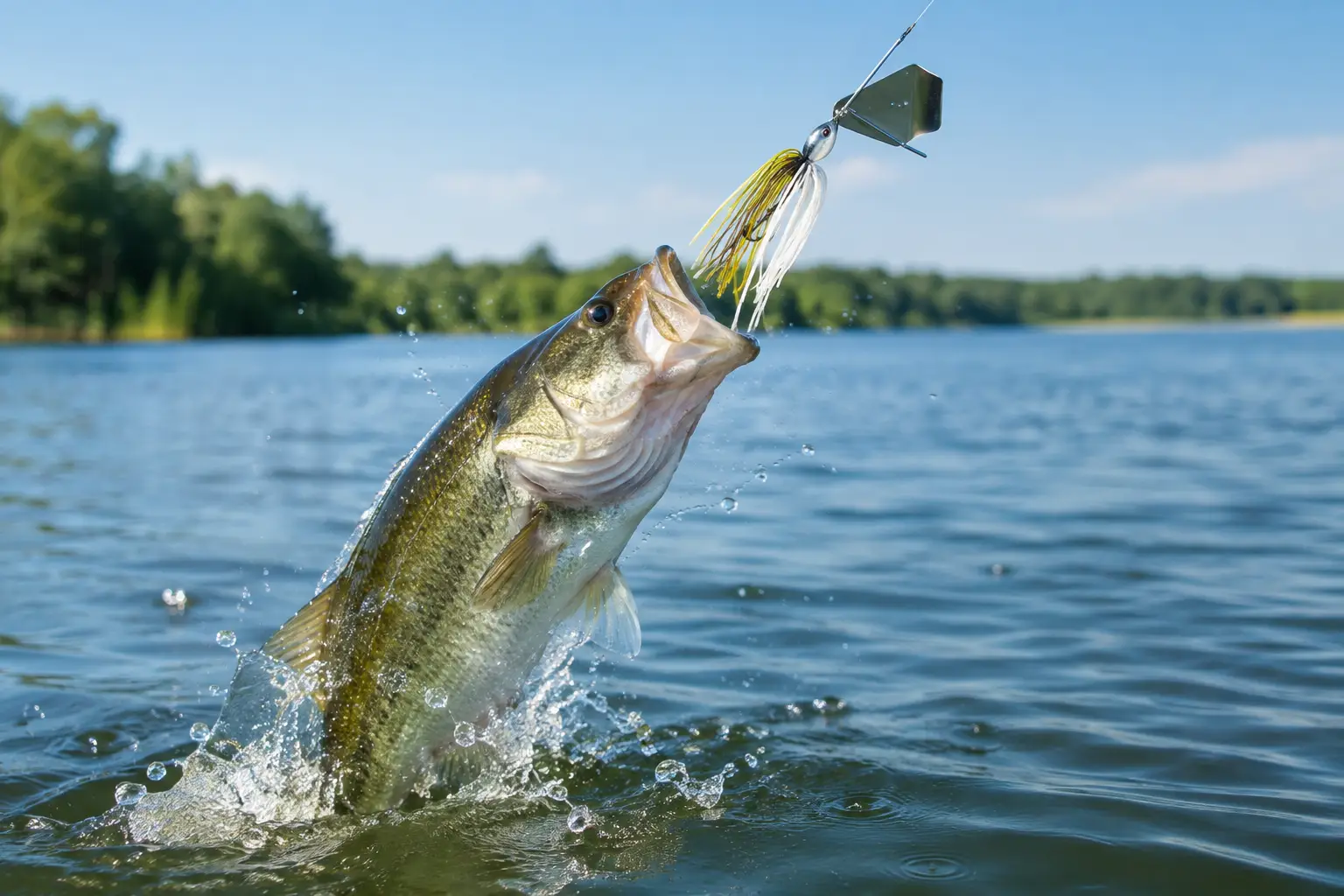
A buzzbait strike is rarely subtle. One second your lure is squeaking across a shady bank, the next it disappears in a boil that can make your knees weak. Learning how to fish a buzzbait is not complicated, but getting more of those strikes takes better timing, better angles, and the nerve to keep the bait moving when a big bass blows up short.
A buzzbait is a topwater search bait built for covering water and calling fish up through shallow cover. It shines when bass are feeding shallow, guarding fry, pushing bluegill into the bank, or sitting under shade waiting on an easy meal. Throw it in the right places, and it can produce the kind of fish that make an ordinary morning worth remembering.
Start With the Conditions That Favor a Buzzbait
Buzzbaits are best when bass are willing to look up. That usually means water temperatures are warming through spring, staying warm through summer, or cooling enough in early fall to get bait moving shallow again. You can catch fish on one outside those windows, but the bite is most dependable when shallow bass are active.
Low light helps. Early morning, late evening, cloudy days, a light rain, and a little wind all make a buzzbait easier for bass to commit to. The chop breaks up the surface, the shadows make fish less cautious, and the bait can get surprisingly close before a bass decides to eat.
Do not put the buzzbait away just because the sun gets high. Bright conditions can actually create a strong shallow pattern when there is heavy cover. Docks, laydowns, willow bushes, grass mats, shade lines, and overhanging trees give bass a place to sit tight. In that situation, accuracy matters more than the clock.
Water color changes the deal. In clear water, a buzzbait is often strongest in low light and around isolated shade. In stained or muddy water, its surface noise becomes a major advantage. Bass may not see the bait until the last instant, but they can track the commotion and strike from close range.
Choose a Buzzbait That Matches the Cover
A standard single-prop buzzbait is the workhorse. It casts well, comes through wood and grass, and creates enough surface disturbance to pull fish out of hiding. A larger blade pushes more water and is easier for bass to find in dirty water or wind. A smaller blade can be better when the fish are pressured or the water is calm and clear.
Weight affects more than casting distance. A heavier buzzbait is easier to launch into the wind and can be retrieved faster without blowing out. A lighter one is useful when you need a slower crawl over shallow water. If you are fishing a foot of water across the back of a pocket, being able to keep the bait on top at a slow pace is a real advantage.
Color should be simple. Black is hard to beat in low light, muddy water, and around dark shade because bass see its silhouette from below. White or chartreuse-and-white can be easier to track in daylight and can look like a fleeing shad. When bluegill are the main shallow forage, a darker bait with a more natural skirt can be a better call.
A trailer can change the whole presentation. A soft plastic trailer adds bulk, lift, and a little extra kick. That can help a buzzbait stay on top at slow speeds. A toad-style trailer is a good choice around grass, while a slimmer trailer keeps the bait from becoming too bulky around sparse wood or when bass are swiping instead of eating.
For a dependable all-around setup, use a baitcasting rod around 6 feet 10 inches to 7 feet 3 inches with a medium-heavy power and fast action. Spool up with 30- to 50-pound braid. Braid floats, starts the blade quickly, cuts through vegetation, and gives you the leverage to pull a big fish away from cover. A high-speed reel helps when a fish hits running toward the boat, though a moderate retrieve is usually all you need to make the bait work.
How to Fish a Buzzbait Through High-Percentage Water
The best buzzbait water is usually shallow water with something different in it. A lone stump, the dark corner of a dock, a grass point, a laydown reaching into deeper water, or the edge where pads meet open water can all hold a fish ready to blast a surface bait.
Make casts that run alongside cover instead of only casting directly at it. A buzzbait moving parallel to a dock walkway, grass edge, or fallen tree stays in the strike zone longer. That gives a bass more time to hear it, locate it, and eat it. Many anglers make one cast past a target and move on. Make several, changing the angle each time.
Start the retrieve the instant the bait hits the water. A buzzbait that sinks for even a second can foul in grass or lose the clean surface track that triggers a reaction strike. Keep the rod tip up enough to help the bait plane, then settle into a steady retrieve.
Steady does not always mean fast. Begin with the slowest speed that keeps the blade churning on the surface. If the fish are aggressive, speed it up. If you get follows, bulges, or short strikes, slow down a touch before you start changing baits. Often, the bass wants the same noise but needs another second to line it up.
Make the bait do something different at key targets. As it reaches a stump, dock post, grass clump, or the end of a laydown, briefly hesitate without letting it sink. You can also give the handle a quick half-turn burst to make the blade sputter harder. That change is often what turns a follower into a committed fish.
Do not be afraid to run a buzzbait into cover. Tick the outside of a dock float. Bump a limb. Skim the edge of a grass mat. The little deflection makes the bait sound and move less predictable, which is exactly what a bass buried in cover has been waiting on.
Work a Bank With a Plan
When you pull into a promising pocket, fish the obvious targets first but keep moving. Buzzbaits are at their best when they help you find active bass fast. Hit the shade, wood, grass, and the first drop near the bank. If a fish blows up, misses, or follows, slow down and work that immediate area with a jig, soft plastic, or other follow-up bait.
The biggest mistake is treating every bank the same. On a calm morning, focus on protected pockets and shade. With wind blowing into a shoreline, fish the windward bank where bait gets pushed shallow. After rain raises the water, get farther back into flooded brush and newly available cover. Let the conditions tell you where the buzzbait belongs.
Handle Short Strikes Without Losing Your Cool
A surface explosion makes people swing too soon. When a bass blows up on a buzzbait, keep reeling until you feel the weight of the fish. Then sweep the rod to the side and keep pressure on. A violent upward hookset right at the splash often pulls the lure away before the fish has it.
If a bass misses, do not stop the bait immediately. Keep it moving for a few more turns. A fish may come back and eat it, especially if the first strike was a miscalculation. If it does not return, cast right back to the same spot. Then make a follow-up cast with a slower bait that can stay in the strike zone.
A trailer hook can help when fish are slapping at the bait, but it is not always the right answer. Around open water, sparse grass, or scattered wood, it can turn missed strikes into hookups. In thick brush, laydowns, and heavy vegetation, it can snag more cover and cost you the weedless advantage. Let the cover make that decision.
Tune Your Buzzbait for the Sound Bass Want
Buzzbaits are not supposed to sound polished. A little squeak, clack, or irregular sputter can make them better. Before fishing a new bait, make sure the blade spins freely and the wire tracks straight. If it runs on its side, gently adjust the wire until it planes true.
Some anglers like to let a buzzbait develop a squeak naturally after a little use. That sound can be a difference-maker on waters where bass hear plenty of clean-running topwaters. Just do not sacrifice function for noise. If the blade binds or the bait rolls over, it needs adjustment, not more abuse.
At Hart Tackle, the goal behind a good buzzbait is simple: make it durable enough to grind through the places where bigger bass live, then make sure it keeps working when the bite gets mean.
Put It in Their Face
Buzzbait fishing rewards commitment. Make accurate casts, keep the bait moving, and put it through the shallow cover that other anglers avoid. You will lose a few lures, get startled by some bad misses, and occasionally watch a giant bass blow a hole in the water without getting hooked.
Make the next cast anyway. The fish that misses a buzzbait is telling you exactly where it lives, and the next pass might be the one that puts your best bass of the day in the boat.
