
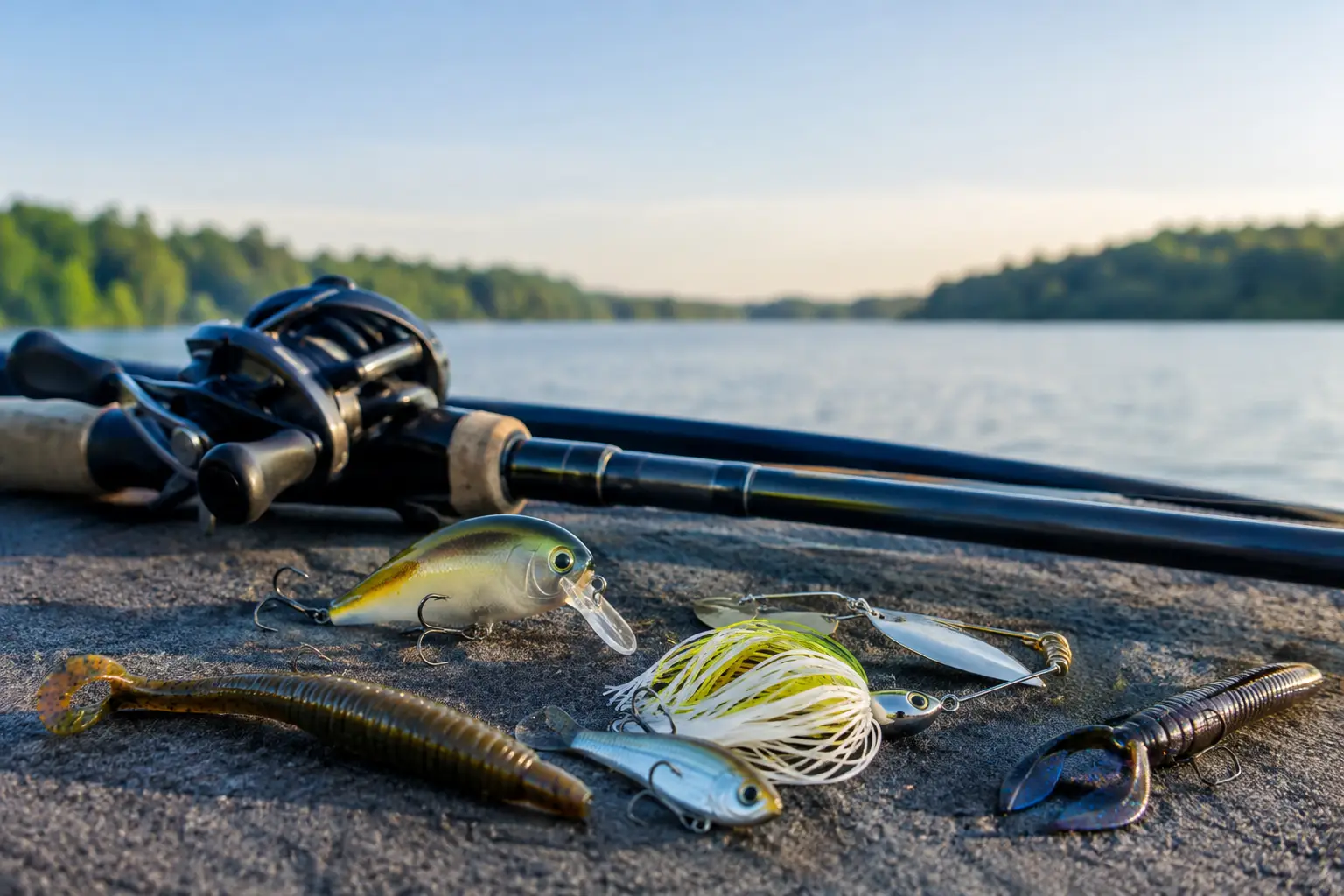
A tournament day can turn on one decision: picking up the lure that gets a keeper to commit instead of just following. Tournament bass lures are not magic baits reserved for pros. They are dependable tools you know well enough to fish hard when the clock is running, the wind changes, and the bite gets tougher.
The goal is not to pack every bait in the garage. It is to keep a small, capable lineup that covers water, works through cover, and gives you a way to slow down when bigger bass quit chasing. Get those jobs covered, then let the conditions tell you where to start.
Tournament Bass Lures Start With Conditions
Before the first cast, look at the water instead of reaching for a favorite color. Water clarity, wind, temperature, current, sky conditions, and available cover should steer your first lure choice. Bass do not read the tournament schedule, but they do respond to what is happening around them.
In muddy water or low light, choose lures that bass can find. A buzzbait, spinnerbait, or vibrating soft plastic can create the flash, thump, and surface disturbance that brings fish in. You are not trying to make a bait look subtle when visibility is poor. You want it to announce itself without looking out of place.
Clear water calls for more restraint, especially when the lake has fishing pressure. A compact jig, natural soft plastic, or smaller swimbait often gives bass a better look without putting them on guard. That does not mean you must fish painfully slow all day. It means your lure’s profile, color, and retrieve need to match the cleaner conditions.
Wind is usually a friend if you have moving baits ready. It breaks up the surface, pushes bait toward banks and points, and gives you cover for a faster presentation. A spinnerbait can stay in the strike zone around windblown grass, wood, and rock. A buzzbait can be the right call when bass are looking up and the chop keeps them from studying the bait too closely.
Cover Water Without Fishing Past the Best Bite
A tournament morning is often about locating active fish. Start with a lure that lets you make efficient casts around likely areas: shallow grass, laydowns, docks, riprap, creek mouths, points, and visible bait. A buzzbait, spinnerbait, or swimbait does that job well because each cast tells you something.
If bass blow up on a buzzbait, follow it, or roll behind it without committing, do not immediately abandon the area. First change the angle, retrieve speed, or color. Run the bait tighter to the cover. Pause it beside a stump. Make a cast that travels with the wind instead of across it. Small adjustments can turn a near miss into a fish in the livewell.
A buzzbait is especially useful when fish are shallow and aggressive, but it is not only a low-light lure. On a warm day with stained water, shoreline shade, or wind on the bank, it can draw strikes long after the sun is up. Keep the bait moving, but not mindlessly. Run it over shallow grass, beside dock posts, and through lanes where a bass has room to track it.
Hart Tackle’s buzzbait lineup is built for anglers who need a bait they can throw through a full day of shallow-water decisions. That matters in competition. You need confidence that the bait will run true after it bumps cover and that its sound and profile stay consistent from cast to cast.
When to Put Down the Search Bait
Fast lures find the neighborhood. Slower lures catch bass that live there but will not chase. Once you get a bite, a follower, or a clear sign of life, ask whether the fish are feeding aggressively or simply holding tight to cover.
A jig is one of the best answers when bass position on wood, dock shade, rock, or the outside edge of grass. It can be pitched precisely, left in place, crawled slowly, or hopped to trigger a reaction. The trade-off is speed. You will not cover as much water, so use it when you have a reason to believe the fish are there.
Soft plastics handle the middle ground. A creature bait or chunk-style trailer adds bulk and movement to a jig. A worm can work through isolated cover and along breaks where bass are less likely to chase. A soft swimbait offers a natural moving profile when spinnerbait flash is too much but a slow bottom presentation is not getting noticed.
Do not confuse finesse with tiny, weak, or passive. A deliberate soft-plastic presentation around the right target can be the most efficient move you make. If a bass is buried under a dock or lodged in a grass pocket, putting a bait directly in front of it is often better than making ten extra casts with a lure it will not chase.
Build a Lure Rotation, Not a Pile of Options
A solid tournament selection should give you answers for the major jobs on the water. Keep a topwater option for shallow active fish, a moving bait for wind and water coverage, a jig for heavy cover and bigger bites, and soft plastics for pressured fish or precise presentations. Add a swimbait when baitfish are the main pattern.
Color should be simple enough that you can make decisions quickly. In dirty water, darker silhouettes and colors with chartreuse or bright accents can help. In clear water, shad, bluegill, crawfish, and other natural patterns are dependable starting points. Let forage and water color guide you more than a long list of trendy paint jobs.
Size matters too. A larger profile can call up a better fish, push water, and stand out around cover. A smaller bait can get more bites when fish are pressured or feeding on small forage. Neither is automatically better. If you are getting short strikes on a large bait, downsize. If you are catching only small fish, a fuller jig, larger trailer, or stronger-profile spinnerbait may help you sort for quality.
Make Adjustments With a Purpose
Tournament anglers lose time when every missed bite leads to a random lure change. Change one meaningful thing at a time so the fish can teach you something. If a spinnerbait gets followers but no strikes, try a smaller blade combination, reduce speed, or follow up with a soft plastic. If a jig gets bites on the first drop but not after that, focus on the freshest targets and move on faster.
Pay attention to where the strike happens. A bass that hits at the shady side of a dock is telling you more than a bass that hits somewhere along a bank. A fish caught on the windy end of a point may point toward a wind pattern. One bite is not always a pattern, but it is always information.
Keep your best producers ready. Retie after dragging rough cover. Check spinnerbait wire and hooks after fish. Make sure soft plastics are straight on the hook. A lure that runs crooked, has a dull hook, or slides down after every cast can cost the only bite that matters.
Fish What You Can Trust
The best tournament bass lures are the ones you can place accurately, retrieve with purpose, and keep in your hand when the pressure rises. Confidence is not superstition. It comes from knowing what a lure does around grass, wood, current, wind, and shallow bass that have seen plenty of baits.
Bring enough options to respond, but not so many that you stop making decisions. Watch the water, trust the clues, and make each cast earn its place. The next big bite usually comes from the angler who stays ready to adjust without forgetting what the fish already said.
