
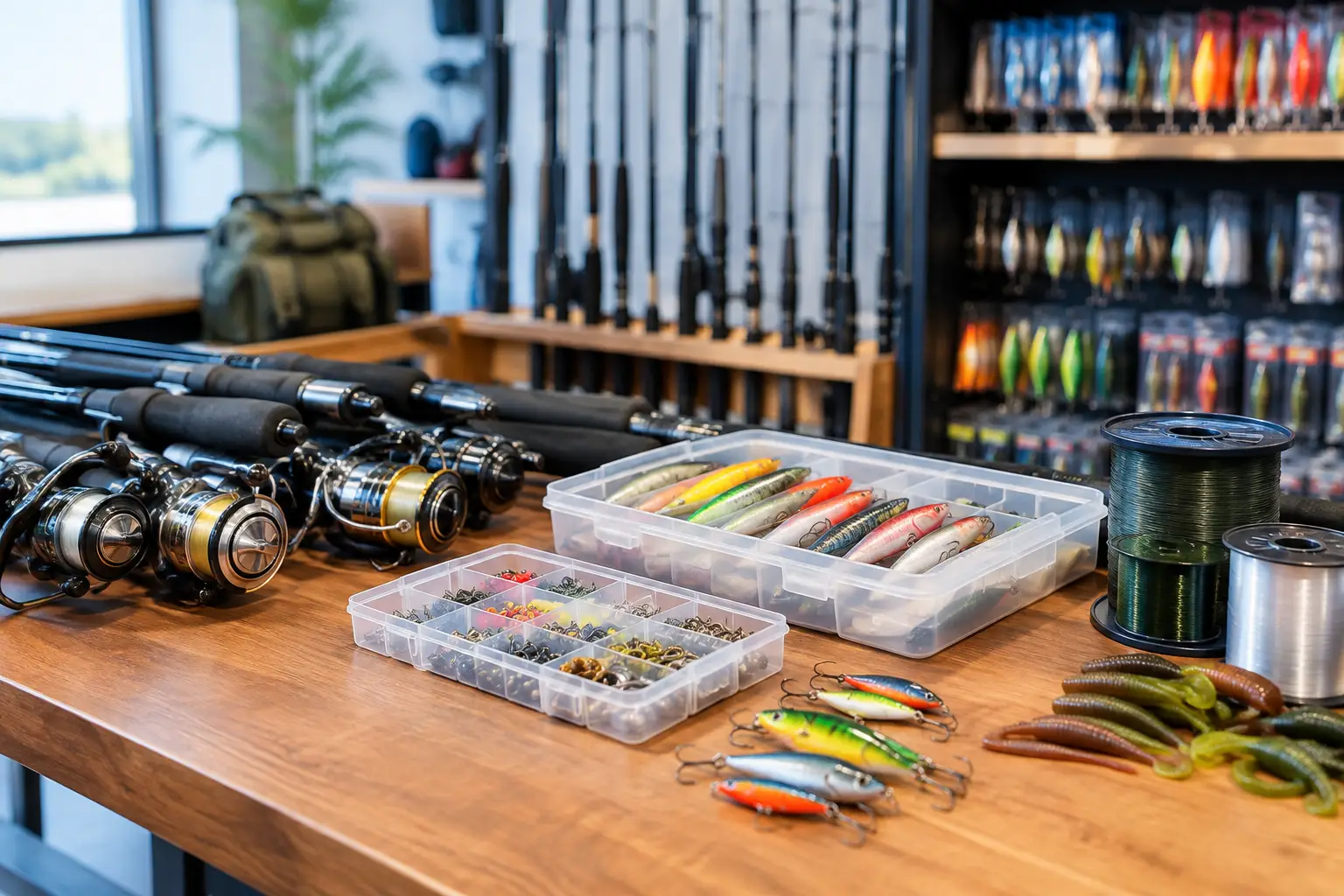
A good tackle wall does more than look full. It gives a bass fisherman confidence when he is standing at the counter, watching the weather roll in, and trying to pick the one bait that will get crushed. Fishing tackle dealers earn repeat business when they stock lures that make sense for local water, explain why they work, and stand behind what they sell.
The cheapest pegboard filler will not build a loyal customer base. Anglers remember the shop that had the right buzzbait for a shallow grass bite, the jig that held up around wood, or the spinner that put fish in the boat after a tough cold front. That is how a tackle dealer becomes part of a fisherman’s routine instead of just another stop on the way to the lake.
What Fishing Tackle Dealers Should Look For
The best inventory decisions start with the fishery, not a catalog. A dealer near stained farm ponds, shallow reservoirs, and weed-lined creeks needs a different mix than one serving clear, deep highland lakes. Both customers may chase bass, but they will not always need the same blade flash, skirt color, hook size, or retrieve speed.
Start with the lures anglers can fish confidently in more than one situation. A quality buzzbait belongs in that group. It can cover water at daylight, run over shallow grass, and pull a reaction strike from fish tucked under bank cover. Spinnerbaits, jigs, soft plastics, and swimbaits also earn their space because they solve different problems without forcing customers to learn a complicated presentation.
That does not mean every item has to be an all-purpose bait. Specialty lures matter, especially for serious fishermen and tournament anglers. The key is balance. Keep dependable everyday tools in stock, then carry a few distinctive profiles, colors, and actions that give regular customers a reason to come back and check the wall.
A lure line should prove itself in three ways: it needs to run right, hold together, and catch fish. A bait that tracks sideways after a few casts or comes apart after one fish is not a bargain. Anglers notice hook sharpness, wire strength, skirt quality, paint durability, and whether the bait performs the way it did in the package. They may forgive a missed bite. They will not forgive gear that fails when the bite is on.
Build Around Local Conditions
Talk to the fishermen who actually fish your area every week. Ask what the water looked like, where the fish were positioned, and what they caught them on. That information is more useful than a broad national trend when you are deciding what to reorder.
In muddy water, customers often need baits they can feel and fish can find. That may mean louder vibration, stronger blade thump, bulkier jig trailers, or darker silhouettes. In clearer water, more natural colors, compact offerings, and subtle presentations can earn a place. There is no magic color that works everywhere, but there is a smart way to cover the conditions your customers face most often.
Season matters too. During spring, shallow moving baits and compact soft plastics may fly off the shelves. Summer can call for buzzbaits at first light, worms around deeper cover, and swimbaits for fish feeding on shad. When fall baitfish are active, keep moving baits ready. Winter may slow retail traffic, but anglers who keep fishing still need jigs, trailers, and slower presentations they trust.
Choose Manufacturers Who Support the Counter
A dealer relationship should not feel like placing an order into a black hole. Good manufacturers answer questions, ship what they promise, and know their own products. If a customer asks why one buzzbait has a particular blade setup or when to throw a certain jig, the dealer should be able to get a straight answer.
Look for suppliers that provide consistent products and clear wholesale terms. A lower unit cost can look attractive until a dealer deals with late shipments, discontinued colors, weak packaging, or a line that has no story behind it. Margin matters, but sell-through matters more. A lure that turns over quickly at a fair margin beats a high-margin product that gathers dust all season.
It also helps when the maker listens to anglers. Handcrafted tackle has an advantage here because changes can come from real feedback instead of a boardroom guess. Hart Tackle, for example, builds its freshwater lures with that hands-on mindset and invites fishermen to speak up about how baits perform on the water. That kind of direct accountability gives a retailer something real to talk about at the counter.
Before committing to a new line, ask practical questions. What are the minimum order requirements? How often are core colors and models available? Is there support for damaged or incorrect shipments? Are product descriptions clear enough for your staff to explain the bait? Can the manufacturer point to actual on-the-water use rather than empty claims?
Stock a Tackle Wall That Sells
More choices are not always better. A wall packed with near-identical lures can make a customer hesitate, especially a newer angler. Organize products by what they do and where they shine. Keep topwater, spinnerbaits, jigs, soft plastics, and swimbaits easy to find. Within each group, place the most dependable, broadly useful options where customers see them first.
Color selection deserves discipline. Carry proven basics before chasing every limited-run pattern. White and chartreuse patterns cover a lot of spinnerbait water. Black or dark topwaters stand out in low light. Natural baitfish colors help in clear water. Green pumpkin, black and blue, and a few local favorites make a strong jig and soft-plastic foundation. Add specialty colors after the core selection is covered.
Put complementary products near each other. A customer buying a jig may need a matching trailer. Someone grabbing a buzzbait may also want a spare or a different color for changing light. This is not about pushing junk into a cart. It is about helping an angler leave prepared instead of realizing at the ramp that he forgot the piece that makes the presentation work.
Keep the display clean and current. Bent packages, empty hooks, and sun-faded old inventory send the wrong message. So do pegs that remain empty through the busiest part of the season. A small shop does not need endless inventory, but it does need the right inventory in stock when the local bite gets hot.
Teach the Bite, Not Just the Product
The strongest advantage a local dealer has is conversation. Big-box shelves and online listings cannot ask a customer what section of the lake he is fishing or whether the water has risen two feet since last week. A knowledgeable person behind the counter can.
Train staff to give simple, useful advice. Explain that a buzzbait needs a steady retrieve fast enough to keep it on top. Tell a customer when to slow-roll a spinnerbait, how to work a jig around laydowns, or why a smaller soft plastic can get more bites after a front. Keep it practical. Nobody needs a lecture while they are trying to get to the water before dark.
Pay attention to what comes back through the door. If customers report that a certain bait caught fish, write it down and share it. If a particular color is sitting untouched, do not reorder it just because it looks good in a catalog. Local results should steer the buying plan.
Turn First-Time Buyers Into Regulars
A customer who catches a good fish on a lure bought from your shop is likely to return. Give that customer a reason to tell the story. Ask for a photo, display a few local catches, or keep a simple board with recent reports. Real fish from real water carry more weight than a polished sales pitch.
Be fair when something goes wrong. Manufacturing defects happen. Packages get damaged. A customer may have an honest question after losing a fish. Handle those moments like a fisherman, not like a paperwork department. A reasonable response can turn frustration into loyalty.
Do not try to be everything to every angler. Be the place that understands the water, carries tackle that earns its spot, and gives straight answers. When the next early-morning bite starts, customers will remember who helped them get ready for it.
