
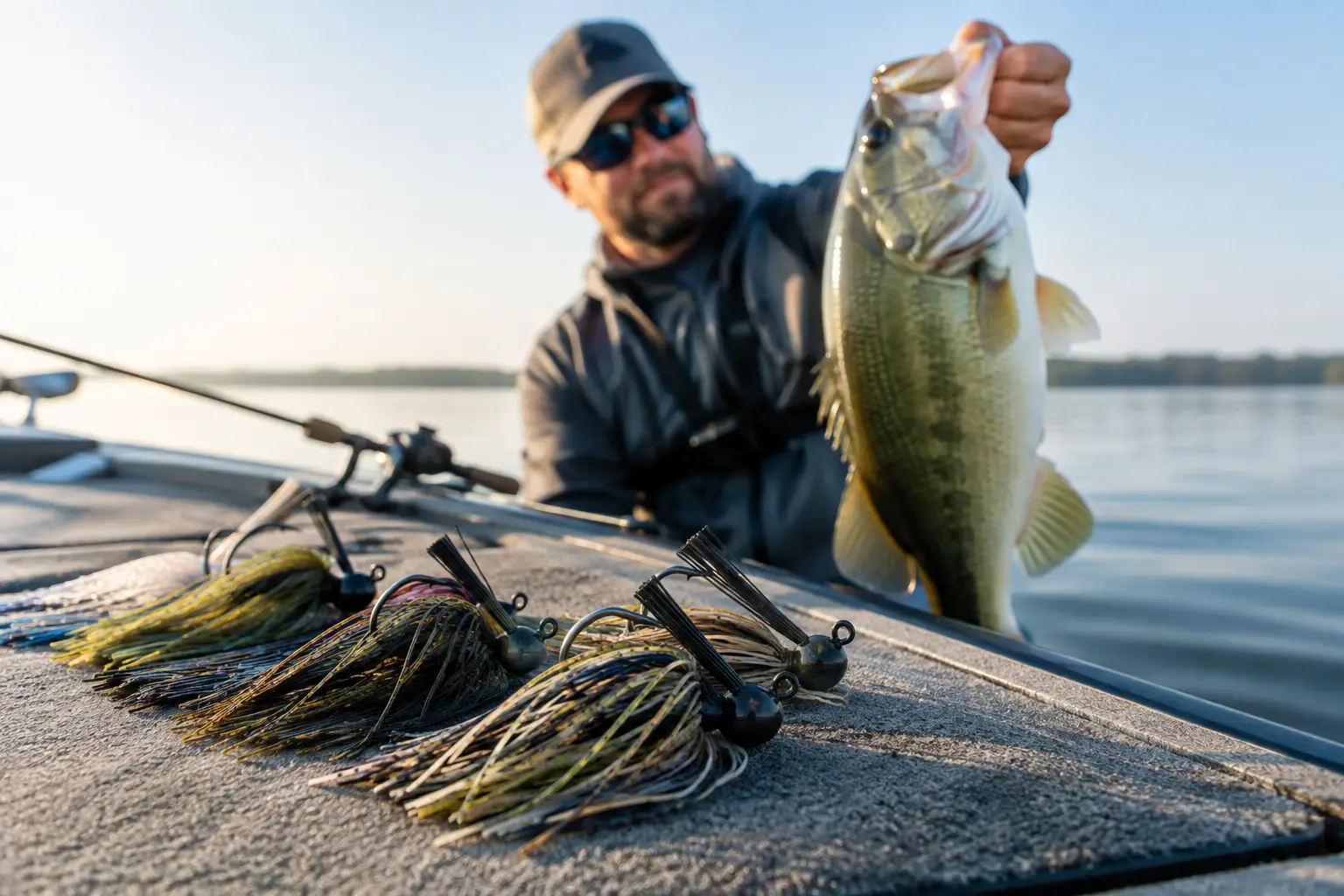
A bass jig is not the lure you throw when the easy bite is over. It is the lure you throw when you want to put a big fish in front of something it cannot ignore. Work a jig through the right piece of wood, skip it under the right dock, or crawl it along the right rock pile, and it has a way of finding the bass that other baits miss.
Why Bass Jigs Catch Big Fish
Jigs look like food bass already know. A compact skirt and trailer can pass for a crawfish, bluegill, shad, or some hard-to-identify meal trying to get away. More importantly, a jig gets into places where big bass feel safe: thick grass, laydowns, dock shade, brush piles, and the ugly stuff most anglers would rather fish around than through.
The big-fish reputation is not magic. A jig is usually worked slowly and tight to cover, which puts it in the strike zone longer. It also carries a solid hook and enough weight to reach the bottom or punch into the cover where a better-than-average bass is holding.
That does not mean a jig is only a cold-water bait. Bass will eat one every month of the year. The difference is how you choose the jig, what you put on the back, and how fast you fish it.
Choosing Bass Jigs for the Job
Start with the cover, not the color. The head shape, weed guard, and weight determine whether your jig gets where it needs to go. Color matters, but a perfect color does no good if the bait hangs every cast or never reaches the fish.
Flipping jigs for wood and heavy cover
A compact flipping jig is built for close-quarters work. Pitch it to a stump, root ball, dock post, bush, or matted edge. A stout hook and firm weed guard help it come through cover and give you the power to move a fish before it wraps you up.
Use a 3/8-ounce jig when you want a slower fall around shallow targets. Step up to 1/2 ounce when the wind is pushing, the cover is thicker, or fish are holding a little deeper. In truly nasty cover, a heavier jig may be necessary, but more weight also changes the fall. Let the fish tell you whether they want it crashing down or easing into the strike zone.
Football jigs for rock and offshore structure
A football-style head shines on hard bottom. It rocks and crawls over chunk rock, gravel, points, ledges, and offshore humps while keeping the hook upright. It is not the best choice for brush or thick grass, where that wide head can wedge itself into trouble.
This is a good jig for covering bottom with a deliberate retrieve. Cast long, let it hit bottom, then drag it with the rod. Pause it beside a boulder or change in bottom composition. A lot of bites feel like added weight, a soft stop, or a line that starts moving sideways.
Swim jigs for grass, shade, and baitfish
A swim jig stays moving. Fish it through shallow grass, along dock edges, beside reeds, and around bluegill beds. A streamlined trailer gives it a clean profile and keeps it from rolling over.
Unlike a bottom jig, the swim jig gets its drawing power from steady motion. Reel it just fast enough to keep the skirt breathing. Add a few twitches around holes in grass or when it passes a dock post. If a bass wakes behind it but does not commit, kill the retrieve for a second, then start it again.
Match the Trailer to the Bite
The trailer is half the bait. It controls bulk, action, fall speed, and profile. A big chunk-style trailer makes a jig look like a full meal and slows its fall. That can be the right move around shallow wood, in cooler water, or when fish are holding tight and refusing to chase.
A craw-style trailer brings more kick. Use it when bass are feeding on crawfish, when you need extra movement, or when stained water calls for a bait fish can locate. Trim the trailer shorter when you want a smaller, tighter profile for pressured fish or clear water.
For a swim jig, a paddle-tail or slender swimbait-style trailer adds baitfish action without too much drag. Keep it straight on the hook. A crooked trailer can make even a good swim jig roll over and run wrong.
Color should follow the water and the forage. In muddy water, black-and-blue is hard to beat because it creates a bold silhouette. In clearer water, green pumpkin and natural craw colors keep the presentation believable. If bluegill are the main meal around shallow cover, a jig with green pumpkin, brown, orange, or blue accents can be a strong choice.
How to Fish a Jig Without Fishing It Too Fast
The most common jig mistake is making a cast, hopping it back in a hurry, and missing the whole reason for throwing it. Bass jigs are target baits. Pick a target, make a precise cast, and give the bait time to do its work.
When flipping wood, let the jig fall on a controlled slack line. Watch the line closely. If it jumps, ticks, or starts swimming off before the jig should reach bottom, set the hook. Once it lands, shake it in place, lift it a few inches, and let it settle again. Then bring it out and hit the next target. Big bass often bite in the first few seconds after the jig enters their space.
Around docks, skip the jig as far into shade as you can. The darkest back corner, cross braces, and isolated posts are high-percentage spots. Let it fall beside each piece of cover on the way out instead of reeling it straight back to the boat.
On rock, slow down even more. Drag the jig with the rod rather than hopping it constantly. Crawfish do not jump three feet at a time across the bottom. Short pulls, long pauses, and occasional pops make the bait feel alive without overworking it.
In grass, a swim jig deserves a different approach. Keep the rod tip up and the bait moving. If it collects a strand of grass, snap the rod lightly to clear it. That quick burst is often when a bass eats.
Use Gear That Lets You Win the Fight
A jig hook needs a real hookset. For flipping, pitching, and heavy cover, a baitcasting rod around 7 feet to 7 feet 6 inches with a heavy or medium-heavy power gives you leverage. Braided line is a smart choice in matted grass and thick vegetation. Around wood, rock, and clearer water, fluorocarbon provides abrasion resistance and a little less visibility.
The exact setup depends on the jig and where you are fishing. A 1/2-ounce flipping jig in flooded bushes is a different job than a 3/8-ounce football jig on a deep gravel point. Match the line and rod power to the cover first, then to the fish you hope to catch.
Do not use a weak, sweeping hookset with a jig. Reel down until you feel the fish, then drive the hook home and keep steady pressure. Once that bass comes out of cover, do not give it a chance to turn back around.
Small Details That Get More Jig Bites
Check the weed guard before every trip. If it is splayed too wide, it can interfere with hook penetration. If it is trimmed too short, the jig may grab every stick it touches. Spread the strands slightly for thick cover, or trim just a little at an angle for more open water. Make small changes, not drastic ones.
Keep your skirt in good shape, too. Separate strands that have stuck together, straighten the trailer, and make sure the hook point is clean. Those are little things, but jig fishing is a close-range game. A bait that falls naturally and comes through cover cleanly gets more chances.
A well-built jig earns its place because it can take a beating. Hart Tackle Justice Jigs are made for anglers who expect their tackle to come through cover, hold up to hard hooksets, and stay in the fight when a good fish finally bites.
The next time you pull up to a dock line, a laydown, or a rocky point that just looks right, do not rush past it. Put a jig where a bass lives, let it sit for an extra second, and be ready. That one deliberate cast may be the one that catches the big one.
