
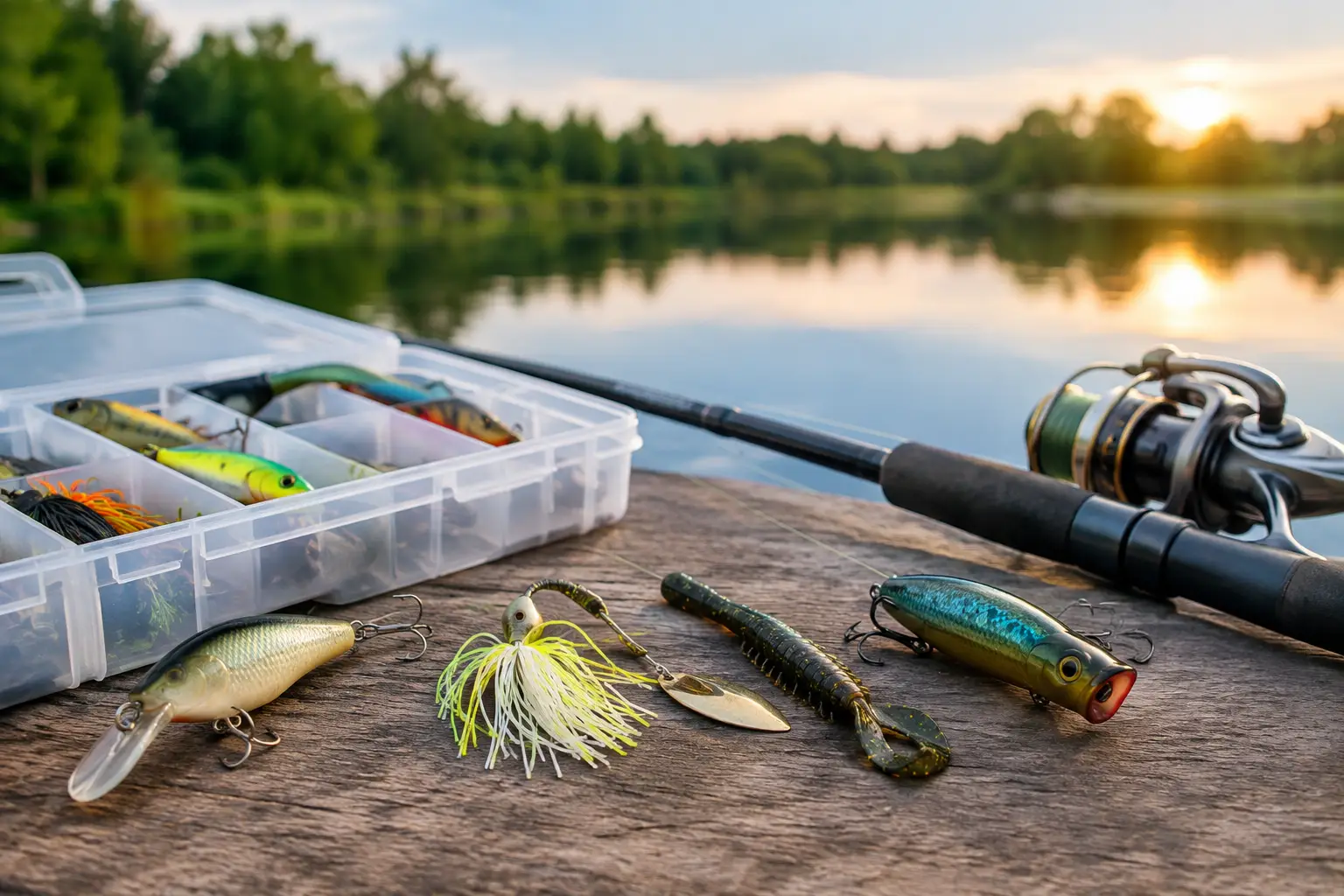
A pond can look easy until the bass quit showing themselves. There may be only a few acres of water in front of you, but pond bass still have food lanes, shade lines, shallow cover, and days when they flat-out refuse the wrong presentation. The best bass fishing lures for ponds are the ones that let you work those high-percentage places without hanging up every other cast.
Ponds reward anglers who pay attention. Instead of racing from spot to spot, fish the pieces of cover that hold the better fish: a laydown with a little depth beside it, the shady side of a dock, a weed edge, a culvert, or the first hard drop from a shallow flat. Pick a lure that fits the cover and the mood of the fish, then make accurate casts. That is how small water gives up big bass.
Start With What the Pond Gives You
Before tying on anything, look at three things: water color, available cover, and activity. A clear pond with scattered grass calls for a different approach than a muddy cattle pond full of flooded brush. You do not need a dozen rods to figure it out, but you do need to fish what is in front of you.
If bluegill are popping around the bank, bass may be shallow and looking up. If you see shad dimpling in open water, a moving bait can cover water quickly. If the pond is slick, hot, and quiet, slow down around the darkest, thickest cover you can reach. Bigger pond bass often spend daylight hours close to something they can hide under or beside.
Wind matters more than many anglers give it credit for. A breeze pushes plankton, bait, and oxygen toward one end of a pond. That windblown bank can turn on quickly, especially in spring and fall. On the other hand, a protected pocket may hold fish when a cold front makes the rest of the pond feel dead.
Best Bass Fishing Lures for Ponds by Situation
Buzzbaits for low light and shallow cover
A buzzbait is hard to beat when bass are feeding shallow. Fish it at daylight, late in the evening, under cloudy skies, or anytime the water has enough stain that bass can track a surface commotion. It shines around bank grass, wood, lily pads, and shallow flats where a treble-hook bait would spend more time snagged than fishing.
Keep the retrieve slow enough to make the blade work, but fast enough to keep the lure on top. The key is not simply making noise. It is running that bait past the places a bass can ambush from. Bring it tight along a grass edge, beside the darkest side of a laydown, or across the mouth of a small pocket.
When a bass blows up and misses, do not jerk the bait away. Keep it moving for another turn or two, then toss back with a soft plastic or jig if the fish does not come back. A missed buzzbait strike tells you the fish is interested. Give it an easier target.
Jigs for wood, shade, and bigger bites
If a pond has brush piles, dock posts, stumps, riprap, or thick bank cover, a jig belongs in the lineup. A compact jig with a trailer looks like a crawfish, bluegill, or easy meal slipping into a bass’s house. More importantly, it can be worked slowly where larger fish spend their time.
Pitch it past the target and let it fall on a controlled slack line. Watch for a tick, a jump in the line, or a fall that stops too soon. Many pond bites happen before the jig reaches bottom. Once it settles, use short hops or drag it a few inches at a time. Do not overwork it. In small ponds, bass see plenty of rushed presentations and often respond better to a bait that stays put.
For clear water, natural craw and bluegill shades are a safe bet. In muddy water or heavy shade, a darker jig creates a stronger silhouette. There is no magic color that works everywhere, but contrast matters when visibility gets low.
Soft plastics when the bite gets tough
A Texas-rigged worm, creature bait, or compact craw is the pond problem-solver. It slips through weeds, reaches fish buried in cover, and can be fished as slowly as conditions demand. When a cold front rolls through or the surface bite fades, this is often the lure that keeps the day alive.
Work a worm along the outside edge of grass first. If that does not produce, send it into the holes, under overhanging limbs, and against the base of isolated wood. Let it fall, shake it lightly, and give the fish time. Pond bass do not always travel far to eat, especially when the water is hot or the pressure is high.
A weightless stick-style bait is another strong option around shallow, calm water. Skip it under docks or twitch it beside visible cover. The slow fall does a lot of the work. If bass are following but not committing to faster lures, this is a smart change-up.
Spinnerbaits and spinners for stained water
When you need to cover water, a spinnerbait gives pond bass flash, vibration, and a target they can find. Run it around weed edges, alongside riprap, and across windblown banks. It is especially dependable when the water is stained, the sky is overcast, or a little chop is breaking up the surface.
Blade choice is not just tackle-shop talk. Colorado-style blades push more vibration and are useful in muddy water or low light. Willow-style blades run tighter and flash more, making them a solid choice when the water is clearer or baitfish are the main forage. A steady retrieve catches fish, but do not be afraid to briefly pause near a stump or speed up as the bait clears a grass point.
Smaller pond bass will hit a spinnerbait all day, but do not mistake that for a small-fish-only lure. Slow-roll a larger profile near deeper cover and it can draw a heavy strike from the fish that has been ignoring everything else.
Swimbaits when bass are chasing
A paddletail swimbait is a clean, natural-looking choice around baitfish. Fish it on a light jighead in open water, or rig it weedless when grass is involved. It works particularly well when bass are cruising shallow banks in spring or roaming near a pond’s deeper middle section in fall.
Keep the retrieve simple. Let it run just over the tops of grass or beside cover where a bass can shoot out and pin it. If you are getting followers, slow down or add a brief pause. A swimbait that suddenly looks wounded can trigger a fish that would not chase a straight retrieve.
Match Your Lure to the Season, Not the Calendar
Spring pond bass move shallow early, often before the rest of the lake crowd expects it. A buzzbait on warm afternoons, a jig around bedding cover, and a soft plastic around protected pockets are all strong choices. During the spawn, avoid assuming every shallow fish will bite. Some will guard aggressively, while others will only react to a bait placed right in their space.
Summer calls for timing. Fish early and late with topwaters and moving baits, then work shade, deeper weed edges, and thick cover with jigs and soft plastics once the sun gets high. In a shallow pond with little deep water, the best shade may be the only place holding quality fish.
Fall often gives you the best moving-bait fishing of the year. Bass follow bait toward shallow banks, and spinnerbaits, swimbaits, and buzzbaits can produce fast. In winter, slow down more than you think you need to. A compact jig or soft plastic fished near the deepest available water usually beats a fast retrieve.
Keep a Pond Lure Lineup That Makes Sense
You can cover most pond bass situations with a buzzbait, a jig, a Texas-rigged soft plastic, a spinnerbait, and a paddletail swimbait. That is not a rule against carrying more tackle. It is a way to keep from changing baits every five casts instead of learning what the pond is telling you.
Hart Tackle builds its lures for anglers who want to fish hard around the kind of cover that grows big bass, not hang pretty in a tackle box. Whatever brand is tied on, make sure the hooks are sharp, the bait runs true, and the setup matches the cover you are fishing.
The next time a pond looks quiet, do not write it off. Pick one piece of cover, make the best cast you have made all day, and work the lure like a good bass is sitting there. More often than not, that is exactly where one is.

3 Comments