
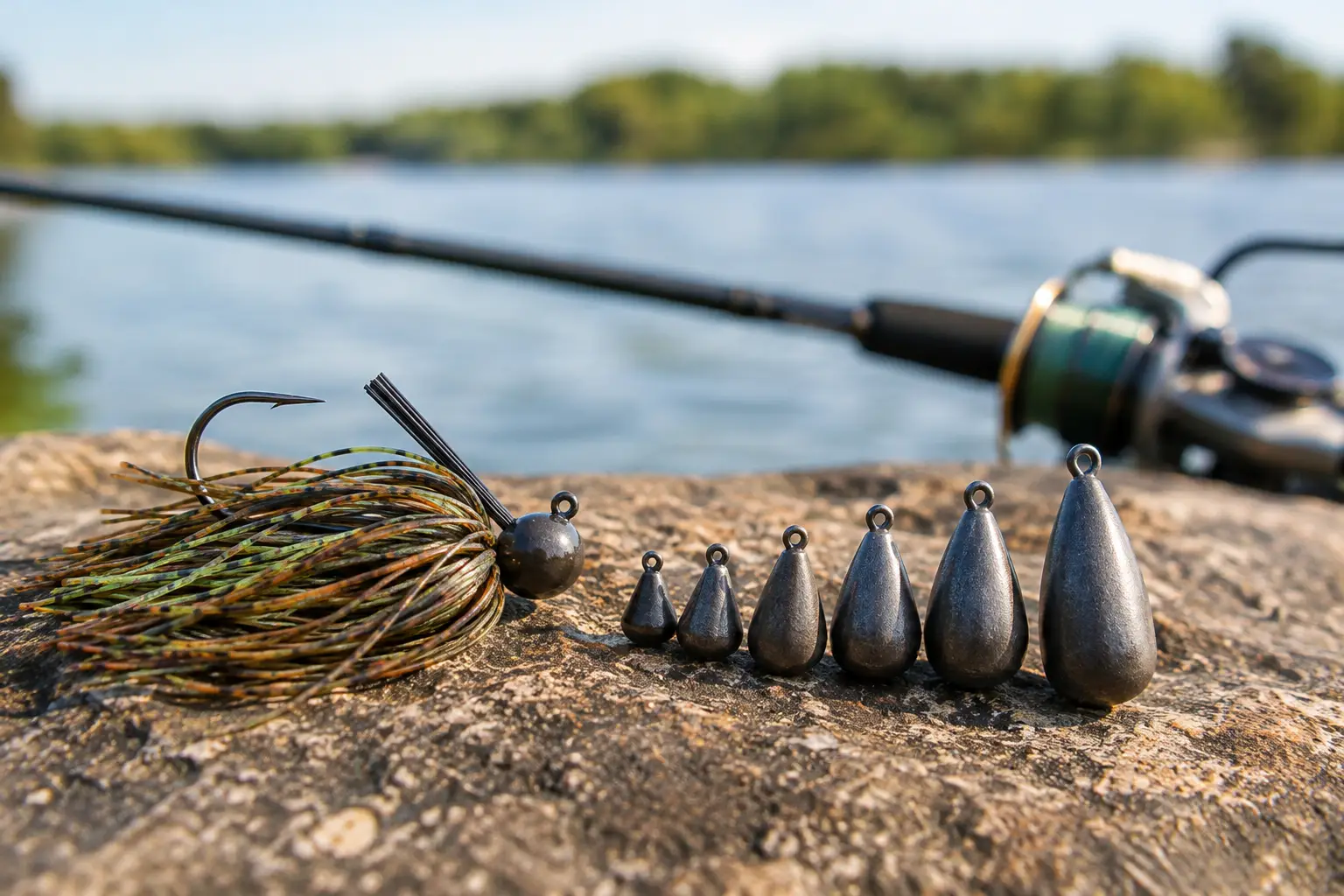
A bass jig weight guide is not about picking the heaviest jig you can throw. It is about getting the bait to the strike zone, keeping it there, and feeling what it is doing without turning a natural presentation into a cannonball.
Bass will eat a jig in a foot of water or 30 feet deep. The right weight changes with depth, wind, current, cover, the trailer you rig, and how active the fish are. Get that part right, and a jig stops feeling like a blind cast-and-drag bait. You can tell rock from wood, feel it crawl through grass, and recognize the soft tick that often means a bigger bass has it.
Bass Jig Weight Guide: Start With the Lightest Weight That Works
A good rule is simple: use the lightest jig that still reaches bottom and stays in contact with the cover you are fishing. That gives your jig a slower, more believable fall and lets a bass inspect it without watching it blast past their face.
But “lightest” does not mean “always light.” A 1/4-ounce jig is hard to beat around shallow docks on a calm day. That same jig can be nearly useless on a windy point in 15 feet of water. If you cannot feel bottom, cannot keep the bait in the zone, or cannot punch through the cover, add weight.
The goal is control. A jig that falls too slowly may never reach the fish. A jig that falls too fast may hang more often, skip past inactive bass, or look wrong in skinny water. Productive jig fishing comes down to matching the fall to the situation.
What Each Common Jig Weight Does
1/4 ounce: shallow water and a quiet fall
A 1/4-ounce jig shines in water from the bank to roughly 8 feet deep when conditions are calm. It is a strong choice for pitching laydowns, shallow brush, dock corners, sparse grass, and riprap where bass are feeding but not buried deep in cover.
This weight is especially good when water is clear or bass have seen plenty of pressure. It slips in quietly and falls slowly enough to stay in the strike zone. Pair it with a compact trailer if you want the lightest, most natural drop. A bulky chunk-style trailer adds water resistance and slows the fall even more.
The trade-off is feel. Light jigs can be tough to track in wind, on slack line, or around deep brush. If you lose bottom contact, move up.
3/8 ounce: the all-around starting point
For many bass anglers, 3/8 ounce is the workhorse. It has enough weight to pitch accurately, work through moderate cover, and maintain bottom contact in the 5- to 15-foot range without falling like a rock.
If you only had one jig weight in the boat, 3/8 ounce would make a strong case. It handles docks, secondary points, chunk rock, stumps, brush piles, and scattered grass. It is also forgiving when conditions shift during the day.
Use it when you are searching for a productive depth or cover pattern. The jig gets down efficiently, but you can still fish it with a controlled hop, drag, or slow crawl. That balance is why this is a dependable tournament weight and a solid weekend-fishing choice.
1/2 ounce: deeper targets and tougher cover
A 1/2-ounce jig is where bottom contact gets serious. It is a go-to choice for deeper docks, offshore brush, ledges, steeper banks, wind-blown points, and thicker grass. It also gives you better line control when a breeze puts a bow in your line.
This weight reaches 10 to 20 feet efficiently and stays useful beyond that when current is mild. In heavy cover, the extra weight helps the jig slip through openings and get to bass sitting under the mess instead of on top of it.
Do not assume a 1/2-ounce jig is only for deep water. In muddy water, on a cloudy day, or when bass are aggressive, the faster fall can trigger reaction bites around shallow wood and docks. Make a few pitches and let the fish tell you whether they want that quicker drop.
3/4 ounce: punching and offshore control
A 3/4-ounce jig earns its place when lighter weights cannot do the job. Think matted vegetation, deep timber, current breaks, river ledges, and offshore rock where wind makes a lighter jig hard to feel.
In grass, the weight needs to carry the jig through the canopy. If it sits on top, you are fishing over the fish. A 3/4-ounce jig creates enough momentum to break through and reach the bottom, where bass often wait for bluegill, crawfish, and anything else that falls through.
Offshore, this weight keeps your bait near the bottom instead of drifting around above it. That matters when fish are pinned tight to cover or holding in a small sweet spot. The drawback is a faster fall, so it can be too much for shallow, clear-water fish that want a slow look.
1 ounce and heavier: specialized heavy-duty work
A 1-ounce jig is a tool, not an everyday answer. Use it for thick mats, strong current, deep water, or situations where you need maximum bottom contact. It can also be effective on deep structure when bass are feeding aggressively and you need to make repeated, efficient casts.
Heavy jigs demand the right gear. A stout rod, dependable reel, strong knot, and line matched to the cover are part of the deal. Around thick vegetation, many anglers use braid for cutting through grass and moving fish out fast. Around rock, wood, and clearer water, fluorocarbon is often the better choice for abrasion resistance and a less visible presentation.
Depth Is Only Part of the Decision
Anglers often choose jig weight by looking at the depth finder, then stop there. Depth matters, but several other factors can matter just as much.
Wind changes everything. A 3/8-ounce jig may work fine in 12 feet on a calm morning, then become hard to feel when the afternoon wind starts pushing your line. Moving to 1/2 ounce can give you the control needed to detect a bite before the fish spits it out.
Current does the same thing. On rivers, tailraces, and current-swept reservoirs, jig weight must overcome moving water. If the current sweeps your jig away before it reaches bottom, add weight. If it wedges the jig naturally behind a rock or log, hold on. Those current breaks are prime feeding spots.
Cover also decides the weight. A jig in open rock can be lighter because nothing blocks its path. A jig in brush needs enough weight to reach the bottom branches. A jig in a grass mat needs enough force to penetrate. Match the head style to the job too. A streamlined, compact profile moves through vegetation better than a wide, bulky jig built for a slow crawl on rock.
Your Trailer Changes the Effective Weight
The number stamped on a jig head is only part of its fall rate. A large trailer with wide claws, flapping arms, or a thick body catches water and slows the drop. A compact chunk or trimmed trailer falls faster and keeps the package tighter.
That gives you an easy adjustment without changing the jig itself. If bass want a slower fall around docks, keep the 3/8-ounce jig and add a fuller trailer. If you need that same jig to get through brush faster, trim the skirt slightly and use a slimmer trailer.
Trailer choice also affects how the jig moves once it is on bottom. A floating trailer can keep the claws raised in a defensive crawfish posture. A denser trailer may keep the bait lower and more subtle. Neither is always better. Let water temperature, fish mood, and cover tell you what makes sense.
Know When to Change Weight
Do not keep dragging the wrong jig just because it is tied on. There are a few clear signs that a weight change is needed.
If you cannot consistently feel bottom, go heavier. If your jig lands on top of grass and will not break through, go heavier. If wind makes every cast feel loose and uncertain, go heavier.
On the other hand, go lighter when your jig is crashing into shallow cover, snagging too aggressively in sparse wood, or falling so fast that bass only follow it. A lighter jig can turn a rushed presentation into one that hangs in front of a fish long enough to get eaten.
Watch how bites happen. If bass hammer the jig as it falls, the drop is working. If they pick it up after it sits on bottom, spend more time dragging, pausing, and keeping contact with the cover. The jig weight should help you repeat the part of the retrieve that gets bit.
Make Every Jig Cast Tell You Something
A jig is one of the best tools for learning what is under the water. With the right weight, you can feel shell beds, gravel, chunk rock, hard clay, wood, and grass. That information is often more valuable than a single bite because it helps you find the kind of place bass use again and again.
Start with 3/8 ounce when conditions are ordinary, then let the water make the call. Go lighter for shallow, quiet, pressured fish. Go heavier for wind, depth, current, and cover that demands it. Keep your line reasonably tight, move the jig with purpose, and pay attention to every change in feel. The next big bass may not hit hard. It may only make your jig feel different.
