
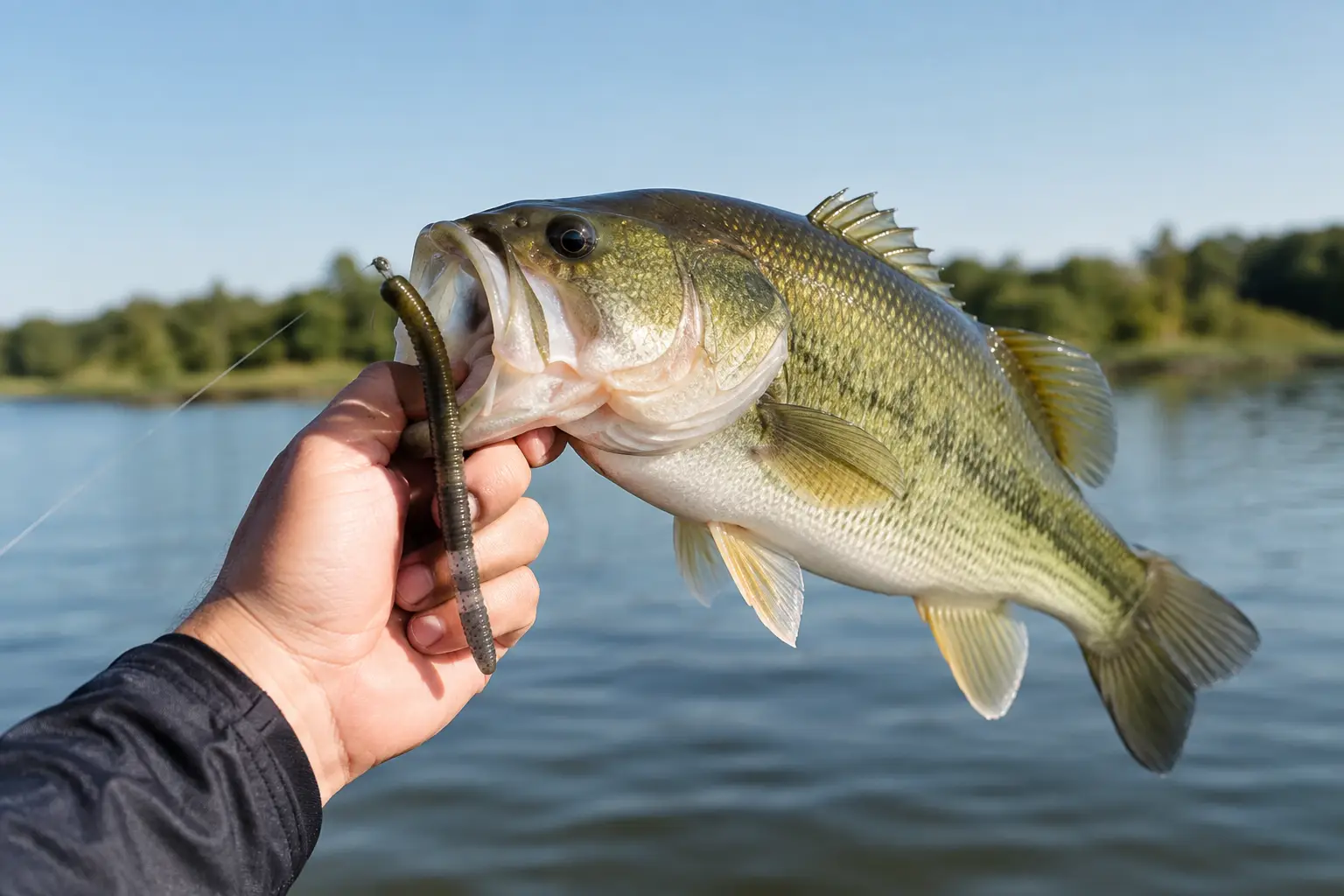
A rattle worm is not a bait you throw just to cover water. It is a bait you put where a big bass is already living, then work it slow enough to make that fish show itself. Learning how to fish rattle worms comes down to matching the rig, sound, and retrieve to the cover in front of you.
The rattle gives a worm something a plain soft plastic cannot always offer: a calling card. In stained water, low light, thick cover, or pressured places where bass are buried tight, that extra click can help them find the bait without turning the presentation into a noisy circus. The key is making the rattle help your worm, not overpower it.
Start With the Right Rattle Worm Rig
Most of the time, rig a rattle worm Texas style. It is weedless, straightforward, and built for the places where bass get big: laydowns, grass edges, brush piles, dock posts, shallow wood, and hard-bottom transitions with cover nearby.
Use a worm hook sized to the body of your plastic. A 3/0 or 4/0 offset worm hook handles many standard worms, while a heavier 4/0 or 5/0 hook makes more sense for a bulky, long-bodied bait. The hook needs enough gap to clear the plastic and still stick a fish, especially when a bass grabs the worm in heavy cover.
A pegged bullet weight is the best all-around choice when you are pitching targets. Pegging keeps the weight and worm together, so the whole package slips through grass and falls into small openings as one unit. Start with a 3/16- or 1/4-ounce weight for shallow cover. Move to 3/8 ounce when the wind is pushing your line, the grass is thicker, or you need to get down fast.
Insert the rattle in the thickest section of the worm, usually in the tail end or lower body. A rattle near the tail creates sound during short hops and shakes. One farther forward can click against cover as the bait falls and crawls. There is no magic spot for every worm, so test the action in the water beside the boat or bank before committing to a pattern.
For line, 15- to 20-pound fluorocarbon is a strong starting point around wood, docks, and sparse grass. In heavy matted vegetation, step up to 40- to 65-pound braid. Braid cuts through grass and gives you the leverage to pull a good fish out before it wraps you around trouble.
Where Rattle Worms Get Bit
Rattle worms shine when visibility is limited or bass are positioned tight to something. After a rain muddies a creek arm, the added sound can make a real difference. The same is true early in the morning, late in the day, and on dark, windy days when light penetration is low.
That does not mean clear-water anglers should leave them at home. In clearer water, use the rattle more selectively. A single subtle rattle fished slowly around a dock walkway, a deep brush pile, or a shady rock seam can call a bass out without making the bait feel unnatural.
The highest-percentage targets are the ones that offer shade, ambush points, and an easy meal. Pitch to the dark side of a dock, the base of a laydown, the outside edge of a grass line, or the intersection where a shallow ditch meets a flat. Let the worm fall on a semi-slack line and watch for a jump, twitch, or sideways drift. Plenty of bites happen before the bait ever reaches bottom.
If you are fishing a bank, do not make one cast to a laydown and move on. Work both sides of the trunk, every visible limb, and the shaded pocket underneath. Big bass often set up on the least obvious part of the cover, especially after it has seen a few boats go by.
How to Fish Rattle Worms on the Retrieve
The biggest mistake is overworking the bait. The rattle already adds attraction. Your job is to make the worm look alive, not make it dance nonstop.
After the cast, let the worm fall on controlled slack. Keep enough line loose for a natural drop, but not so much that you cannot see a bite. Once it reaches bottom, give the rod tip a short lift or two, then let the bait sit. Shake the slack lightly without moving the weight much. That small tail movement and soft click can be enough to get a bass to commit.
Around wood and docks, use a lift-and-fall retrieve. Pull the worm a foot or two, let it settle, then pause. When the weight touches a limb, post, or rock, do not immediately jerk it free. Hold tension for a second, shake the bait, and let it ease over. That moment of hesitation often produces the strike.
In grass, keep the worm moving in short hops. Let the weight contact the top or edge of the vegetation, then pop it loose with a quick snap of the rod. A rattle worm falling free from grass can trigger a reaction bite from bass sitting underneath. If the grass is too thick for a light sinker to penetrate, increase your weight before you speed up your retrieve.
When you feel a bite, reel down and hit the fish with a firm sweep. You do not need a wild overhead hookset, but you do need to drive a single hook through plastic and into the fish. Keep steady pressure after the hookset. A bass in brush or grass will use every second you give it to bury itself.
Match Color and Sound to the Water
Color still matters, but it should not turn into a tackle-box debate. In muddy water, choose darker colors that create a strong silhouette, such as black, junebug, black and blue, or dark grape. In moderately stained water, green pumpkin, watermelon red, plum, and red bug are dependable choices. In clearer water, lean toward natural shades and let the worm’s action do more of the work.
Rattle choice matters too. A louder, larger rattle is useful when water is dirty, wind is chopping the surface, or you are fishing thick cover where bass need help locating the bait. A smaller rattle is better for calm, clear water and heavily pressured fish. If you are getting follows or short strikes, try reducing the sound before changing the whole presentation.
This is one reason a well-built soft plastic matters. A worm needs enough body to hold the rattle and hook securely, but enough flexibility to move naturally when you shake slack line. Hart Tackle Rattle Worms are made for anglers who want that sound-and-action combination without giving up a clean, fishable profile.
Change the Angle Before You Change Baits
When a rattle worm is not producing, anglers often reach for another lure too fast. First, change the angle. A bass sitting on the upstream side of a stump may ignore a worm dragged past from one direction, then crush it when the bait falls naturally along the other side.
Make a few casts that land past the target and bring the worm into it. Then pitch directly beside it and let the bait fall vertically. On docks, hit the front posts, then skip or pitch deeper into the shade. Around grass, fish the outside edge before punching into the middle. Each angle gives the worm a different fall and puts the rattle in a different place relative to the fish.
Also pay attention to the depth where your bites happen. If every bite comes as the worm falls beside wood in two feet of water, do not waste an hour dragging it in ten. If fish are hitting after the bait rests on bottom, slow down and give them more time. Bass will tell you the deal if you let the pattern develop.
When to Leave the Rattle Out
A rattle worm is a tool, not a rule. In ultra-clear, slick conditions, the sound can be more than a cautious bass wants. The same can happen on heavily pressured lakes where fish see loud plastics all weekend. Remove the rattle and fish the exact same worm quietly.
You may also want less sound during a tough cold front. Bass can still eat a worm then, but they often prefer a bait that barely moves and stays in their face. A light weight, a subtle shake, and a long pause can beat a louder presentation when the bite gets stingy.
Put a rattle worm in the places that make bass feel safe, fish it with patience, and let the bait do its work on the fall. The next time a big one buries under a dock or disappears in a muddy laydown, give it a worm it can hear and an easy reason to bite.
