
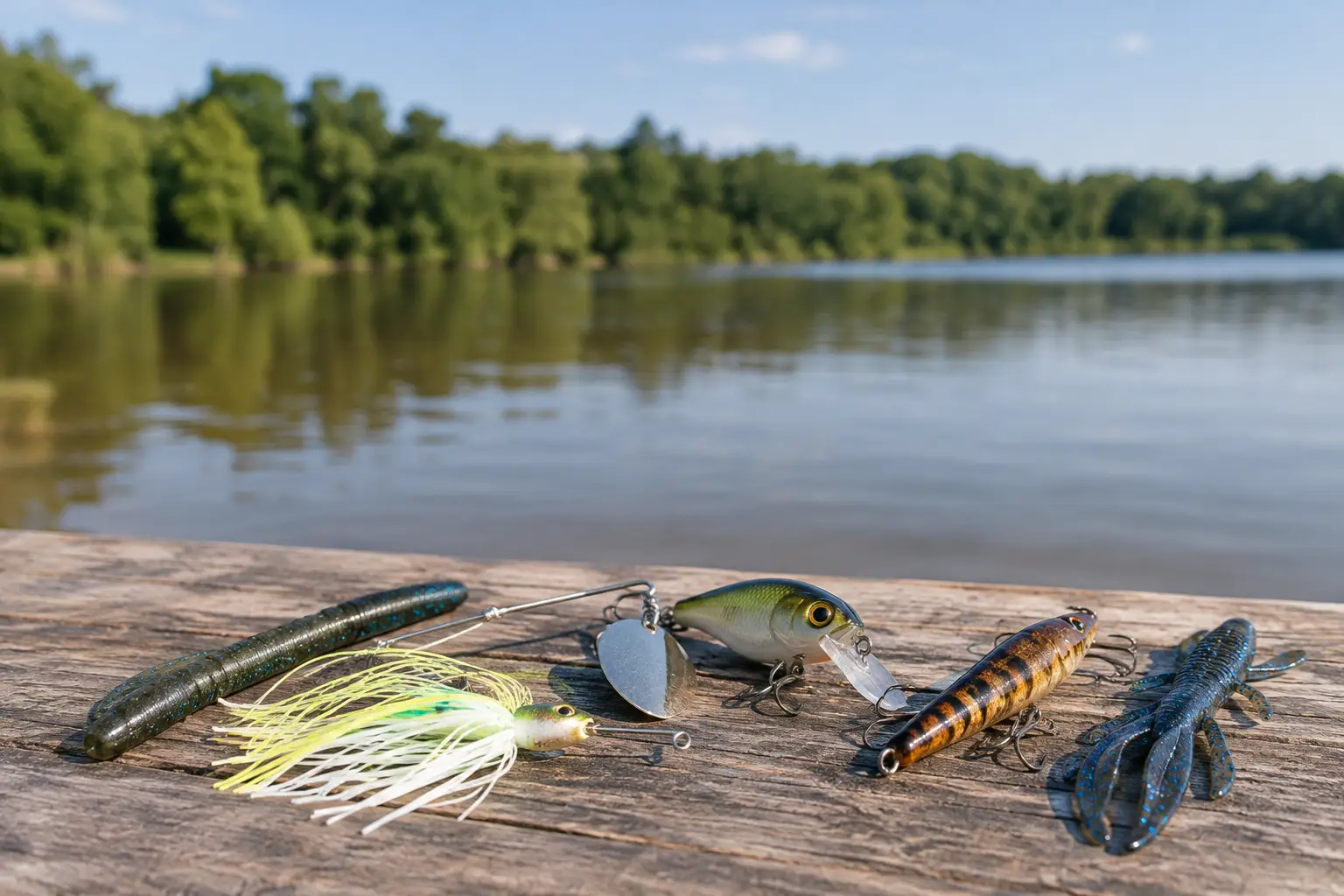
Stained water is where good lure choices separate themselves fast. A bass may only get a second or two to find your bait, so the best lures for stained water do more than look good in the package. They push water, throw flash, make noise, or show a clean silhouette that fish can track before the bait is gone.
That does not mean every muddy-water trip calls for the loudest bait in the boat. Stained water comes in degrees. A lake with 2 feet of visibility fishes a lot differently than a rain-swollen creek where you can barely see a lure beside the boat. Match your bait to the amount of color in the water, the cover, and the mood of the fish, and you will get more bites than simply tying on black and blue all day.
What Makes a Lure Work in Stained Water?
Bass do not quit feeding when the water gets dirty. They lean harder on their lateral line, which helps them feel vibration and pressure changes. They also hunt tight to cover, shallow banks, current breaks, and anything that gives them a short, easy ambush lane.
Your lure needs to announce itself without becoming so wild that fish cannot catch it. That is why blade thump, a steady rattle, a bulky profile, and a deliberate retrieve matter. In lightly stained water, flash and natural baitfish colors still carry plenty of weight. In darker water, contrast and vibration usually take over.
Start by judging visibility. If you can see a lure 18 to 24 inches down, you are dealing with light stain. Around 8 to 18 inches is classic stained water. Less than 8 inches is closer to muddy water, and that is where bigger profiles, stronger vibration, and darker contrast earn their keep.
Best Lures for Stained Water: Start With These Five
Spinnerbaits Cover Water and Call Fish
A spinnerbait is one of the safest first picks in stained water because it gives bass two easy targets: flash from the blades and vibration from the wire frame. It comes through wood, grass edges, and shallow brush well enough to keep casting instead of picking debris off your hooks.
For light to medium stain, a white or chartreuse-and-white spinnerbait is hard to beat. Use silver blades when there is enough light penetration for flash to matter. If the water is darker, the sky is overcast, or you are fishing later in the day, gold Colorado blades put out a heavier pulse and remain easier for fish to locate.
Willow blades are better when you need speed and flash around active fish. Colorado blades are better when the water is dirtier and you want thump at a slower retrieve. A tandem setup splits the difference. Keep the bait running just high enough to tick grass, stumps, dock posts, or laydowns. Contact often triggers the bite.
Buzzbaits Shine Shallow When Bass Are Looking Up
Do not wait for perfectly clear water to fish a buzzbait. Stained water can be prime time, especially when bass are holding shallow around bank cover, grass, wood, or spawning areas. The surface disturbance gives fish a clear line to follow, and the commotion can pull a big one from places where a quieter bait goes unnoticed.
White is a strong all-around buzzbait color because it stands out against the sky and resembles a fleeing baitfish. Black is a better choice in low light, heavy stain, or muddy water because it creates a strong silhouette from below. If you are fishing around bluegill, a darker head with a chartreuse or blue accent can be a smart change-up.
The key is pace. Retrieve a buzzbait only fast enough to keep it on top, then run it close to the cover. Do not burn it six feet away from the target and expect the same results. Make casts that scrape past a stump, run alongside a grass line, or land tight to a dock float. If a fish blows up and misses, keep it moving for another second before following back with a jig or soft plastic.
A well-built buzzer matters here. It needs to start running immediately, stay upright, and keep working after it bangs through cover. Hart Tackle builds its buzzbaits for that kind of work, not for hanging on a pegboard.
Jigs Catch the Fish That Will Not Chase
When stained-water bass are buried in wood, sitting under docks, or holding tight to a hard piece of cover, a jig is often the better answer. It is slower, more precise, and built for the fish that will not run down a moving bait.
Black and blue is popular for a reason. It offers strong contrast, looks substantial in the water, and works from light stain all the way into muddy conditions. In water with a little more visibility, green pumpkin with a dark trailer or a brown-and-orange jig can get more natural bites around crawfish habitat.
Use a bulky trailer when you need more water displacement and a slower fall. A chunk-style trailer keeps the package compact and can be better around heavy cover or pressured fish. Pitch the jig past the target, let it fall on a semi-slack line, then work it with short hops and pauses. Most bites come on the fall, when the jig first settles against the cover, or when it crawls over a limb.
Bladed Jigs Bring Vibration Without Giving Up Profile
A bladed jig is a strong middle ground between a spinnerbait and a jig. It has the hard thump needed for stained water, but the skirt and trailer give it a fuller meal-like profile. That makes it especially useful around grass, flooded bushes, riprap, and shallow flats where bass are feeding but not committed to the surface.
Go with white, chartreuse-and-white, or a shad pattern when baitfish are present. Black and blue is tough to beat in dirty water, around dark-bottom ponds, or on a cloudy day. A paddle-tail trailer adds more movement, while a craw-style trailer slows the bait down and makes it hunt a little harder.
Keep the retrieve steady at first. If you feel the blade stop vibrating, pop the rod tip and get it going again. Letting the bait bump grass and then snapping it free is one of the best triggers in stained water. That sudden burst often looks like prey trying to escape.
Soft Plastics Clean Up Behind Moving Baits
Soft plastics are not always the fastest way to find fish in stained water, but they are how you catch the fish that show themselves and refuse your moving bait. A Texas-rigged creature bait, worm, or compact craw can go places a spinnerbait cannot and stay in front of a bass longer.
For dark stain, choose colors that create contrast: black and blue, junebug, black grape, or dark green pumpkin with a colored tail. In lighter stain, green pumpkin, watermelon red, and shad-colored soft plastics can still work well, especially when bass are feeding on bluegill or crawfish.
Add a bead or use a bait with built-in rattles if the water is truly dirty. That extra sound can help fish locate the lure, but do not assume it is mandatory. In shallow wood and grass, the splash of the bait entering the water, the displacement of the plastic, and a patient presentation are often enough.
Match Color to Visibility, Not Just Water Color
The old rule of bright colors in dirty water and natural colors in clear water is useful, but it is not the whole deal. Water color, sky conditions, depth, and forage all affect what bass see. Chartreuse can be excellent in stain because it remains visible, but a black bait can stand out even better when the water is dark and the fish are looking upward.
A good working rotation is simple. Start with white or chartreuse-and-white for baitfish presentations. Switch to black and blue when visibility drops or you are fishing thick cover. Use green pumpkin, brown, or orange when crawfish are the main meal and the water still has enough clarity for a more natural look.
Do not get trapped in color changes every ten minutes. If your bait has the right vibration, depth, and path through the cover, color is often the final adjustment, not the first one.
Retrieve Speed Is Part of the Lure Choice
Stained water usually rewards a retrieve that is steady enough for fish to track. That does not always mean slow. Active bass in warm, stained water will crush a fast spinnerbait or buzzbait, especially in shallow cover. The difference is that your bait should run predictably enough for a bass to home in on it.
When the water is cold, muddy, or rising after rain, slow down and make repeated casts to the best targets. A jig, slow-rolled spinnerbait, or bladed jig worked just above the bottom can be a better bet than covering every bank at top speed. When the water is warm and fish are positioned shallow, pick up the pace with a buzzbait or spinnerbait and let the fish tell you how aggressive they are.
Pay attention to the kind of bite you get. If bass are swiping and missing, your bait may be moving too fast, running too high, or lacking a trailer. If they are choking it, keep the same speed and color until the pattern changes.
The next time the water has that tea-colored look after wind or rain, do not treat it like a bad fishing day. Pick a bait that can be felt or seen, put it close to cover, and make every cast look like an easy meal. The big ones are still there. You just have to give them something they can find.
