
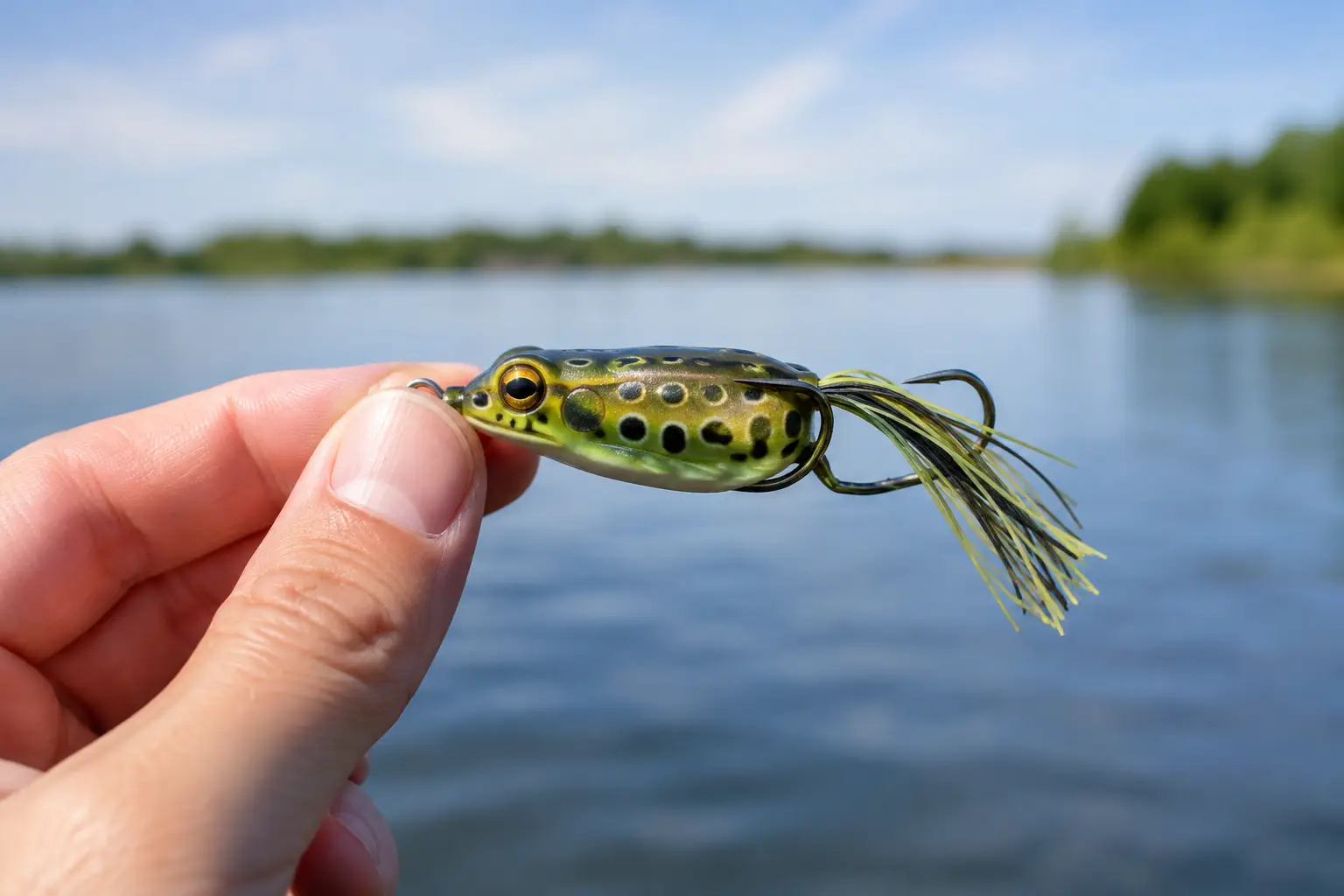
A buzz frog shad earns its keep in the places where a regular topwater either hangs up or looks too easy to ignore. Run one tight to grass, over flooded brush, beside dock posts, and across shallow flats where bait is moving. The buzz, wake, and bulky profile give bass a target they can track without asking you to fish slow.
This is a lure for anglers who want to cover water but still expect a big bite. It can call fish from a distance, slip through nasty cover, and put a meal-sized silhouette over the kind of shallow water that holds a better-than-average bass. But it is not magic. Timing, angle, retrieve speed, and a clean hookset matter.
What Makes a Buzz Frog Shad Different?
A buzz frog shad brings together two things bass see often: the surface disturbance of a fleeing baitfish and the broad, kicking shape of a frog or shad. Instead of quietly sliding through a pocket, it announces itself. The blade or buzzing action churns the surface while the body tracks straight enough to stay in the strike zone.
That noise is the point. In stained water, low light, wind, or heavy cover, bass may not get a perfect look at your lure. They do not need one. They can feel the vibration, see the surface commotion, and zero in on a moving target that looks worth the effort.
Compared with a hollow-body frog, a buzz frog shad is generally better for covering water and creating a steady commotion. Compared with a standard buzzbait, it offers a fuller profile and can look more like actual forage. The trade-off is simple: a loud, moving bait is not always the answer when fish are pressured, the water is slick calm, or bass are feeding on tiny bait.
When to Throw a Buzz Frog Shad
The best window is not limited to dawn and dusk, though those times are hard to beat. Start with low light, overcast skies, a little wind, or water with some color. Those conditions let you make a little more noise without showing bass every detail of the bait.
Shallow grass is prime territory. Fish the outside edge first, then bring the lure across holes, lanes, points, and isolated clumps. A bass sitting under a mat may not chase far, but one positioned on the edge of a grass line can blast a buzzing bait moving just overhead.
It also shines around wood. Run it past laydowns, stumps, flooded bushes, and standing timber, especially when the water is warm and bait is shallow. Make repeated casts from different angles. The first cast might tell a fish something is nearby. The second or third can put the bait on the exact line it wants.
Do not overlook bank shade. On a sunny day, a shaded dock walkway, seawall corner, overhanging bush, or steep bank can hold a bass that is ready to eat. Cast past the target and bring the lure through the shade instead of landing it right on top of the fish.
Season matters, but water conditions matter more. In late spring through early fall, a buzz frog shad can be a regular player. During a warm front or a fall baitfish push, it may produce all day. When water cools sharply, fish pull deeper, or bass are glued to the bottom, put it down and pick up a jig, worm, or other slower presentation.
Four conditions that call for it
- Wind pushing into shallow banks or grass edges
- Stained water where vibration helps bass locate the bait
- Active baitfish around flats, pockets, and creek arms
- Heavy cover that keeps bass shallow and confident
How to Fish a Buzz Frog Shad Without Wasting Casts
The first job is getting the bait running immediately. Make a long cast, engage the reel before it touches down when possible, and begin turning the handle as the lure lands. A bait that starts buzzing right away spends more time where the fish are.
A steady retrieve is the baseline. Keep the lure moving just fast enough to create a clean surface disturbance without rolling over or blowing out. If the bait runs straight and throws a consistent wake, you are doing enough. Most anglers hurt this presentation by adding too much rod movement.
Still, do not fish every cast like a machine. When you reach a grass point, stump, dock post, or opening in the weeds, change something. Pause for a split second if the bait can stay on the surface, speed it up, or give it a short burst. That small change often looks like prey trying to escape cover.
Angles are as important as retrieve speed. Bring the bait parallel to grass edges and dock walkways whenever you can. A bass positioned under the edge gets a longer look, and the lure stays in the strike lane instead of crossing it for only a second. Around isolated targets, cast beyond the cover and pass tight to the shady or current-facing side.
If a fish blows up and misses, do not jerk the bait away. Keep reeling for a beat. Many bass come back and eat it on the next turn of the blade. If it does not return, make the same cast again. Then follow with a soft plastic or jig if the fish showed itself but would not commit.
Gear That Helps You Land the Blowups
Topwater strikes can make a grown angler swing early. The cure is simple: keep the bait moving until you feel the fish load the rod, then drive the hook home. Seeing the explosion is exciting. It is also the fastest way to pull a bait away from a bass if you react before it actually has the lure.
A medium-heavy to heavy casting rod gives you the backbone to pull fish away from grass and wood. A rod around 7 feet to 7 feet 3 inches is a useful range for most anglers, with enough length for casting and leverage without feeling clumsy around tight cover. Match it with a baitcasting reel that picks up line quickly enough to keep the lure buzzing.
Line depends on the cover. Braided line is the right call around thick vegetation, pads, matted grass, and nasty laydowns because it cuts through cover and gives you direct control. In lighter cover or clearer water, fluorocarbon or monofilament can work, but make sure the line lets your bait run properly and gives you confidence when a big fish eats close to the boat.
Check your hook point often. Grass, wood, and repeated strikes can dull or foul it. Also inspect the bait after every fish. A crooked body, a torn keeper, or a blade that is not running true can turn a great topwater bite into a frustrating one.
Color Choices for Real Fishing Conditions
Start simple. White or shad colors are dependable when bass are feeding on baitfish or when the sky is bright enough for fish to see the profile. Black is hard to beat in low light, muddy water, and at night because it makes a sharp silhouette against the sky.
Natural frog shades fit green vegetation and shallow ponds where bass are used to seeing frogs, bluegill, and small panfish. If the water is dirty, do not get too caught up in matching every detail. Choose a color you can see well enough to guide through cover, then let the sound and surface action do the work.
The best color is often the one you keep in the water. A buzz frog shad needs time in productive cover. Instead of changing colors every five minutes, change your casting angle, move to a better stretch, or adjust retrieve speed first.
Put It Where Big Bass Live
A buzz frog shad is built for aggressive fishing. It lets you cover a shallow flat, probe a grass edge, and pick apart cover without changing baits every few casts. That makes it a strong choice when you are looking for active fish and want the chance at one that is sitting shallow with its shoulders up.
Hart Tackle anglers know the value of a bait that gets attention and holds up when the cover gets mean. Fish it with purpose, stay ready through the strike, and do not leave a good-looking stretch after one pass. The next cast tight to that grass clump may be the one that catches the big one.
