
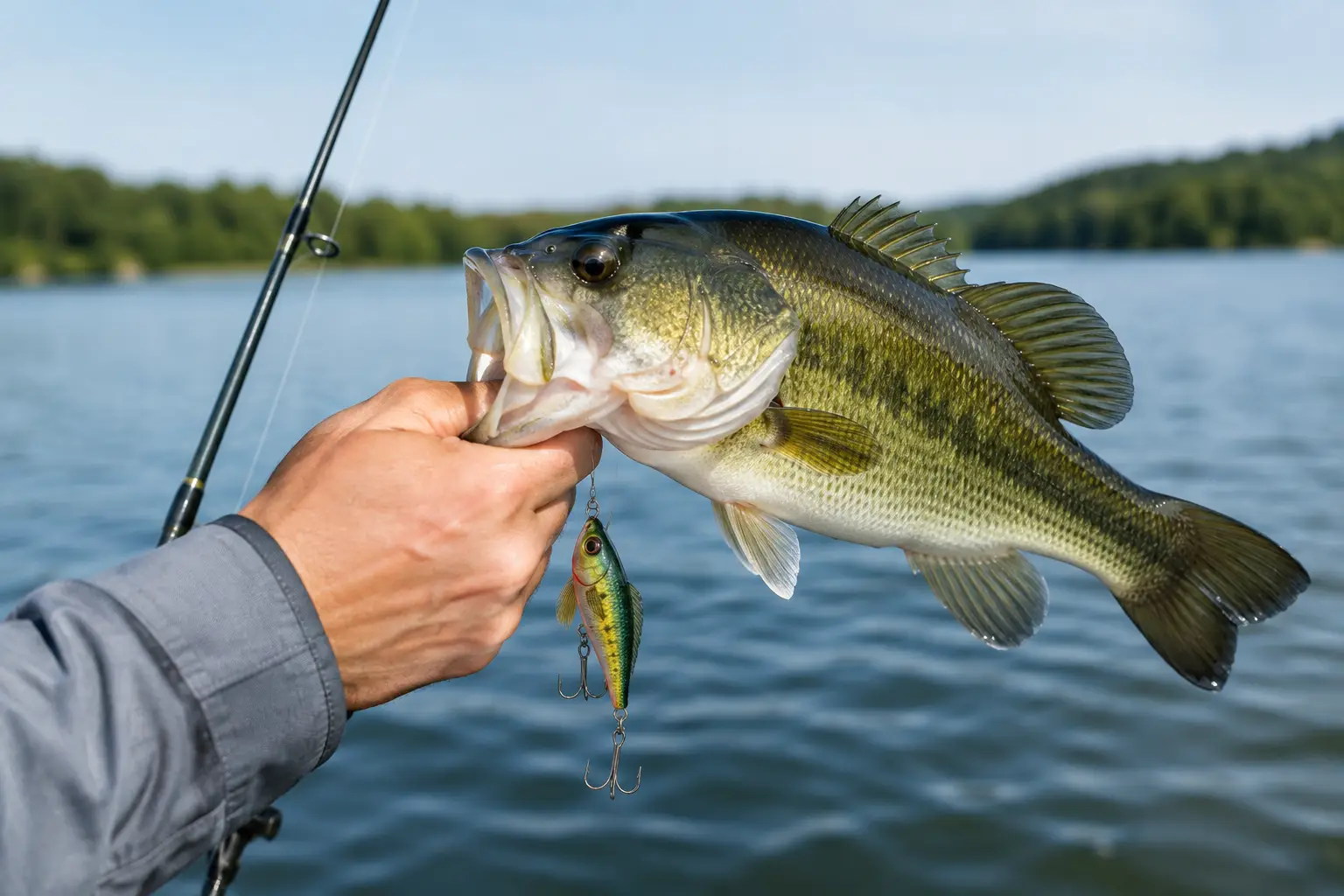
A bass blowing up a buzzbait beside a laydown is no time to wonder whether your wire will twist, your skirt will slide, or your hook will lose its edge. Durable bass lures earn their place in the boat because they keep working after the cast that should have wrecked them. They take abuse, keep their intended action, and give you the confidence to put another cast where the biggest fish lives.
Durability is not about owning a lure that looks new forever. A good bait will get scratched, chewed, and bent a little over a hard season. What matters is whether it still tracks true, runs right, hooks fish, and holds together when a heavy bass makes one last run at the boat.
What Makes a Bass Lure Durable?
The toughest-looking lure is not automatically the one that will fish best. Some components need to be stout, while others need enough give to create action and avoid breaking. The right balance depends on the bait and where you plan to throw it.
On a buzzbait or spinnerbait, start with the wire frame. It has to be strong enough to handle repeated fish and contact with cover, but it cannot be so heavy that the bait loses vibration or becomes hard to tune. A quality frame returns close to its original position after a fish, a stump, or a bad collision with the trolling motor. If the arm stays spread wide, the bait may roll over, track crooked, or miss the sweet spot that made it productive.
Hooks are just as important. A sharp hook gets talked about more than a durable one, but you need both. The point should stay sharp after contact with rock, wood, and fish mouths, while the hook itself needs enough backbone to turn a good fish. A hook that opens on a big bass is not a bargain, no matter how cheap the lure was at checkout.
Then there are the small pieces anglers tend to overlook: split rings, swivels, skirt collars, blade clevises, molded bait keepers, and trailer hardware. These parts carry a lot of the load. A spinner with a weak swivel can quit spinning. A jig with a loose skirt collar can turn into a bare head after one fish. A soft-plastic bait without a solid hook keeper can slide down the shank every few casts and ruin the presentation.
Durability Means Consistent Action
A lure can survive and still be done. That is the part many anglers miss.
A buzzbait with a bent blade may still sputter across the surface, but if it no longer squeaks, clacks, or planes quickly the way you need, it has lost part of its job. A swimbait might have no tears in the body yet lose its tail kick because the plastic has stiffened or the tail joint has weakened. A spinnerbait can look fine while a slightly bent wire arm causes the blade to run off-center.
The real test is simple: Does the bait still do what you bought it to do? If it does, keep throwing it. If it does not, repair it, retune it, or retire it before it costs you a fish.
Durable Bass Lures by Style
Different lure families fail in different ways. Fish them with that in mind and you will get more productive casts from every bait.
Buzzbaits and Spinnerbaits
These are moving baits built for contact, speed, and reaction strikes. They can cover water fast, but their exposed wire makes them vulnerable when they collide with hard cover or get crushed in a rod locker.
After a fish, look down the wire from the head toward the line tie. If the head, hook, and line tie are no longer aligned, make a small adjustment before the next cast. Do not wrench the frame back and forth. Small corrections are easier on the wire and more likely to preserve the bait’s action.
A quality buzzbait deserves a trailer that matches the job. If you are waking shallow grass, choose a trailer with enough body to help it plane fast. Around wood or heavy fish, use a trailer and hook setup that lets you keep pressure on them. The lure is only as dependable as the whole package tied to your line.
Jigs
A jig takes a beating because that is often where it shines. It gets crawled over rock, skipped under docks, punched through cover, and dragged through brush where big bass feel safe. A durable jig needs a secure weedguard, a stout hook, a well-tied skirt, and a head shape suited to the cover.
Do not confuse a stiff weedguard with a better weedguard. Too stiff and it can cost you hookups. Too soft and it folds over on the first brush pile. Trim or fan the fibers only after you fish the jig enough to know how it comes through your local cover. One adjustment can make it more effective, but over-trimming is permanent.
Check the knot and line above the jig often. The jig may be built to survive a dozen fish, but a frayed line against riprap will not.
Soft Plastics and Swimbaits
Soft plastics are not supposed to last forever, especially when bass are feeding hard. Still, there is a difference between a bait that gets torn because it is catching fish and one that splits after a couple casts.
Dense, well-poured plastic holds a hook better and stays in place longer. A cleanly molded bait also runs more consistently. On a paddle-tail swimbait, inspect the tail connection before using it. That thin section creates the kick, so it is usually the first place to fail after repeated fish or aggressive retrieves.
When a soft bait starts sliding down the hook, straighten it before you cast again. A crooked worm or swimbait will not run naturally, and fishing it that way can tear the body faster. Save slightly damaged plastics for lighter cover or short-strike situations, but do not force a bait that is no longer presenting right.
Make Your Lures Last Without Babying Them
Good tackle should be fished hard. That does not mean tossed loose into a cluttered compartment where hooks, blades, and line ties bang together all day. A little care keeps your baits ready without turning tackle maintenance into a weekend project.
After a trip, let wet lures air out before closing the box. Moisture causes hooks and hardware to rust, especially if a bait has been sitting under a wet rain suit or in a livewell splash zone. Keep soft plastics out of extreme heat. A bag left on a hot truck deck can warp tails, bleed colors, and turn a great bait into a mess.
For hard baits, buzzbaits, spinnerbaits, and jigs, make a quick inspection part of putting rods away. Feel the hook point against your thumbnail. Check wire alignment. Pull lightly on skirts and trailers. Look for line damage at the knot. These checks take seconds and prevent the kind of failure that happens at the exact moment a five-pounder eats.
Do not be afraid to use a lure with battle scars. A chipped head, tooth marks, or a chewed-up skirt can mean that bait has already proven something. Just make sure the scars are cosmetic, not functional. A beat-up lure that still runs true often has more fish-catching character than a fresh one straight out of the package.
When Tougher Is Not Better
There is a trade-off. Heavier wire, thicker hooks, harder plastics, and oversized components can add strength, but they can also change the action that triggers bites. In clear water or on pressured lakes, a lighter-wire spinnerbait may pulse better and get more bites. In open water, a softer swimbait may move more naturally than a tougher one.
Match your bait to the fight. Around docks, flooded timber, grass, and big fish, lean toward components that can take punishment. When conditions call for finesse, choose the action that gets bit and accept that you may give up some life from the bait. The goal is not to make every lure indestructible. The goal is to make every cast count.
Hart Tackle builds baits for anglers who would rather make the cast into the nasty stuff than watch somebody else do it. Fish your best lures with confidence, check them before they fail, and keep the ones that still run right in rotation. Big bass do not live where tackle stays pretty.
