
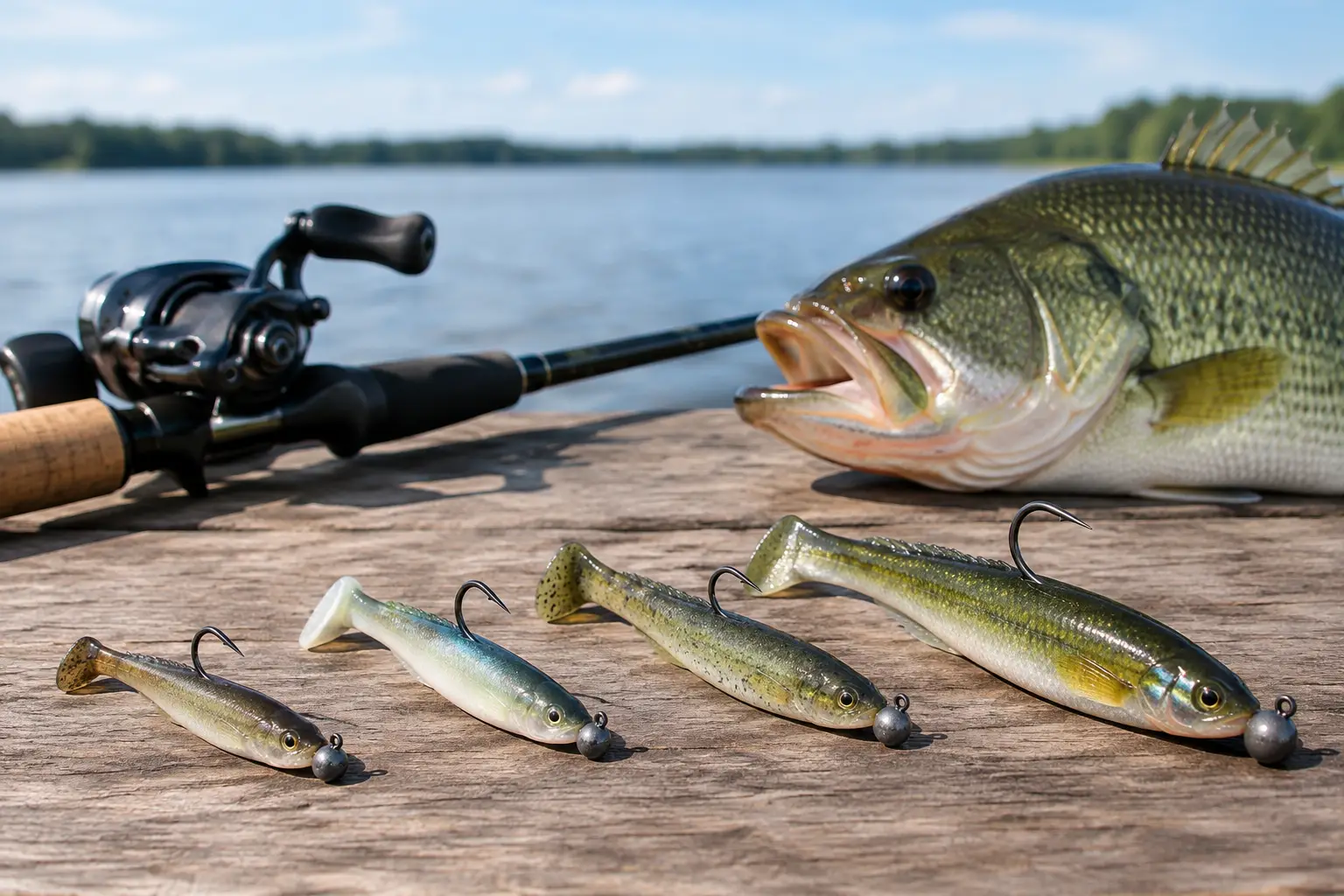
A soft swimbait can have the right color, the right tail kick, and the right spot on the lake, then still come back to the boat untouched because the hook is wrong. This swimbait hook size guide cuts through the guesswork. Match the hook to the bait’s body depth, length, and the cover you are fishing, and your bait will track straighter, look more natural, and stick more fish.
The goal is not to use the biggest hook that will fit. It is to use enough hook for a clean hookup without choking the bait’s action or leaving so little gap that the plastic balls up in the bite.
Start With Hook Gap, Not Just Bait Length
Anglers often size a swimbait hook strictly by bait length. That is a decent starting point, but body depth matters more. A skinny 5-inch paddletail may need a smaller hook than a bulky 4-inch bait because the thicker body takes up more of the hook gap.
Look at the distance from the point to the shank, commonly called the gap. Once the hook is buried or skin-hooked in the plastic, you still need enough open gap to clear the bait and find the fish’s mouth. If the bait fills nearly all that space, a bass can bite down, compress the plastic, and never get hooked.
As a practical rule, choose a hook that leaves roughly one-third of its gap open after the swimbait is rigged. That is not a hard law. Thick, tough plastics and heavy cover can call for a little more room. Thin, soft baits fished in open water can get away with less.
Common Soft Swimbait Hook Sizes
For most bass anglers, these hook sizes cover the bulk of paddletail swimbaits:
| Swimbait Size | Typical Hook Size | Best Starting Point | | — | — | — | | 2.8 to 3.3 inches | 1/0 to 2/0 | 1/0 for slim bodies, 2/0 for thicker bodies | | 3.5 to 4 inches | 2/0 to 3/0 | 3/0 for most standard paddletails | | 4.5 to 5 inches | 3/0 to 4/0 | 4/0 when the body has real thickness | | 5.5 to 6.5 inches | 4/0 to 6/0 | 5/0 is a dependable all-around choice | | 7 inches and larger | 6/0 to 10/0 | Size up based on body depth and target fish |
Treat that chart as a starting line, not the finish. Hook manufacturers do not all size their hooks the same way. One company’s 4/0 can have a wider gap than another company’s 5/0. Put the hook against the actual bait before rigging a whole pack.
Choose the Right Swimbait Hook Style
A hook’s size means little if its style does not fit the job. The three most common options for soft swimbaits are a weighted screw-lock hook, a belly-weighted EWG hook, and a jighead.
A screw-lock hook is a strong choice when you want to fish a paddletail weedless around grass, wood, docks, or shallow shoreline cover. The spring at the nose holds the bait straight and helps it survive more fish. Pick a spring that fits the bait’s nose without splitting it apart. On a 4- to 5-inch swimbait, a 3/0 or 4/0 weighted screw-lock is often right at home.
A belly-weighted EWG hook brings the bait down while keeping the point protected. It works well when you need a slow, level retrieve through shallow grass or want to skip a bait under a dock. The trade-off is that an extra-wide-gap hook can spread a narrow swimbait body and make it roll if the hook is oversized. If your bait starts listing to one side, check the rigging before blaming the lure.
A jighead is the call for open water, rock, sparse cover, and situations where a totally exposed point will produce better hookups. It is hard to beat for targeting suspended bass, counting a bait down on a point, or slow-rolling a swimbait along a channel break. Use a jighead with a hook long enough that the point comes out around the midpoint of the bait, not way back near the tail.
For hollow-body swimbaits, use the hook style and size recommended for that particular bait when possible. These baits are built differently than solid paddletails. A hook that is too small can collapse poorly and miss fish, while one that is too large can tear the bait or ruin its swimming posture.
Match Weight to Depth and Retrieve Speed
Hook size and hook weight work together. A 3/0 hook may fit a bait perfectly, but the wrong amount of lead can make that bait run too high, drag bottom, or roll on a steady retrieve.
For a 3.5- to 4-inch paddletail in less than 5 feet of water, a lightly weighted hook around 1/16 to 1/8 ounce is usually enough. Go heavier when you need to reach deeper water, fish current, or keep the bait down on a faster retrieve. A 1/4-ounce belly weight is useful for deeper grass edges and windy points, but it can overpower a small, thin swimbait.
Watch the bait on the first few casts. A properly rigged swimbait should track true, kick consistently, and stay upright at the speed you plan to fish. If it rolls, first make sure the hook entered the nose dead center and came out of the back in a straight line. A crooked rig is the most common cause of a bait that spins.
Let Cover Decide How Much Hook You Need
Open water gives you room to use an exposed hook and maximize hookups. Thick grass, laydowns, and brush demand a more weedless setup, but going fully weedless comes with a price. You need a firmer hookset and a hook gap wide enough to clear plastic and cover.
In milfoil or hydrilla, a 4-inch swimbait on a 3/0 or 4/0 belly-weighted hook is a solid all-purpose setup. Skin-hook the point just under the plastic’s back so it stays clean through the grass. Do not bury the point deeply. That makes the bait more snag resistant, but it also makes the hook much harder to drive home.
Around sparse grass or dock posts, an exposed jighead often gets more bites and converts more of them. Bass do not hand out bonus points for fishing the most weedless rig possible. Give them the cleanest presentation the cover will allow.
Signs Your Swimbait Hook Is the Wrong Size
The bait will usually tell you when something is off. A hook that is too small may sit buried in a thick body, leave no usable gap, or bend under heavy pressure. You may feel a bite, swing, and come back with the bait balled up on the hook.
A hook that is too large can tear the bait’s nose, make a slim paddletail roll, or pin the body so tightly that the tail loses its easy kick. It can also make a small bait look unnatural in clear water when the hook wire and bend are easy to see.
Missed fish are not always a sizing problem. Short strikes can mean bass are feeding on small bait, following but not committing, or just swatting at the tail. Before changing hooks, try slowing down, changing colors, or moving to a slightly smaller swimbait. But if the plastic is consistently shoved down into the gap after every strike, move up one hook size or choose a wider-gap model.
A Quick Rigging Check Before You Cast
Rig the hook point straight through the center of the bait’s nose. Lay the hook alongside the swimbait before inserting the point to mark where it should exit the back. That small step prevents a bent body, and a bent body kills action.
Once rigged, hold the bait up by the line tie. It should hang straight. Then pull the tail through the water beside the boat or at the bank. If it runs upright with a steady thump, you are ready. If it leans, spins, or keeps sliding down the shank, rerig it now instead of fishing a bad presentation for an hour.
At Hart Tackle, we like tackle that earns its place with fish in the boat, and a properly matched hook is part of that deal. Keep a few hook sizes in the box, pay attention to body thickness, and let the cover dictate your rig. The next time a big bass blows up on your swimbait, you will have the gap and bite you need to make that cast count.
