
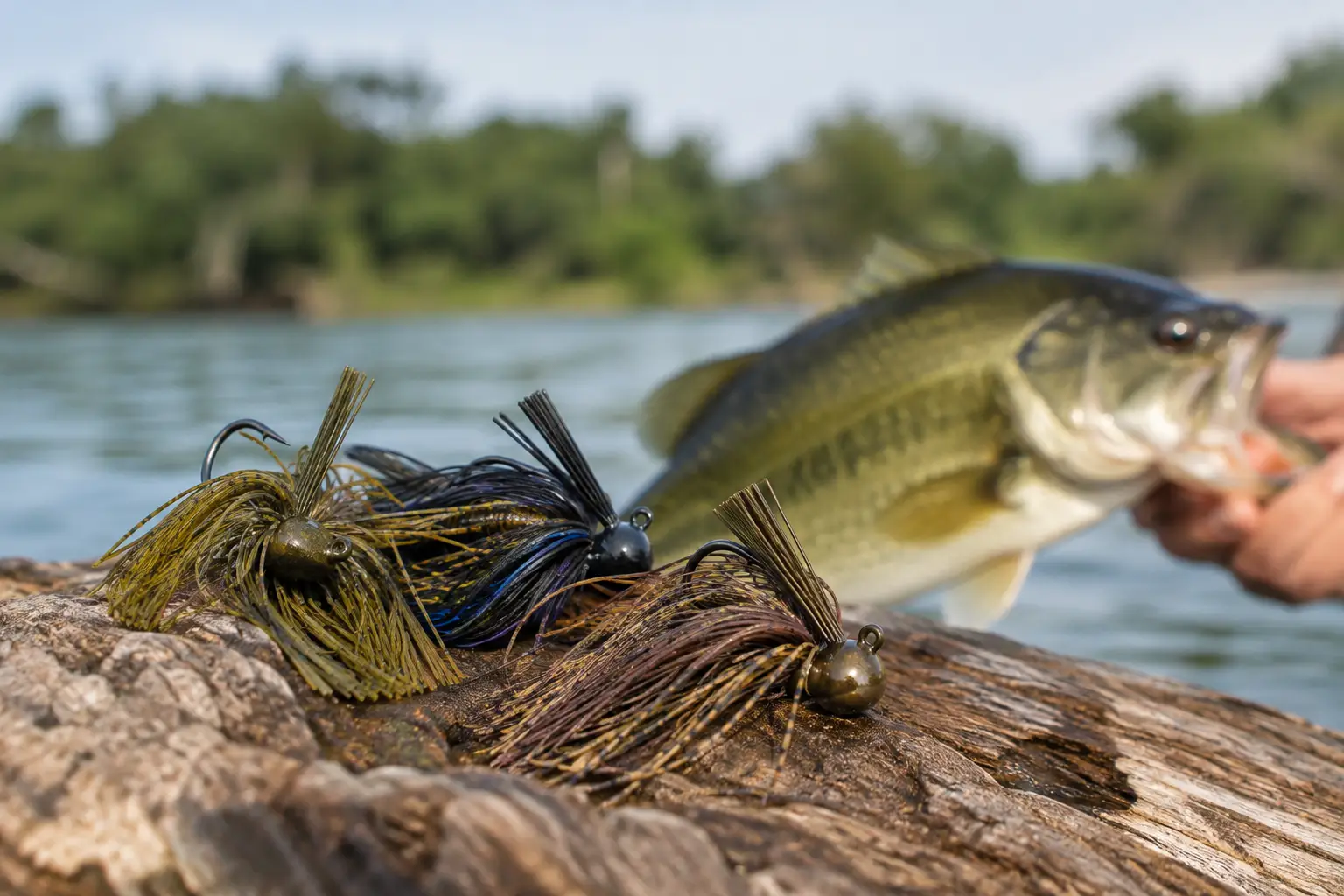
A bass buried under a laydown, tucked beneath a dock float, or sitting in a grass mat is not waiting on an easy meal. It expects crawfish, bluegill, and baitfish to come through the same tight places it calls home. The best jig for heavy cover is the one you can put in that strike zone, work naturally, and pull free when a big fish bites.
That sounds simple until you start pitching into flooded bushes, matted vegetation, dock cables, and gnarly timber. A jig that looks good in the package can hang every other cast. One that comes through clean may have a hook that is too light for hard hooksets and thick braid. The answer is not one magic jig for every lake. It is matching the jig to the cover and fishing it with enough confidence to let it do its job.
What Makes the Best Jig for Heavy Cover?
A heavy-cover jig needs four things working together: a compact head, a stout hook, a properly tuned weedguard, and a skirt-and-trailer combination that moves water without becoming a snag magnet. Miss one of those pieces and the jig becomes harder to fish where the biggest bass live.
The head shape comes first. For wood, bushes, dock posts, and mixed hard cover, a pointed or tapered flipping-style head slips through limbs better than a broad, flat profile. It should be compact enough to enter a tight opening but heavy enough to get down through the cover. A 3/8-ounce jig is a strong starting point for shallow targets and lighter vegetation. Move to 1/2 ounce when you need a faster fall, have wind to fight, or are working thicker cover.
Matted grass is its own deal. When the canopy is thick, a heavier jig, often 3/4 ounce or more, may be needed just to break through. Weight is not about showing off a heavy rod. It is about getting the bait to the fish. If the jig keeps landing on top of the mat, bass underneath never get a chance to see it.
The hook has to match the job. Heavy cover calls for a strong, sharp hook that will not flex when you set hard with braid. A light-wire hook has a place with lighter line and open-water presentations, but it is not the first pick when a five-pound bass turns sideways in a bush. Check the point often. One trip across a rock, dock bracket, or stump can dull it enough to cost you the bite you waited all day for.
A weedguard should deflect cover, not block hooksets. Too stiff, and the jig comes through clean but misses fish. Too soft, and it folds over on every twig. The best guards have enough backbone to part grass and brush while compressing when a bass bites. If a guard is overly long or spread too wide for the way you fish, trim it carefully. Take off a little at a time. You cannot put it back.
Match Your Jig to the Cover
Heavy cover is not one thing, and treating it that way leads to wasted casts. Start by looking at what is actually below the surface and what kind of path the jig has to travel.
Wood, laydowns, and flooded bushes
Wood is where a compact flipping jig earns its keep. Pitch past the thickest limb you can reach, let the jig fall on a controlled line, and watch for the line to jump, twitch, or stop before it should. Most bites happen on the initial fall or after the jig bumps a limb and drops free.
Do not just pitch the outside edge of a laydown. Work the intersections where several limbs meet, the dark pocket under the trunk, and the back side that gets less pressure. A bass in wood often pins a jig before it ever feels like a clean thump. If your line moves sideways, set the hook.
A craw-style trailer is a dependable choice here. It adds a bulky profile and slows the fall without turning the jig into a sail. In stained water, a trailer with active claws can help fish find it. In clear water or on heavily pressured lakes, a more subtle chunk trailer often gets more bites.
Docks and hard targets
Docks demand accuracy more than brute force. Skip or pitch a compact jig into the shade, especially around cross braces, floats, cables, and the darkest corners. A smooth head and clean weedguard matter because every hang-up under a dock wastes time and announces your presence.
Color can be simple. Black and blue is tough to beat in dirty water, deep shade, and muddy runoff. Brown, green pumpkin, and craw patterns are solid when the water has more visibility. Do not get trapped changing colors every ten minutes. Put a jig where a bass can eat it first.
Grass, reeds, and vegetation
In scattered grass, a 3/8- or 1/2-ounce jig can be worked like a crawfish moving from clump to clump. Let it fall beside stalks, shake it in openings, then pop it free. That pop is often the trigger. Bass sitting in grass are used to seeing prey struggle and suddenly break loose.
In thick reeds or hyacinth, use enough weight to get down quickly and keep the profile compact. A long, floppy trailer can catch vegetation on the way through. Shorten the trailer or choose one with a tighter shape when penetration matters more than extra action.
With a true mat, make repeated pitches to the same high-percentage holes. A single opening may hold several fish, and the best one may not bite until the jig falls right beside it. Let the bait reach bottom if possible, give it a couple of deliberate hops, then get it out and hit the next opening. Heavy mat fishing is a game of efficient repetition.
Weight, Trailer, and Line Work as a System
Anglers sometimes treat jig weight, trailer choice, and line size as separate decisions. In heavy cover, they are tied together.
A larger trailer creates more lift and slows the fall. That can be great around wood or shallow grass when bass want a slower target. But it can keep a 1/2-ounce jig from penetrating thick vegetation. Before jumping to a heavier jig, try trimming the trailer first. A smaller profile may get through cleanly while still giving the jig enough bulk to attract a bigger bite.
For most serious heavy-cover work, braided line gives you the control and pulling power you need. It cuts vegetation better, transmits bites, and helps move a fish before it wraps you around a limb. A stout baitcasting rod with a fast action lets you pitch accurately and drive the hook home. The goal is not to winch every bass across the surface. It is to turn its head early and keep it from taking control.
There are exceptions. In clearer water around sparse wood and wary fish, fluorocarbon can be a good choice if you are not dealing with a jungle of cover. It offers less visibility and a bit more stretch, but you give up some ability to saw through grass and muscle fish out. Let the cover decide, not habit.
Retrieve It Like Something Alive
A jig does not need a complicated retrieve. In fact, too much movement is one of the fastest ways to make it look wrong. Pitch it, let it fall, and pay attention. If it reaches bottom, lift it just enough to make it crawl over the cover, then let it settle again.
When the jig contacts a limb, rock, or grass stem, do not immediately rip it away. Pause. Shake the slack lightly. Then pop it free. That change from stuck to free looks like a crawfish escaping, and it gets crushed.
Keep your eyes on the line instead of waiting only for a tap. In heavy cover, bass may pick up the jig and swim toward you, pin it against a stump, or simply add weight. If anything feels different, reel down and hit them. A hard hookset is part of the presentation when you are fishing a heavy-wire jig in thick cover.
Confidence Beats Constant Switching
The biggest mistake with a heavy-cover jig is quitting on it too soon. It is not a fast, wide-search bait. It is a tool for putting a meal where a big bass feels safe. That takes patience, accurate casts, and the willingness to hit the best target from more than one angle.
A well-built jig such as a Hart Tackle Justice Jig gives you a dependable starting point, but the angler still makes the difference. Fish the right weight for the cover, keep the hook sharp, use a trailer that matches the conditions, and make every pitch count.
When you pull up to a stretch of ugly cover that everyone else is avoiding, do not see a mess. See the places a big bass can hide, feed, and stay comfortable. Put your jig in the hard-to-reach spot, stay ready for a line twitch, and catch the one that lives there.

4 Comments