
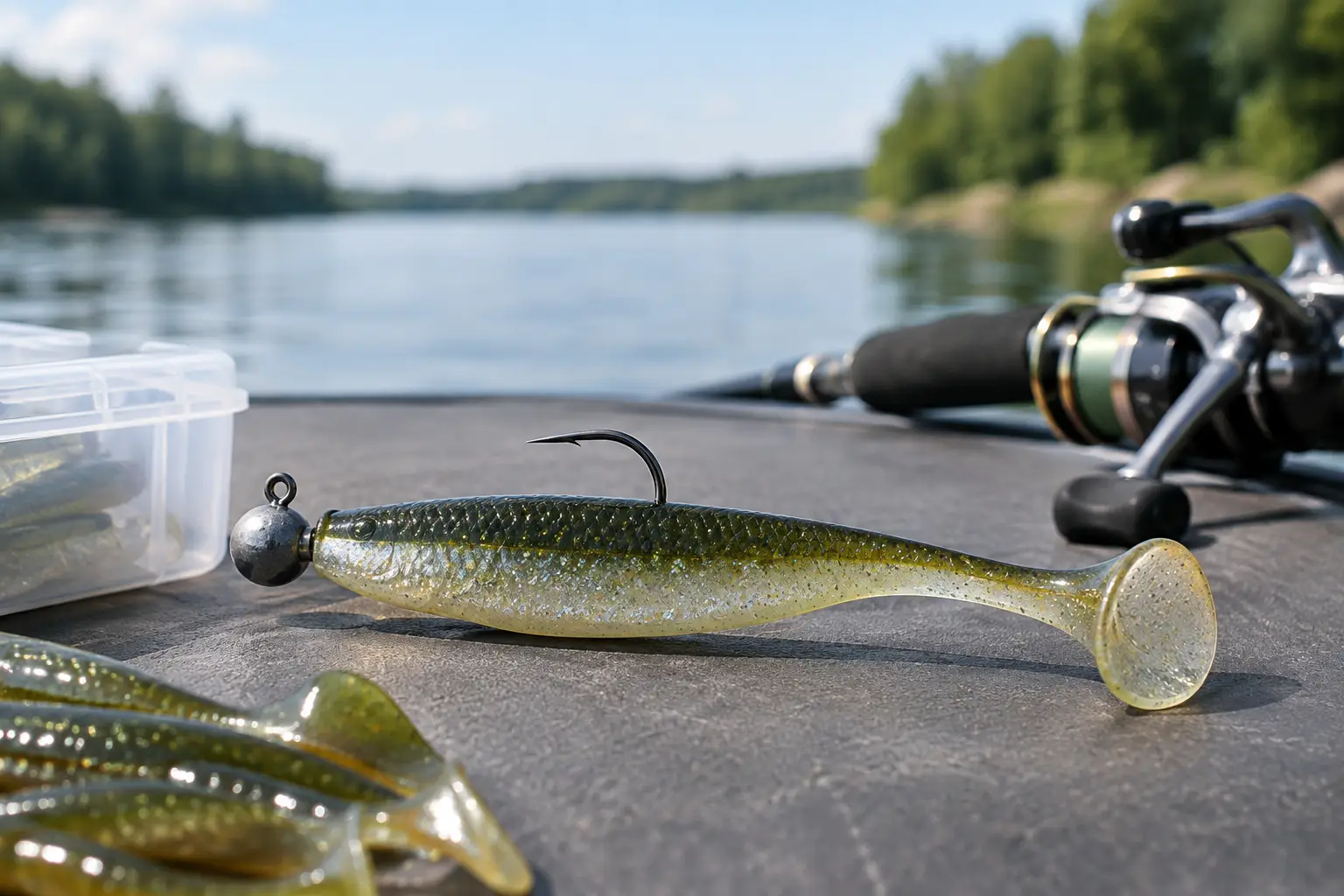
A paddle tail can look like an easy bait: put it on a hook, throw it, wind it back. Then you watch it roll, drag sideways, foul in grass, or come back with no bites while somebody else catches them on the same point. Paddle tail swimbait rigging is what separates a bait that merely moves from one that tracks true, thumps hard, and gives a bass an easy target.
The right setup depends on where the fish are holding. Open-water bass, shallow grass fish, dock fish, and ledge fish do not require the same hook, weight, or retrieve. Get the bait straight first. Then build the rig around depth and cover.
Start With the Swimbait Itself
Paddle tails come in a lot of body shapes, and that shape tells you plenty about how to rig them. A slim 3.5-inch bait with a narrow tail is usually at home on a light jighead or small belly-weighted hook. It starts kicking with little forward movement and makes a fine choice around schooling fish, creek mouths, and clear-water banks.
A thicker 4- to 5-inch swimbait pushes more water and calls for more hook. If the body is deep, a tiny wire hook can choke the action and cost you fish. Use a hook with enough gap that the point has room to clear the plastic and find the fish’s mouth. If you have to mash the body flat to expose the point, step up in hook size or choose a wider-gap model.
Color matters, but it comes after profile and action. In clear water, shad, pearl, smoke, and natural baitfish colors keep the presentation honest. In stained water, a white belly, chartreuse tail, or darker back can help fish find it. When bass are feeding on bluegill around grass or docks, a green pumpkin, sunfish, or perch pattern often gets more attention than another white bait.
Paddle Tail Swimbait Rigging by Cover and Depth
The simplest question is this: do you need the hook exposed, or do you need it protected? An exposed hook gives you the best hookup percentage. A weedless hook lets you put the bait where bigger bass often live. Neither one wins everywhere.
Jighead Rigging for Open Water
A jighead is the cleanest option for open banks, bluff walls, offshore schools, rock piles, and suspended fish. It keeps the bait balanced and lets it fall naturally. Thread the bait onto the keeper so the hook comes out exactly on the centerline of the back. If it exits even a little left or right, the swimbait will lean, spin, or pull to one side.
For most bass fishing, a 1/8-ounce jighead is a solid shallow starting point. Go lighter when fish are high in the water column or you need a slow fall. Move to 3/16 or 1/4 ounce when wind, current, or depth makes it tough to stay in contact. The goal is not to fish the heaviest head possible. The goal is to run the bait at the depth where bass are feeding without killing its natural action.
A round-ball head works well for a basic steady retrieve. A more streamlined head can come through deeper water cleanly and stay stable at faster speeds. If you are crawling bottom on rock, expect some snags. That is the trade-off for an exposed hook and a better hookset.
Belly-Weighted Hooks for Grass and Wood
A belly-weighted swimbait hook is a workhorse around submerged grass, laydowns, dock posts, and shallow bushes. The weight below the bait helps it swim level, and the weedless hook point lets you slide through cover that would eat a jighead.
For a 4-inch paddle tail, a 3/0 or 4/0 hook is commonly right. For a bulky 5-inch bait, a 4/0 or 5/0 often fits better. Those are starting points, not law. Match the hook to the body depth and make sure the point rests flat against the back without bending the bait.
Use a lighter belly weight when you are waking the bait over grass or slow-rolling it beside docks. Use more weight when you need to get through the top of hydrilla, keep the bait down on a windy flat, or count it to a certain depth. A swimbait that rides upside down usually has a crooked rig, an undersized hook, or a weight that does not balance the bait well.
Unweighted Hooks for the Skinny Stuff
When bass are buried in shallow vegetation, an unweighted screw-lock hook can be the right call. It lets you skip a paddle tail beneath docks, twitch it through flooded cover, or bring it over matted grass where a weighted bait digs in too quickly.
The trade-off is control. An unweighted bait is harder to cast into the wind and harder to keep below the surface. It shines when the water is warm, shallow, and full of places a bass can ambush prey. Let it fall into holes in the grass, then give it a few turns of the reel handle and pause. That little drop is often where the bite happens.
How to Rig a Paddle Tail Straight
Most swimbait problems start before the cast. Hold the hook beside the bait and mark where the point should exit. Push the point into the nose dead center, then run it through the body in a straight line. Do not rush this part. A crooked bait is not a small mistake.
With a screw-lock hook, twist the spring into the nose first, keeping it centered. Lay the hook alongside the body again before bringing the point through the back. The bait should sit straight without a hump, twist, or stretched nose. If the plastic bunches near the eye, back it off and rerig it.
Tex-pose the hook point when cover is heavy. Bring the point through the back, then barely tuck the tip beneath the skin. This keeps the bait cleaner in grass while still allowing the hook to drive through on a firm sweep. In sparse cover, leave the point resting on top of the back for quicker hookups.
A drop of plastic adhesive at the nose can save a bait after several fish, especially on a screw lock or jighead keeper. Use it sparingly. Too much glue makes bait changes a headache and can ruin a soft plastic that only needed a quick repair.
Match Your Line and Rod to the Job
Line changes how a paddle tail fishes. Fluorocarbon is a good choice for jigheads, deeper water, and clear conditions because it sinks and gives you solid contact. Braid is hard to beat in thick grass because it cuts vegetation and helps pull fish away from cover. Around docks, wood, and mixed shallow cover, a tougher fluorocarbon or copolymer setup gives you abrasion resistance without making the bait too difficult to manage.
A medium-heavy rod with a fast action handles many 4- and 5-inch swimbaits on weighted hooks. For light jigheads and smaller baits, a medium-power spinning or casting rod may cast better and keep fish pinned more reliably. The rod should load on the strike, but it needs enough backbone to move a single hook. A broomstick can rip the bait away. A rod that is too soft makes it tough to drive the hook home at the end of a long cast.
Give the Tail a Job
A steady retrieve catches plenty of bass, but speed should match what the fish are doing. In cold water, slow-roll the bait just fast enough to keep the tail working. In warm water, burn it over grass, wake it around shallow cover, or use a stop-and-go retrieve near bluegill beds.
Pay attention to where the bite comes. If bass hit right as the bait clears grass, repeat that angle. If they follow to the boat but will not commit, kill the bait for a second, then start it again. A paddle tail does not need fancy rod work. It needs to look like an easy meal that made one bad decision.
When a fish hits, keep reeling until you feel weight, then sweep the rod to the side. Do not snap-set like you are fishing a jig. Single-hook swimbaits reward steady pressure, especially when the fish eats the bait coming toward you.
Fix the Problems Before Changing Baits
If your swimbait spins, rerig it before blaming the bait. If it will not get down, add weight or slow your retrieve. If it constantly fouls in grass, move to a weedless hook or bury the point more carefully. If you are getting short strikes, try a smaller profile, slow the bait down, or make sure the hook gap is not crowded by too much plastic.
Keep a few hook styles and weight sizes in the boat instead of forcing one setup to do every job. That small bit of preparation lets one paddle tail cover a surprising amount of water, from shallow grass to open ledges. Rig it straight, put it where a big bass can feed, and give that tail enough room to do what it was built to do.
