
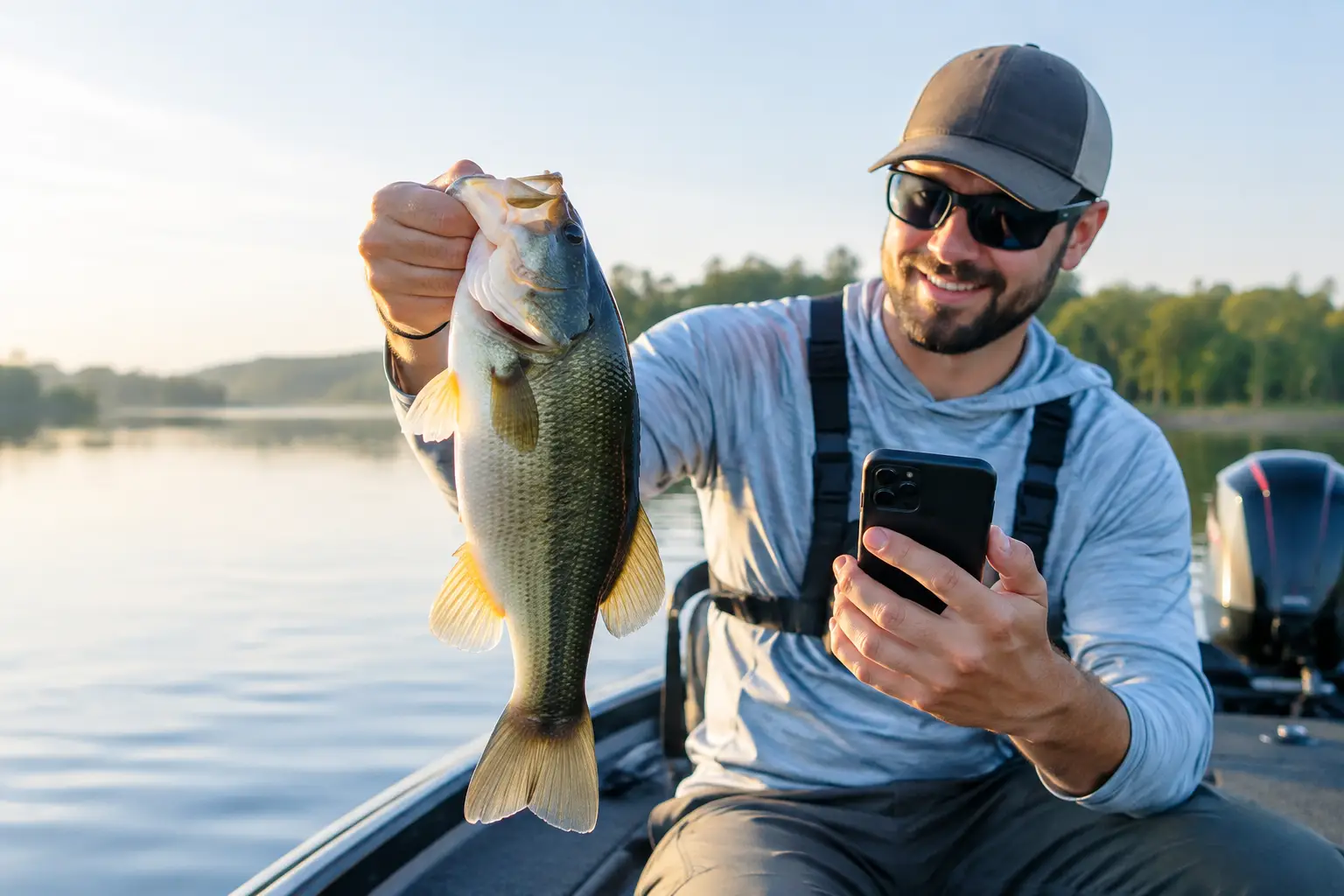
That bass did not eat by accident. Maybe it crushed a buzzbait at first light, thumped a jig beside a laydown, or followed a swimbait out of deep grass before committing at the boat. When you submit bass fishing catch details, the fish matters, but so does the information behind it. A solid catch report gives other anglers something they can use the next time the bite gets tough.
A quick photo and a line that says “caught a good one” is always fun. But if you want your Fish Tale to help other fishermen, remember the details while they are fresh. The lure, the cover, the water color, the weather, and the way that fish struck can say more than a guessed weight ever will.
Submit Bass Fishing Catch Reports With Useful Details
Start with the facts you know. If you weighed the bass on a reliable scale, give the actual weight. If you measured it, include the length. If you did neither, do not turn a good fish into a made-up number. Say it was an estimated weight, or simply let the photo do the talking.
The same rule applies to location. A lake, river, pond, or region gives readers helpful context without giving away somebody’s best dock, brush pile, or backwater pocket. There is a difference between sharing a pattern and burning a spot. “Upper end of a stained-water reservoir” tells anglers plenty. Exact coordinates usually do not need to leave your phone.
Dates matter more than many anglers think. A bass caught during the pre-spawn on a warming afternoon may point to a completely different pattern than a fish caught on the same bank in late summer. Include the season, time of day, and whether the water was rising, falling, clear, muddy, calm, or windblown. You do not need to write a novel. Two honest sentences can paint the whole picture.
Name the Lure and How You Fished It
A catch report is strongest when another angler can understand what the bait was doing. Name the lure type, color, and size if you know it. Then explain the retrieve.
For a topwater bite, say whether you were slow-rolling the bait over grass, buzzing it tight to wood, or holding it in a hole before moving it again. A buzzbait can draw explosive strikes when it stays moving, but there are days when slowing down near a target is what gets the fish to commit. Those little details are where the value lives.
For a jig, mention the trailer, the cover, and whether the bite came on the fall, after a hop, or while the bait sat still. With soft plastics, tell readers whether you were fishing weightless around shallow cover, dragging a Texas rig across a point, or working a shaky-style presentation on rock. A spinnerbait report should include blade style when it mattered, especially in dirty water or heavy wind.
Hart Tackle was built around that kind of real-world feedback: anglers putting baits to work, catching fish, and telling the truth about what happened. A report that includes a lure and a pattern helps tackle makers and fellow fishermen far more than a glamour shot alone.
Describe the Strike, Not Just the Catch
The strike often reveals the fish’s mood. Did the bass blow up and miss twice before coming back? Did it barely load the rod after a slow retrieve? Did it hit on the first cast to a piece of shade, or did it take repeated casts before reacting?
Those details help anglers decide whether bass were feeding aggressively, holding tight to cover, or following without fully committing. They also help explain why a bait worked. One fish does not prove every bass in the lake is on the same pattern, but a clear strike description gives others a smart starting point.
Keep the gear details practical. Line size, rod action, and retrieve speed are useful when they affected the result. Listing every piece of equipment just to fill space is not. If heavier line helped you winch a fish from matted grass, say so. If a lighter leader made a difference in clear water, that is worth sharing too.
Take Photos That Show the Bass Clearly
A good catch photo should make the fish easy to see and the story easy to believe. Wipe water spots from the camera lens. Keep the sun behind the camera when possible. Hold the bass carefully with support under the belly if it is a bigger fish, and avoid laying it on hot carpet, dry gravel, or a boat deck while you get organized.
Get one clean hero shot, then take a few supporting photos if you can. A quick picture of the lure in the fish’s mouth, the type of cover, or the scale reading adds context without requiring a long explanation. If you are fishing alone, a timer photo is better than no photo at all. Do not risk dropping a trophy bass while trying to make the picture perfect.
Photos should match the story. If the fish was released, say it. If it was kept within local regulations, that is your call, but be straight about it. Respect for the fish, the resource, and other anglers always comes through in the best fishing stories.
Do Not Let a Big Fish Become a Tall Tale
Every angler has heard a fish grow after it leaves the water. A catch submission is more useful when it stays grounded. Do not claim a personal best unless you are sure. Do not guess a double-digit weight from a photo. And do not present a buddy’s fish as your own.
Honest reports build trust over time. That matters whether you fish weekend ponds, chase tournament checks, or spend every free morning on the nearest lake. An angler who consistently shares accurate details becomes somebody others want to hear from.
There is also room for uncertainty. Maybe you do not know the water temperature. Maybe the bass was never weighed. Say what you observed instead: “The water had warmed after two sunny days,” or “The fish was measured but not weighed.” Straight talk is always stronger than filling gaps with pretend precision.
Turn a Catch Into a Pattern Other Anglers Can Use
The best reports connect the bass to its surroundings. Look for the reason that fish was where it was. Was bait present? Was the wind pushing into that bank? Did a grass edge meet deeper water? Was a dock throwing the only shade on a bright afternoon?
Then separate what you know from what you suspect. You know the fish came from the outside edge of hydrilla. You may suspect bass were using that edge as an ambush line because shad were flickering nearby. That distinction keeps a report sharp and honest while still giving other anglers a useful idea to test.
It also pays to mention what did not work. If you threw a worm, a spinnerbait, and a topwater before the jig got bit, that tells a fuller story. The goal is not to make every catch sound easy. The goal is to help somebody understand the adjustment that put a fish in the boat.
Keep It Short Enough to Read
A strong bass catch submission does not need a dozen paragraphs. Start with the fish, follow with the lure and conditions, then add the key moment that made the catch happen. Think of it like telling the story at the ramp after loading the boat: clear, direct, and worth hearing.
Before you send it, check three things. Make sure the photo is clear, the details are accurate, and the lure information is specific enough to be useful. If there is a lesson in the catch, put it in plain language. “Keep the buzzbait moving over scattered grass” is better than a vague claim that the fish were biting.
The next bass you catch may be the one everybody remembers, not only because it was big, but because your report showed exactly what made that bite happen. Take the extra minute while the memory is fresh. Somebody else may tie on the right bait because of it, and that is how a good Fish Tale earns its keep.
