
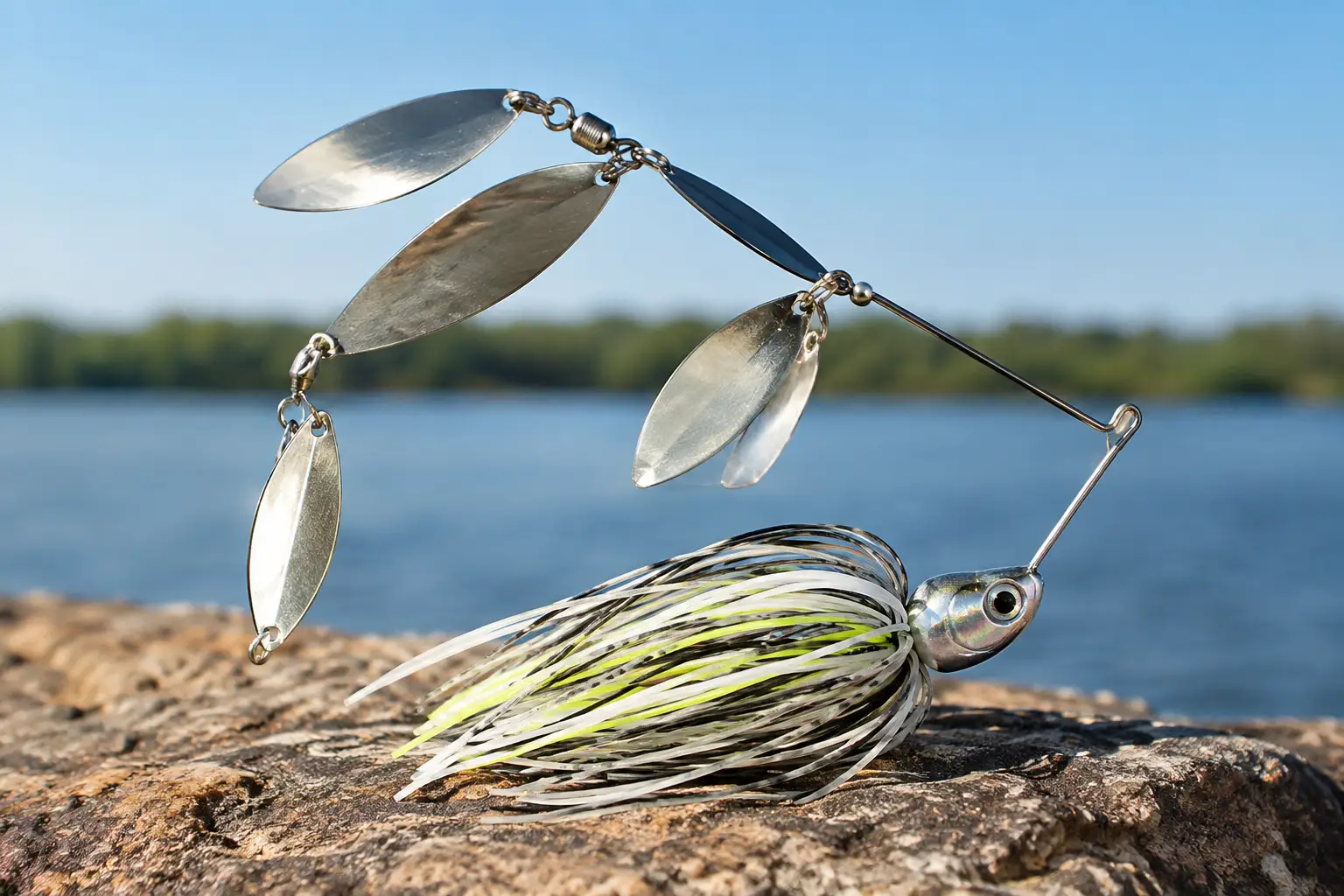
A quad blade buzzbait is not a subtle way to ask for a bass to eat. It is a surface commotion bait built for the moments when a fish needs to find your lure through stained water, wind chop, shallow cover, or pure bad attitude. Four blades churn, flash, squeak, and shove water hard enough to call fish from a distance.
That extra disturbance is exactly why it can catch the big ones. It is also why it is not the right tool every time. If bass are feeding on tiny shad in calm, clear water, a loud quad blade can look like a dinner bell in a library. But when visibility is down and fish are set up shallow, the same bait can turn a slow day into a day you remember.
What Makes a Quad Blade Buzzbait Different?
A standard buzzbait usually gets its action from one blade turning over the surface. A quad blade buzzbait uses four blades to create a wider wake and a fuller sound profile. The lure stays on top with a slower retrieve than many single-blade designs, while the blades keep working to make noise and throw water.
That matters because bass do not always track a topwater bait with their eyes. In muddy water, at low light, or under a thick canopy of bank shade, they feel vibration and locate pressure changes. A quad blade gives them more to key on. It can sound like a fleeing baitfish, a struggling bluegill, or simply something alive that is making too much of a fuss to ignore.
The trade-off is drag. More blade surface means more resistance, so this bait is generally not made for burning across open water at high speed. It shines when you want to crawl a noisy bait across a target zone and keep it in the strike zone longer.
Where a Quad Blade Buzzbait Earns Its Keep
The best water for this bait usually has bass positioned shallow and ready to react. Think shoreline grass, laydowns, dock walkways, shallow brush, flooded bushes, and the backs of creeks where bait is present. It can be especially effective on warm, overcast days, during a light rain, or whenever a breeze has broken up the surface.
Stained water is prime territory. The blades create enough commotion that a bass can home in without getting a clean visual look from several feet away. A dark bait silhouette can be a strong choice under cloudy skies or in dingy water. When the water has a little more clarity, white, chartreuse, or a shad-style skirt can help fish see the bait once they get close.
Do not save it only for dawn and dusk. Early and late are classic buzzbait windows, no question. Still, shallow bass will blow up a big, noisy topwater at midday if shade, cover, and warm water put them in the mood. A bright day can actually help when you can run the bait tight to the darkest edge of a dock or laydown.
Wind is another situation where a quad blade makes sense. Light ripple is great. A steady chop can be even better because it hides the bait’s hardware and gives a bass less time to inspect it. In heavy whitecaps, though, even a loud bait may be hard for fish to track. That is when a moving bait just under the surface can be the better call.
Use It Where a Bass Has to Commit
The highest-percentage cast is rarely one that lands ten feet away from cover. Put the bait tight to the target. Run it alongside a grass line, across the face of a stump, down a dock float, or over the end of a laydown. A bass that is sitting under shade or tucked against wood gets one clean chance to crush it.
Let the bait run past the target before speeding up or picking it out. Many strikes happen after the blades have crossed the sweet spot and the skirt or trailer is just clearing the cover. Keep the bait moving until it is well past the object.
The Retrieve That Makes the Bait Work
Start your retrieve the instant the bait touches down. A buzzbait that sinks for a second before the blades start turning loses its advantage. Cast past the target when possible, lower the rod tip, and begin reeling before the lure lands so it planes up immediately.
The basic retrieve is slow and steady. Give all four blades enough speed to turn cleanly, then resist the urge to crank faster. The broad wake and steady racket are the point. A bait moving too fast can skate or roll, and it may pass a shallow bass before that fish can get lined up.
Once you have a dependable surface track, make small changes rather than wild ones. Slow it briefly beside a stump. Give it a short surge as it clears the corner of a dock. Feather the reel handle enough to change the sound without letting the bait sink. Those minor changes often trigger a follower that has tracked the bait without committing.
If a fish blows up and misses, keep reeling. Do not jerk the lure away or immediately throw back into the boil. A bass may come back and eat the bait on the next turn of the blades. If it does not, then make a follow-up cast with a compact soft plastic or jig to the exact spot. That second bait is for the fish that got a good look but did not get the hook.
Tuning Matters More Than Most Anglers Think
A buzzbait should run straight. If it leans hard, skips, or pulls to one side, inspect the wire frame and blade alignment before you blame the fish. A slight bend in the wire arm can change how the bait tracks. Make small adjustments, test it beside the boat, and stop once it runs true.
Blade contact is worth paying attention to, too. Some anglers like a clean, steady churn. Others want a squeak or a little blade-to-blade chatter. There is no magic sound that wins everywhere. On pressured water, a consistent, natural-sounding bait may be better. In muddy water or when bass are actively feeding, more clatter can help them find it.
Your trailer should support the retrieve, not fight it. A compact trailer can add a little bulk and keep the bait stable. A longer soft-plastic trailer may give you more profile and lift, which can be useful when you want to crawl the bait painfully slow. If the lure begins rolling over, trim the trailer or switch to something slimmer.
A trailer hook is another it-depends choice. It can help when short strikes are common, especially around open water, sparse grass, or schooling fish. Around thick wood and heavy vegetation, it can cost you casts by snagging cover. Start without one in the nastiest stuff. Add one when fish are slapping the bait but not getting hooked.
Gear for Better Hookups
A buzzbait rod needs enough tip to cast accurately and keep a fish from tearing free, but enough backbone to pull a big bass away from cover. A 6-foot-10 to 7-foot-3 medium-heavy baitcasting rod is a solid all-around range. Many anglers prefer a fast action, while others like a slightly more moderate tip for better hookup forgiveness.
Braided line is a strong choice around grass, wood, and shallow cover. It floats, cuts vegetation well, and gives you immediate control after a strike. Monofilament can also work nicely in more open water because it floats and offers a little stretch. Fluorocarbon is usually a poor fit for a buzzbait because it sinks and can pull the bait down.
When a fish blows up, keep your cool for half a beat. Watch for the line to move or feel the weight of the fish, then sweep the rod and keep reeling. Swinging at the splash alone is how good fish become good stories.
When to Put the Quad Blade Down
A quad blade buzzbait is a calling bait. If fish are spooky, the water is slick, and bass are tracking without striking, downsize the profile or switch to a quieter topwater. A walking bait, small popper, or subtle single-blade buzzbait may get more bites when fish want a softer presentation.
It can also be too much when bass are feeding deep or relating to offshore structure. No amount of surface noise will consistently pull fish that are not looking up. Let the fish tell you where they are, then choose the bait that keeps you in their zone.
Still, when the bank is right, the water has some color, and bass are hunting shallow, tie on the loud bait with confidence. Put it tight to cover, keep those blades working, and be ready when the water opens up around it.
