
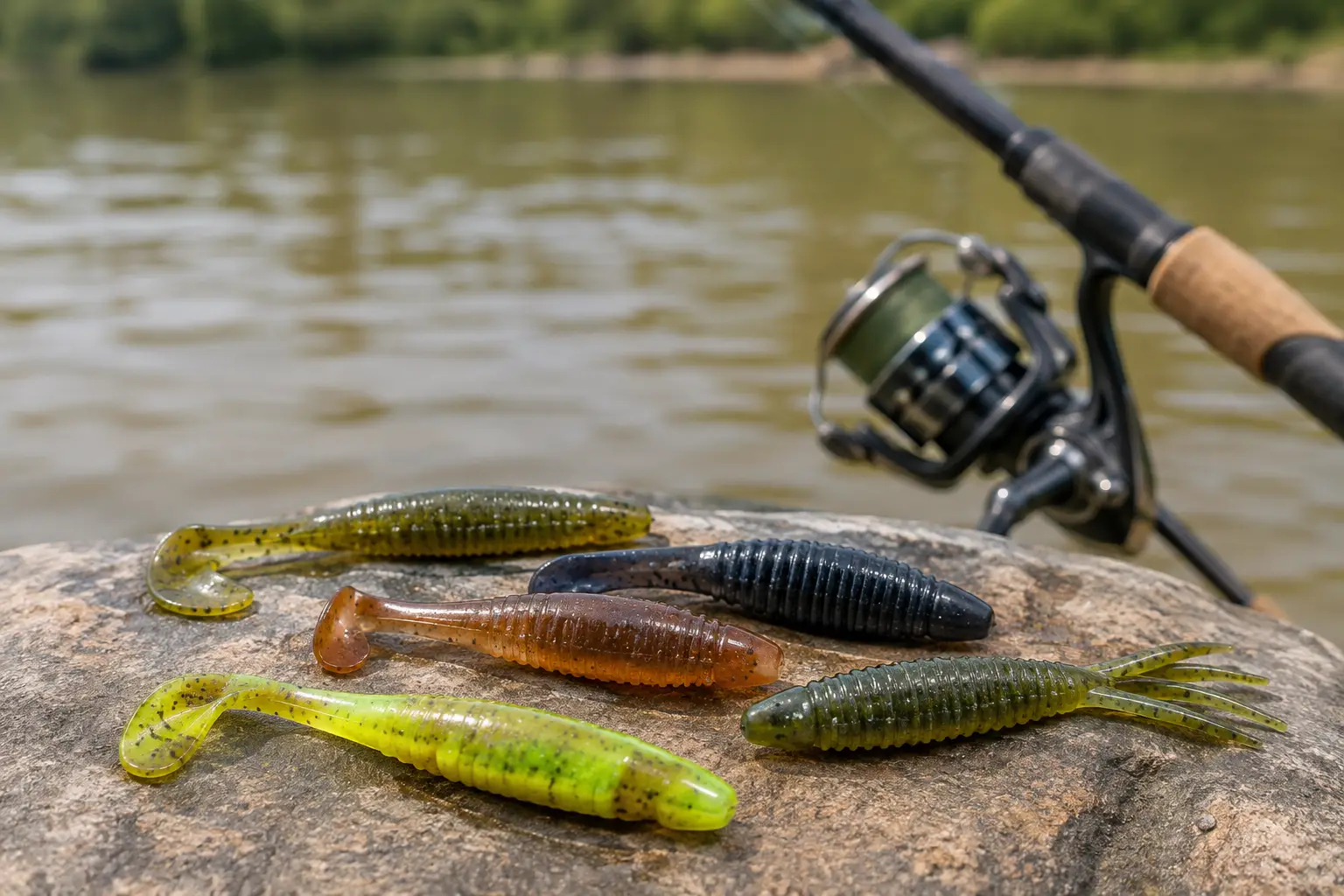
A hard rain turns your favorite bank into chocolate milk, and suddenly that bag of natural green pumpkin worms looks a lot less convincing. Picking soft plastic colors muddy water calls for a different mindset. You are not trying to match every detail of a bluegill or crawfish. You are trying to give a bass a bait it can locate, track, and eat before it slips past.
Muddy water does not mean bass quit feeding. It means their strike zone gets tighter and your bait has to work harder. Color matters, but it works best when you pair it with the right profile, enough movement, and a retrieve that keeps the lure in front of fish.
What Bass Actually See in Muddy Water
In clear water, bass can inspect a bait from several feet away. They can notice subtle laminate patterns, tiny flakes, and the difference between watermelon red and green pumpkin. In muddy water, suspended silt, runoff, and algae scatter light. Visibility may shrink to a foot, or just a few inches.
That changes the job of your soft plastic. A bass is often reacting first to vibration, water displacement, and a visible outline. Once it gets close, a strong color contrast can help it finish the strike. This is why a dark bait can be just as effective as a bright one. The best choice is not always the loudest color. It is the color that shows up best against the available light and background.
Water depth, cloud cover, and bottom color all matter. Muddy water under a bright midday sky may still have enough light for chartreuse or white to stand out. A shallow, muddy creek under heavy clouds can call for black or black-and-blue because it throws the strongest silhouette when viewed from below.
Best Soft Plastic Colors for Muddy Water
Start with black and blue when you need a dependable all-around muddy-water color. A black body creates a clean silhouette, while blue flake or a blue tail adds a little flash when fish get close. It is tough to beat on creature baits, craws, beaver-style baits, and bulky trailers around wood, grass, docks, and rock.
Junebug is another strong choice, especially when the water is dirty but not completely blown out. That deep purple-black body has plenty of contrast, and the purple sheen can show up better than plain black in stained water. It is a proven worm color for Texas rigs, shaky heads, and weightless presentations around shallow cover.
Black neon earns a spot when the water is truly nasty. The dark body maintains its outline, while a bright red, orange, or chartreuse accent gives bass a target point. A black neon worm, lizard, or creature bait can be a smart call during spring runoff, after thunderstorms, or in muddy ponds where visibility is nearly gone.
Chartreuse has its place, but it is not a magic answer for every muddy-water bite. Use it when there is enough light for brightness to matter, particularly in shallow stained water. A chartreuse tail on a black, junebug, or dark green bait often gives you the best of both worlds: a solid dark profile with a flash point at the end of the bait.
White and pearl are useful when bass are feeding on shad or when you are fishing a swimbait, fluke-style bait, or paddletail. They can be easy for fish to track in dirty water, especially when the bait has a pronounced tail kick. On cloudy days or in darker water, consider pearl with chartreuse, a white body with a dark back, or a white bait with a dipped tail rather than plain white alone.
Match Contrast to the Water, Not the Label
Anglers often call every off-color lake “muddy,” but there is a big difference between stained water with 18 inches of visibility and red-clay runoff where you cannot see your hand below the surface. Let the water tell you how far to push the color.
In lightly stained water, darker natural colors still work. Green pumpkin with a chartreuse-dipped tail, a dark watermelon laminate, or a junebug bait may look more believable than a full neon offering. Fish can still see enough to prefer a bait that resembles something living.
In moderate mud, go bolder. Black and blue, junebug, black neon, chartreuse pepper, and white-chartreuse combinations are all solid starting points. Pick one color family, fish it with confidence, and change only when the conditions or the fish give you a reason.
In the dirtiest water, prioritize black, black-and-blue, and black neon. A dark bait makes a clear shape against the lighter surface above it. If you want an accent, use a bright tail, a colored claw, or a small dab of dye instead of turning the entire bait fluorescent.
Bottom color can break the tie. In muddy water over dark rock, flooded timber, or thick vegetation, a chartreuse accent or bright tail may help. Over light clay, sand, or shallow gravel, a black-and-blue bait can remain easier for a bass to separate from the background.
Color Will Not Fix a Bait Fish Cannot Find
This is where plenty of anglers get stuck. They keep changing colors while throwing a slim, quiet bait past shallow bass that are feeding by feel. In muddy water, profile and action often matter as much as color.
Choose a soft plastic with some body to it when you are flipping cover. A creature bait, craw, tube, or compact beaver-style bait pushes more water than a thin finesse worm. Add a rattle if local rules allow and the situation calls for it. That extra click can help fish home in around flooded brush, laydowns, and dock posts.
For moving presentations, use a paddletail swimbait, a ribbed worm, or a bait with active appendages. A paddletail that thumps steadily gives fish a trail to follow. A creature bait with flapping arms can do the same when pitched into shallow cover. You do not need to overwork it. Often the bait’s own movement is enough.
If the bite is tough, downsize the profile before you abandon contrast. Bass in muddy water can still be pressured, cold-fronted, or simply not willing to chase. A smaller black-and-blue compact bait presented slowly may get more bites than a giant bright creature bait crashing through every piece of cover.
Rigging Soft Plastics for Dirty-Water Bites
A Texas rig is hard to beat in mud because it comes through cover clean and lets you put a bait exactly where a bass is holding. Use enough weight to maintain contact and create a noticeable entry, but not so much that the bait rockets past the strike zone. Around shallow wood or grass, a pegged weight and a black-and-blue creature bait are a reliable starting point.
A jig-and-plastic combination is another heavy hitter. A dark jig with a matching black-and-blue or junebug trailer gives you bulk, vibration, and a clear profile in one package. Let it hit a stump, crawl it over a limb, then pause. Muddy-water bass often sit tight to cover because they do not have the visibility to roam far.
For open banks, riprap, and shallow flats where bass are chasing bait, rig a white or pearl paddletail on a weighted hook or jighead. Keep it moving just fast enough for the tail to work. If the water is especially dark, switch to a black-and-blue paddletail or use a chartreuse tail so the bait does not disappear.
Weightless soft plastics can still catch fish in stained water, but give them a reason to be noticed. A fluke-style bait with a white body and chartreuse tail, worked with sharp twitches around flooded bushes, can draw reaction strikes. Just remember that this approach works better when water visibility is stained rather than flat-out muddy.
Fish Closer Than You Think
Muddy water rewards thorough casting more than long casting. Bass may be tucked against the shady side of a laydown, under the first dock post, or on the inside edge of newly flooded grass. If your bait lands two feet away, they may never know it passed.
Make repeated casts to the best target from different angles. Let a Texas-rigged bait fall beside the trunk, then bring it over the same limb. Run a paddletail down both sides of a grass edge. Keep your casts controlled, because accuracy catches more muddy-water fish than constantly digging through another bag for a new color.
Hart Tackle anglers know the goal is not to make a bait look pretty in the package. The goal is to put something in front of a big bass that it can find and crush. Start dark, add a bright accent when conditions call for it, and let the bait’s action do its share of the work.
The next time runoff muddies your water, tie on black-and-blue or junebug, slow down around the best cover, and make every cast land where a bass can actually reach it. That is when muddy water stops being an excuse and starts becoming your advantage.
