
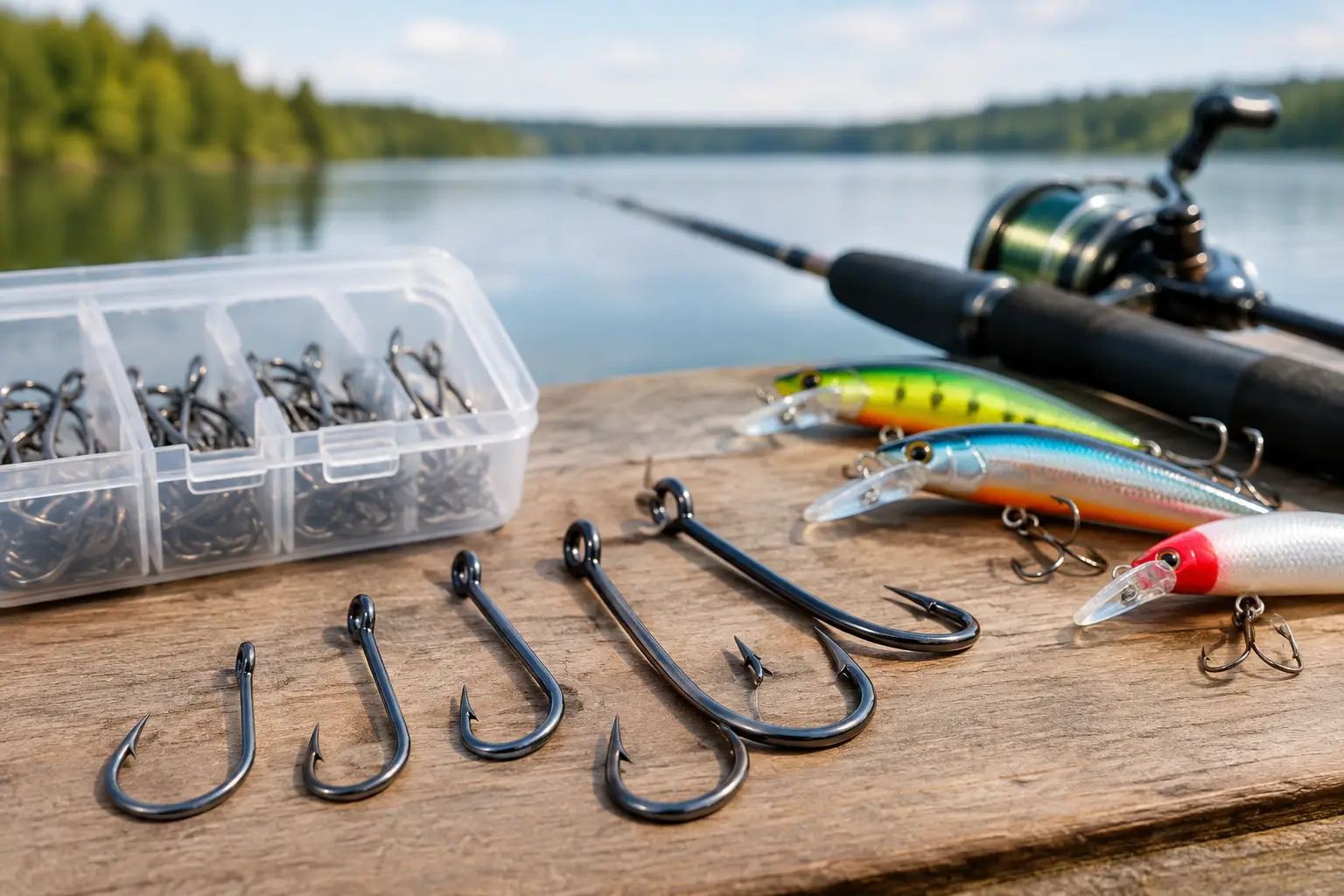
A good lure can get crushed and still lose the fish at the boat if the hook is the wrong match. Knowing how to choose fishing lure hooks means looking beyond the package size. The hook has to fit the bait, penetrate with the gear you are using, stay strong in cover, and leave enough room to grab a bass cleanly.
That sounds like a lot to ask from one small piece of steel. But once you know what to look for, hook choice gets a whole lot simpler. Start with the lure and the water you are fishing, then work your way toward the hook style that gives you the best odds when a big one commits.
Start With the Lure and Presentation
The hook should serve the lure’s job, not fight it. A compact jig needs a hook that fits its profile and comes through cover. A thick swimbait needs enough gap to clear the plastic on the hookset. A walking topwater needs sharp trebles that grab fish slapping at the bait.
Think about how the fish will attack. Bass often engulf a jig, worm, creature bait, or swimbait, so a single hook with plenty of bite makes sense. Fish frequently swipe at a spinner, crankbait, or topwater, which is why those lures commonly use trebles. The goal is not simply more hooks. It is better contact when the fish eats or swats at the lure.
Also consider whether the bait is fished around wood, grass, rock, or open water. An exposed hook gets you a better hookup percentage in clean water. Around laydowns and matted vegetation, that same exposed point can turn every cast into a snag. Weedless rigging gives up a little instant penetration in exchange for getting your lure where bigger fish live.
How to Choose Fishing Lure Hooks by Style
Hook styles have different jobs. Picking the right one starts with understanding where each style shines.
EWG Hooks for Thick Plastics
Extra-wide-gap, or EWG, hooks are a dependable choice for bulky soft plastics. Use them for creature baits, tubes, thick stick worms, beaver-style baits, and many paddle-tail swimbaits. The wide bend gives the plastic somewhere to collapse when a bass bites, exposing the point for a solid hookup.
The trade-off is that an EWG can sit a little differently in a slender bait. If you rig a skinny finesse worm on a hook that is too wide, the bait may not run straight and the hook may not have the cleanest angle on the set. Match the gap to the body of the bait instead of assuming wider is always better.
Offset Round-Bend Hooks for Worms
For straight worms, ribbon-tail worms, and slimmer soft plastics, an offset round-bend worm hook is hard to beat. Its shape often gives a natural, straight presentation and a strong bite on a fish that has eaten the bait deep.
A round-bend hook is especially useful when your plastic does not need a giant gap to collapse. It can be a better fit than an EWG for a 6-inch or 8-inch worm, particularly when you want the bait to slip through brush without balling up on the hook.
Straight-Shank Hooks for Heavy Cover
When you are flipping thick grass, reeds, brush piles, and shallow wood, a straight-shank hook is built for the fight. These hooks are commonly used with pegged weights and compact creature baits or craws. A bait keeper on the shank helps hold the plastic in place after repeated pitches.
Straight-shank hooks are made for decisive hooksets with stout line and a heavy rod. They are not the best choice for every worm or open-water presentation, but when a fish eats in nasty cover, they provide the direct connection you want.
Treble Hooks for Moving and Topwater Baits
Treble hooks belong on many hard baits because the fish may strike from the side or barely catch one point. Crankbaits, jerkbaits, lipless baits, spinners, and topwaters all depend on sharp, properly sized trebles.
Do not automatically go bigger when replacing trebles. An oversized treble can foul on the lure body, tangle with another hook, kill the action, or catch too much grass. Match the factory hook size first, then change only if you have a reason. One size larger may help a bait grab fish in open water, while the original size may be better around cover.
Jig Hooks Are Part of the Whole Package
A jig hook is not an afterthought. It affects how a jig comes through cover, how the trailer sits, and how well the lure holds a heavy fish. For bass jigs, look for a hook with a strong point, enough gap for the trailer, and wire heavy enough for the rod and line you plan to use.
A hand-built jig is only as dependable as its hook. That is why a serious jig, like a Hart Tackle Justice Jig, needs a hook that can take hard hooksets and keep its shape when a fish buries itself in wood or grass.
Size Means Gap, Not Just a Number
Hook sizes can confuse anglers because a smaller number does not always mean a smaller physical hook in every style. A 3/0 EWG and a 3/0 round-bend hook may have noticeably different gaps, shank lengths, and overall profiles. Brand-to-brand differences add another wrinkle.
Instead of choosing by number alone, lay the hook alongside the bait. For a Texas-rigged plastic, the hook gap should be wide enough that the bait can compress after the bite and still leave room for the hook point to penetrate. If the plastic fills the entire gap, the hook may never clear the bait well enough to stick the fish.
With trebles, size has to preserve the lure’s action. A larger hook adds weight and drag. On a shallow crankbait or walking topwater, that can change how the bait runs. If you upgrade hooks, test the lure in clear water before trusting it on your best spot.
Choose Wire Diameter for Your Gear and Cover
Wire diameter is one of the biggest decisions anglers miss. Light-wire hooks penetrate easily with lighter line, spinning gear, and sweeping hooksets. They are a smart match for finesse worms, small swimbaits, drop-shot baits, and open-water presentations where a heavy hook would overpower the setup.
Heavy-wire hooks are built for braid, heavy fluorocarbon, stout casting rods, and close-range fights in cover. They resist bending when you drive the point home and pull a bass away from roots, grass, or dock posts.
The catch is simple: a heavy-wire hook takes more force to penetrate. Pairing one with light line and a soft rod can cost you fish. On the other hand, driving a light-wire hook with a heavy flipping stick and locked-down braid can bend it out. Your rod, line, drag, and hook need to work as a team.
Pay Attention to Point, Barbs, and Hook Condition
A needle-sharp point matters more than fancy packaging. Check your hooks after a fish, a hard snag, or a day of grinding rock. Drag the point lightly across your thumbnail. If it slides instead of biting, replace it or sharpen it if the hook style allows.
Needle points penetrate easily, while heavier cutting-style points can be durable around hard cover. Both can catch fish when sharp. The better option depends on where you fish and how much abuse the hook takes.
A modest barb is usually plenty for bass fishing. Huge barbs can make penetration harder, especially with light line or a long cast. Once a fish is hooked, steady pressure does more to keep it pinned than an oversized barb ever will.
Watch for bent hook points, opened gaps, rust, and dullness. A hook does not have to look terrible to cost you a fish. If you have any doubt after a good fish straightens a hook or after you hammer rocks all morning, change it. Hooks are cheaper than regret.
Match the Hook to the Bite You Expect
In clear water with pressured fish, lighter line and a more natural presentation may call for a light-wire hook and a smaller profile. In muddy water or thick summer grass, a bigger bait, heavier line, and stronger hook can be the right call. Neither setup is better all the time.
For buzzbaits and spinnerbaits, the factory single hook is usually part of the lure’s balance. Add a trailer hook when fish are short-striking in open water, but skip it when brush, grass, or wood will grab it every cast. For hollow-body frogs, use the stock double hook unless you have a specific reason to modify the bait. A frog has to stay weedless to do its job.
The best hook choice is the one that lets your lure run right, reach the fish, and hold up when the bite finally comes. Rig your bait straight, keep the point sharp, and choose enough hook for the bait and cover without overdoing it. The next big one may give you one clean chance. Make sure your hook is ready for it.
